Friuli Venezia Giulia: Trieste, Lagoons and the Karst
Travel guide · editorialIn the far northeast of Italy, Romance, Slavic and Germanic worlds meet. A vacation in Friuli Venezia Giulia means coffeehouses in Trieste, Roman mosaics in Aquileia, beach days in Lignano and Grado, and vineyards along the Slovenian border.
Borderland between the Alps and the Adriatic
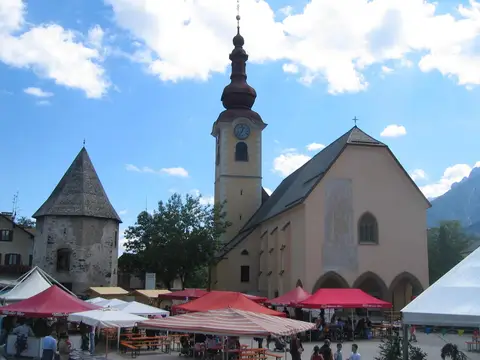
The region borders Austria and Slovenia. To the north lie the Carnic and Julian Alps, with towns like Tarvis, Tarvisio in Italian, where three language areas meet and winter sports fans head for Monte Lussari. Below stretch moraine hills and the Friulian plain, crossed by the Tagliamento, one of the last near-natural wild rivers in the Alps. The coast consists of lagoons with fishermen's huts, the casoni, in the west and the Karst, a limestone plateau that drops steeply to the Gulf of Trieste, in the east. Its special status as an autonomous region stems from its unique history and its linguistic minorities: in addition to Italian, Friulian, Slovenian and German are spoken here.
Trieste, the city on the edge
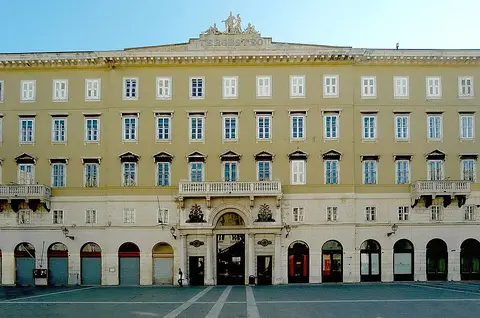
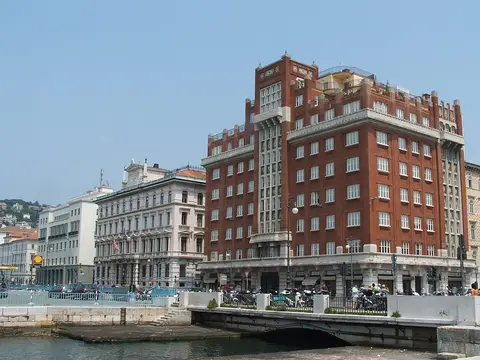
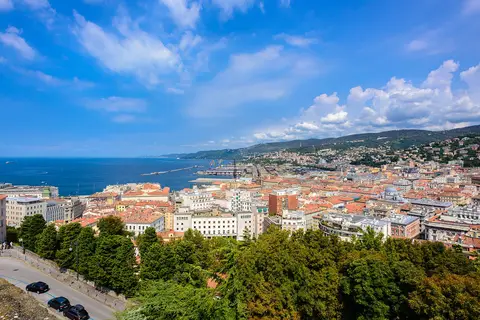
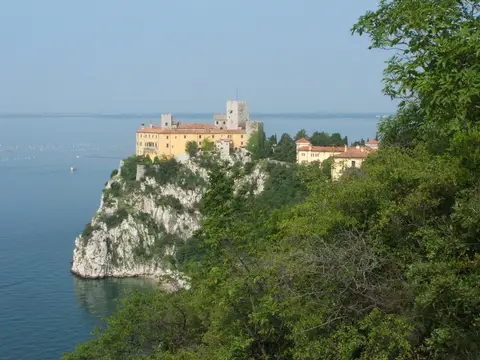
Trieste was the Habsburgs' most important port for over 500 years and only became Italian after 1918, and definitively in 1954. The Piazza Unità d'Italia, one of the largest squares in Europe and open to the sea, the neoclassical palaces of the Borgo Teresiano and historic coffeehouses like Caffè San Marco are reminiscent of Vienna. James Joyce lived here, and Italo Svevo and Umberto Saba wrote here. On the coast to the northwest stands Miramare Castle, the white palace of Archduke Maximilian. A streetcar or bus takes you up onto the Karst, where the Grotta Gigante is one of the largest show caves in the world. Nearby lies Monfalcone, with its large shipyard where cruise ships are built.
Sights in Friuli Venezia Giulia
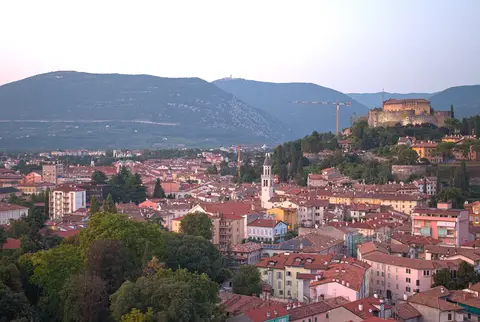
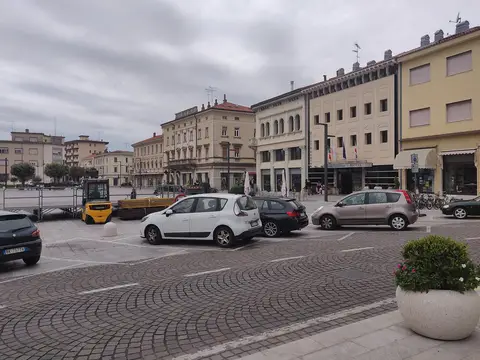
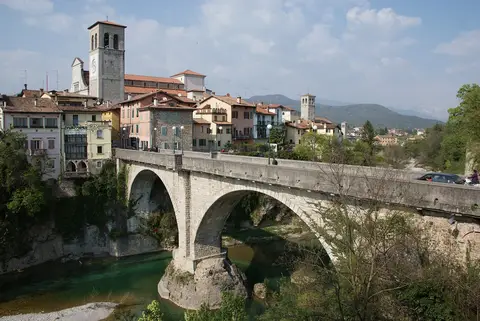
Aquileia was one of the largest cities of the Roman Empire; the basilica's 4th-century floor mosaic is the largest early Christian mosaic floor in the West and a World Heritage Site. Cividale del Friuli has the Tempietto Longobardo, a testament to the Lombards, and a Devil's Bridge over the Natisone. Palmanova is a Venetian fortress town laid out as a nine-pointed star, also a World Heritage Site. Udine, the unofficial capital of Friuli, shows off Venetian charm on the Piazza della Libertà, along with frescoes by Tiepolo. Gorizia, Görz in German, has grown together with Slovenia's Nova Gorica; in 2025 the two cities were joint European Capital of Culture. Pordenone is a lively merchant town with painted facades along the Corso Vittorio Emanuele.
Beaches: Lignano and Grado
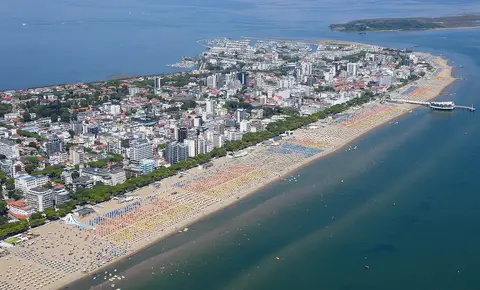
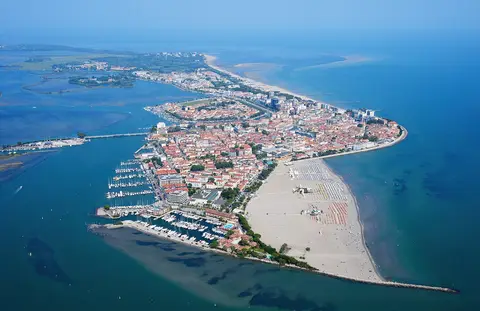
Lignano Sabbiadoro sits on a peninsula between the lagoon and the sea and offers a sandy beach about eight kilometers long, pine forests and plenty of vacation apartments; it has long been a favorite destination for Austrians and Germans. Grado is quieter, an island town with a Venetian-style old town, early Christian churches and a thermal spa; the lagoon in front of it is ideal for boat trips to the casoni and to the pilgrimage island of Barbana.
Food and drink
The cuisine reflects the borderland. Frico, a cheese and potato pancake made with Montasio, is the Friulian national dish. In Trieste, you eat pork with mustard and horseradish at the buffet restaurants, along with jota, a soup of beans and sauerkraut, and strudel. San Daniele produces a sweetish cured ham, Sauris a smoked one. In Udine's osterie you drink a tajut, a glass of wine. The white wines from the Collio and the Colli Orientali, such as Friulano, Ribolla Gialla and Sauvignon, are considered among the best in Italy, and the Karst produces Terrano. In Trieste, coffee is ordered with its own vocabulary: a nero is an espresso, a capo a macchiato.
Getting there and the best time to visit
Trieste Airport is located near Ronchi dei Legionari and is connected to the train station. Venice and Ljubljana are good alternatives. The highway from Villach leads through Tarvis into the plain, and trains connect Udine with Vienna and Villach. The best time to visit is late spring and early fall. The beach season on the coast runs from June to September. In winter, Trieste can be hit by the bora, a cold downslope wind that reaches speeds of over 100 km/h. In October, the Barcolana takes place, one of the largest sailing regattas in the world.