Abruzzo: National Parks, Mountain Villages, and Adriatic Beaches
Travel guide · editorialNearly a third of Abruzzo is protected, and yet the highest peaks of the Apennines lie just an hour's drive from the sandy beaches of the Adriatic. A vacation in Abruzzo combines bear country and mountain villages with seaside resorts, trabocchi, and hearty shepherd cooking.
Europe's Greenest Region
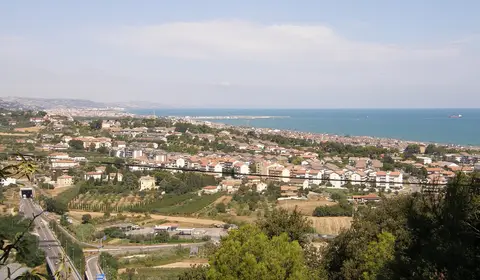
Abruzzo likes to market itself as the greenest region in Europe, and it does in fact have three national parks and one regional park. The Gran Sasso, home to Corno Grande, the highest peak in the Apennines at nearly 2,900 meters, holds the Calderone, one of the southernmost glacier remnants in Europe. At its foot lies the high plateau of Campo Imperatore, often called a little Tibet. The Majella to the south is a mighty limestone massif dotted with hermitages. Marsican brown bears, wolves, and chamois live in Abruzzo, Lazio and Molise National Park. Between these mountains and the coast, hills covered in vineyards and olive groves roll out.
L'Aquila and the Mountain Villages
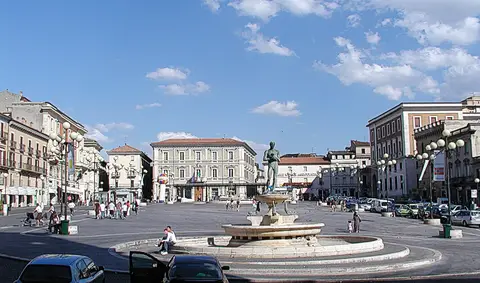
L'Aquila was hit hard by the 2009 earthquake, which claimed more than 300 lives. A large part of the historic center has since been rebuilt, including the Basilica of Santa Maria di Collemaggio with its pink-and-white façade and the Fountain of the 99 Spouts. High above the city lies Santo Stefano di Sessanio, a medieval village whose houses are partly used as a scattered hotel. Rocca Calascio, a ruined castle at 1,400 meters, has served as a film location. Other mountain towns include Scanno with its heart-shaped lake, Sulmona, home of the poet Ovid and of confetti sugared almonds, and Pescocostanzo, known for its bobbin lace.
Pescara and the Coast
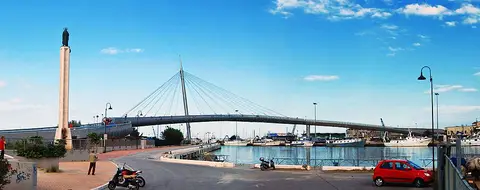
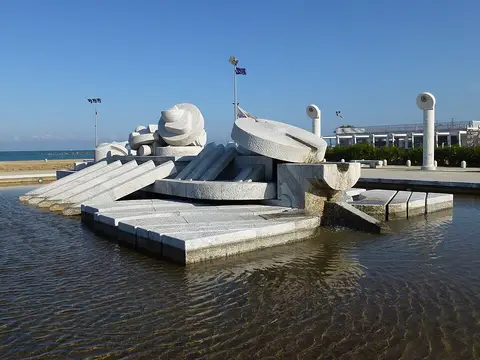
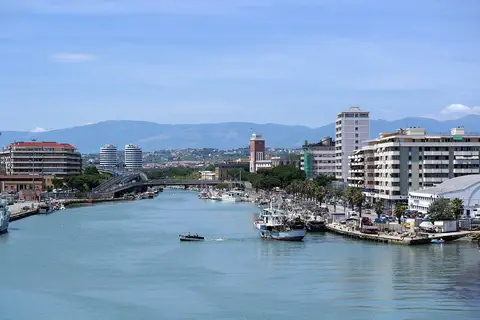
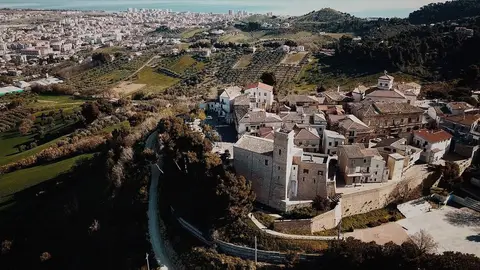
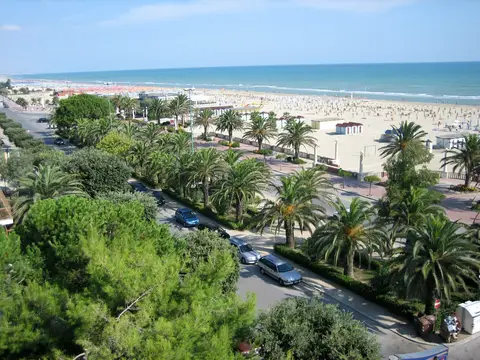
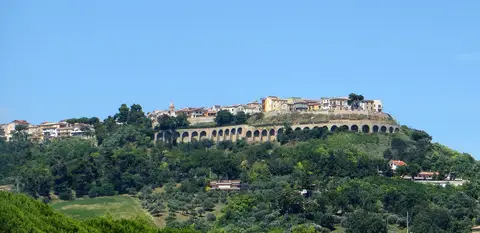
Pescara is the largest and most modern city in the region, with a long beach, a pedestrian zone, and nightlife; the poet Gabriele D'Annunzio was born here, and his birthplace is now a museum. To the north follow Montesilvano with its hotels and convention center, Silvi Marina, Roseto degli Abruzzi with fine sand, and Giulianova with its hilltop old town. South of Ortona, the Costa dei Trabocchi begins. Trabocchi are wooden fishing platforms on stilts that jut out over the sea, today often converted into restaurants. A bike path along a former railway line follows this stretch of coast. Vasto in the south has an old town on a cliff overlooking the gulf and the Punta Aderci nature reserve.
Sights in Abruzzo: Art and History
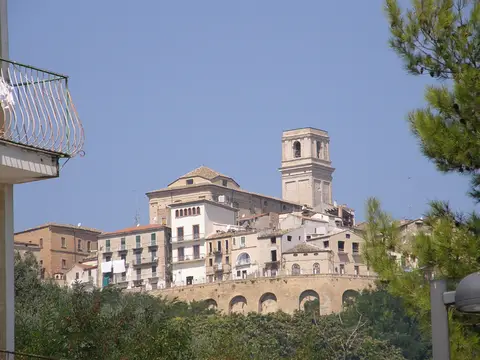
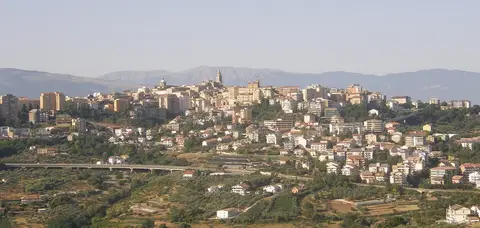
Chieti, one of the oldest cities in Italy, sits on a hill above the Pescara Valley; the Archaeological Museum houses the Warrior of Capestrano, an enigmatic stone figure from the 6th century B.C. Teramo has a cathedral and the remains of a Roman theater. Inland, Romanesque abbeys such as San Clemente a Casauria and San Giovanni in Venere, high above the sea, are scattered across the countryside. Atri is famous for its cathedral and the bizarre erosion formations of the calanchi. Civitella del Tronto has one of the largest fortresses in Europe; the Bourbons held it against the new Italian state as late as 1861.
Food and Drink
Abruzzo's cuisine comes from shepherds and farmers. Arrosticini, small skewers of mutton grilled over charcoal, are the best-known dish. Spaghetti alla chitarra is cut using a frame of stretched strings and served with a ragù of small meatballs. Saffron from the Navelli plateau is considered among the best in Italy. Add to that pecorino, ventricina salami from the area around Vasto, and brodetto on the coast. Montepulciano d'Abruzzo and Trebbiano are the main wines, and Cerasuolo is a robust rosé. To finish, there's the herbal liqueur Genziana or Centerbe.
Getting There and Best Time to Visit
Pescara Airport is served by a number of European cities; otherwise, you can reach Pescara from Rome in about two and a half hours by car or bus. The Adriatic railway connects the coastal towns, but you'll need a car for the mountains. The best time for hiking is June through October, and for beach vacations July through September. In fall the beech forests change color, and in winter ski areas such as Roccaraso and Campo Imperatore beckon. The saffron festival is held in Navelli in June, and Cocullo hosts its unusual snake festival in May.