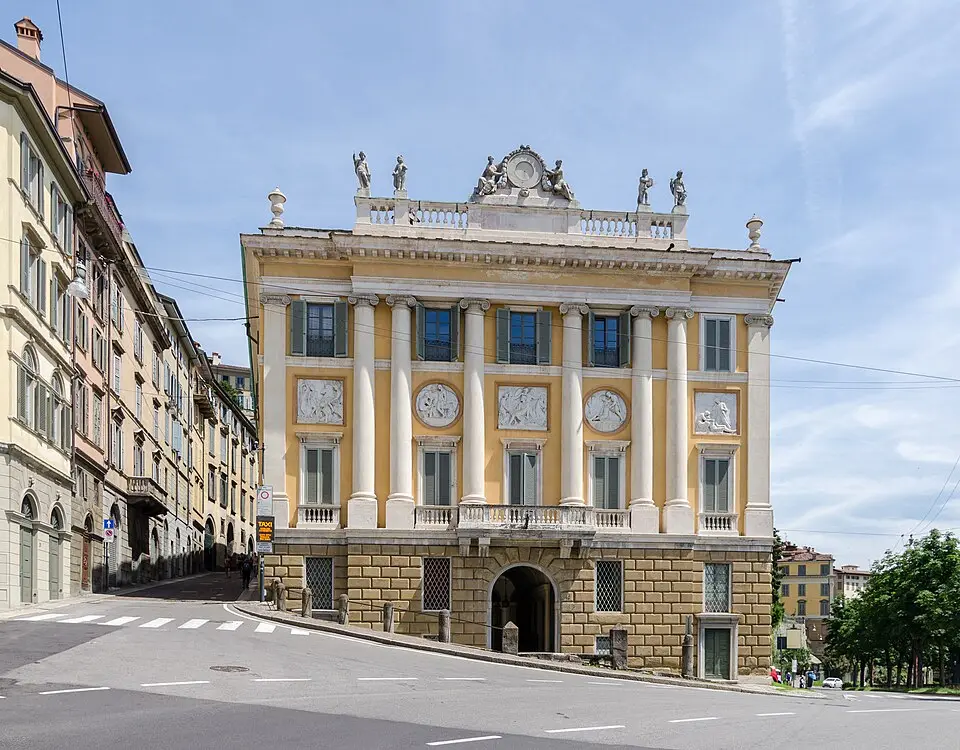
About Palazzo Medolago Albani
The Palazzo Medolago Albani is an impressive example of Neoclassical architecture in Bergamo, located on Viale delle Mura near the Porta San Giacomo. Built by Simone Cantoni starting in 1770, the building was purchased in 1841 by Count Giacomo Medolago Albani and transformed into one of the city's most prestigious residences. The facade shows a clear division of the floors, crowned by a clock panel flanked by four statues of the arts. Other artistic highlights include marble medallions with scenes from Torquato Tasso's "Gerusalemme liberata" and an entrance area designed by Leopoldo Pollack, with an adjoining courtyard and a small family crypt. Inside, the halls impress with rich stucco work and paintings by renowned artists such as Gian Paolo Cavagna and Luigi Deleidi. Particularly worth mentioning are the gallery with frescoes by Paolo Vincenzo Bonomini and the so-called Red Hall, whose ceiling is adorned with the coats of arms of the Medolago family and other noble houses.
At a glance
- Category
- Sight › Palaces
- Rating
- no reviews yet · write a review
- Address
- —
Bergamo, Italy - District
- Città Alta
- Phone
- —
- Website
- www.lombardiabeniculturali.it
- —
- Coordinates
- 45.70174° N · 9.66323° E
- Data quality
- confidence 0.71
- Identifier
- ID 0645a0f2-359…
Location & surroundings
Toggle layersRatings & comments
none yetNear Palazzo Medolago Albani
closest 5 per category · 2 kmSights
Restaurants
Museums
Hotels
More:All sights in Bergamo (75)
218 places within 2 km loaded.
Don't miss in Bergamo
All sights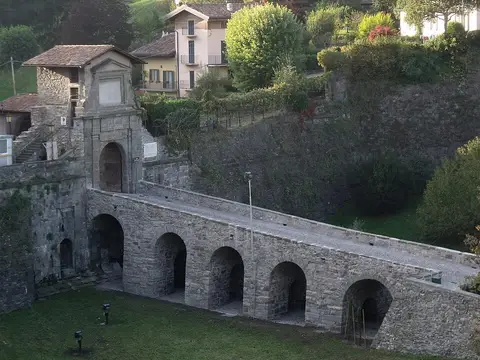 Historic sites01
Porta San Lorenzo
Via alla Porta di S. Lorenzo, 27 · Bergamo○ Website○ Phone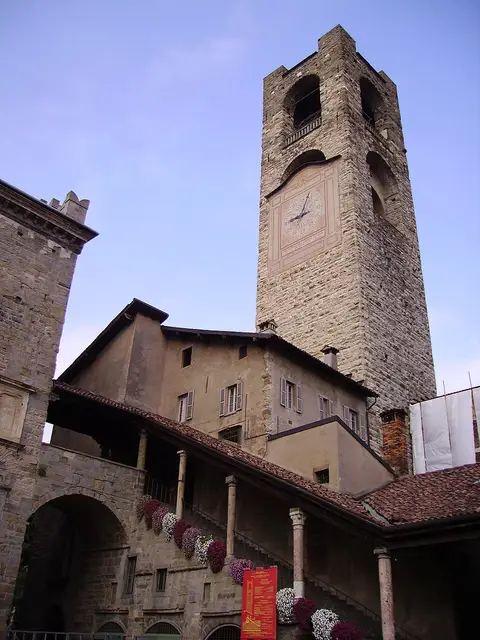 Historic sites02
Campanone
Piazza Vecchia, 8A · Bergamo● Website● Phone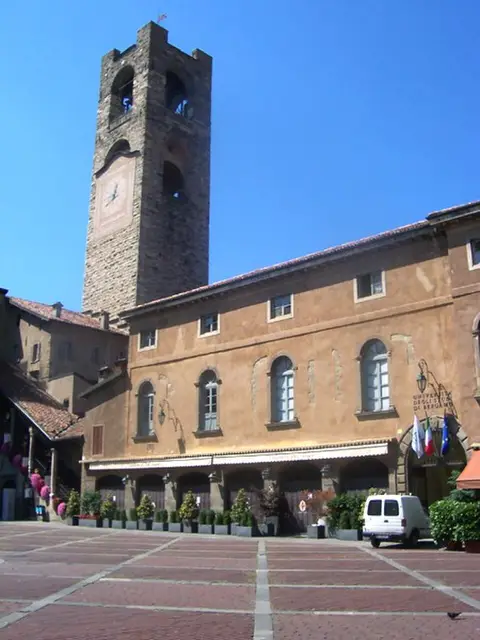 Historic sites03
Palazzo del Podesta
Piazza Vecchia, 7 · Bergamo● Website● Phone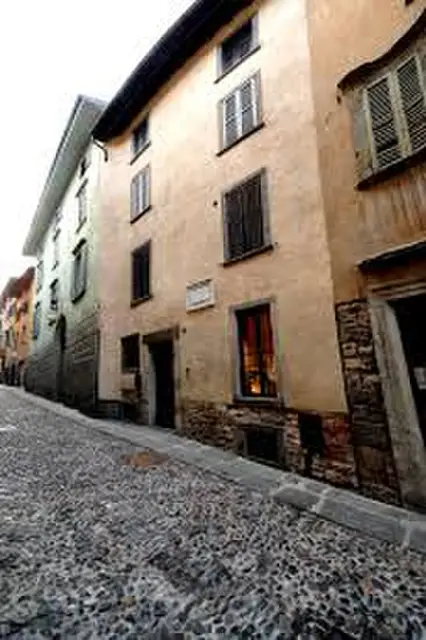 Historic sites04
You need a free account to leave reviews and photos – that keeps comments genuine and lets you edit them later.
It was built between 1783 and 1791 in neoclassical style — a typical example of bourgeois palace of the late 18th century.
Source: Wikivoyage, „Bergamo“ · authors per page history · CC BY-SA 4.0 · as of 4/28/2026