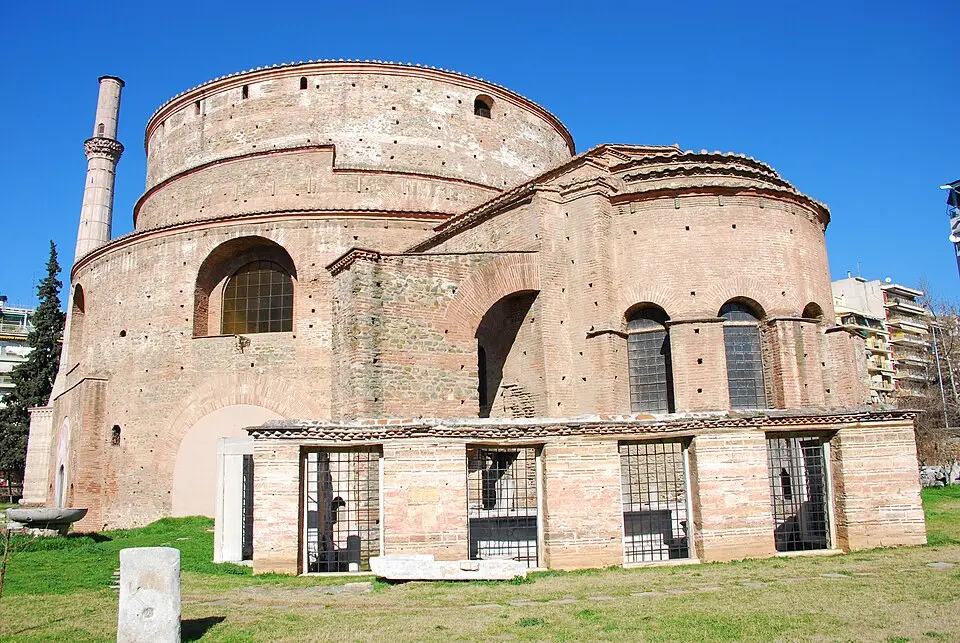
About Rotonda Thessaloniki
The Rotunda of Galerius in Thessaloniki is an imposing domed structure from late antiquity that originally served as a cult site or mausoleum for the Tetrarch Galerius. The round building stands in the east of the city center, near the ancient Via Egnatia, and is striking for its massive brick dome, which was the largest of its kind in the world when it was built in AD 306. The thick walls are pierced by windows, while the interior was once clad in marble. Over the centuries, the building's use changed several times: it was first converted into a Christian church, then into a mosque during the Ottoman period, before returning to church use after the Greek conquest of the city and finally being turned into a museum. A particular highlight for visitors is the surviving wall mosaics, which are among the oldest Christian mosaics in the East. Set against a gold background, they depict scenes with martyrs, apostles, and angels, framed by lively painted architecture. Today the building houses the Macedonian Museum, although a consecrated altar still stands in the eastern apse.
At a glance
- Category
- Museum › History museums
- Rating
- no reviews yet · write a review
- Address
- —
Thessaloniki, Greece - District
- Kamara
- Phone
- —
- Website
- —
- —
- Coordinates
- 40.63331° N · 22.95277° E
- Data quality
- confidence 0.85
- Identifier
- ID 60acb9ac-808…
Location & surroundings
Toggle layersRatings & comments
none yetNear Rotonda Thessaloniki
closest 5 per category · 2 kmSights
Museums
Hotels
More:All museums in Thessaloniki (68)
249 places within 2 km loaded.
Don't miss in Thessaloniki
All sights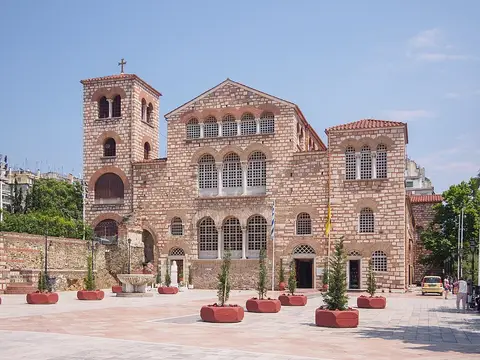 Monuments01
Paleochristian and Byzantine monuments of Thessaloniki
No address · Thessaloniki○ Website○ Phone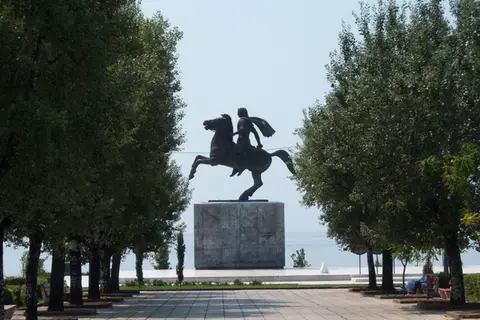 Monuments02
Alexander the Great Statue
Μέγας Αλέξανδρος · Thessaloniki○ Website○ Phone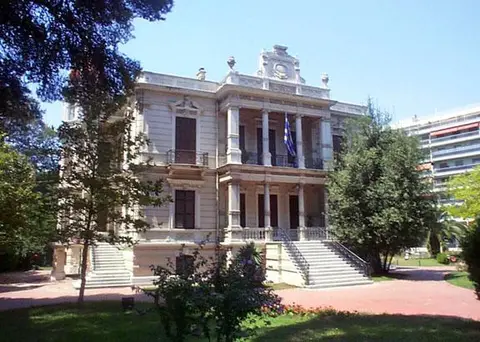 Historic sites03
Villa Mordoch
Leof. Vasilissis Olgas 162 · Thessaloniki○ Website● Phone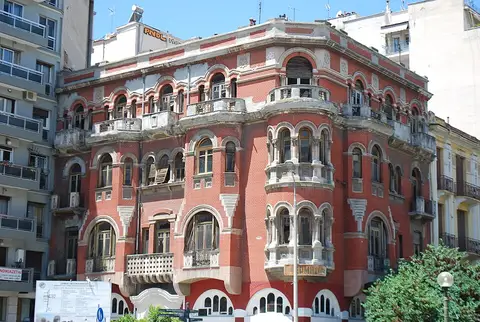 Historic sites04
You need a free account to leave reviews and photos – that keeps comments genuine and lets you edit them later.
Started life as a Roman temple of Zeus, built by Caesar Galerius, and is almost as old as the Pantheon in Rome. The monument has a diameter of 24.5 m and its dome reaches a height of 30 m. It was converted into a Christian church during the Early Christian era, and its interior was decorated with magnificent mosaics. However some inside frescoes are a work of the British artist Alexander Rossi (1840-1916). In 1591 the Rotunda was converted into a mosque, and a tall minaret still stands beside the monument. Frequent earthquakes from the early 7ᵗʰ century until 1978 caused several damage. The latter caused the destruction of the dome section. After being restored, the monument reopened to the public in 1998.
Source: Wikivoyage, „Thessaloniki“ · authors per page history · CC BY-SA 4.0