Western Macedonia: Kastoria, the Prespa Lakes, and Mountain Villages
Travel guide · editorialWestern Macedonia is the only Greek region without a sea coast – but it makes up for it with lakes, bear forests, and stone mountain villages. A vacation in Western Macedonia is made for explorers: Kastoria with its Byzantine churches on the lake, the Prespa Lakes where three countries meet, and the mansions of wealthy merchants in Siatista.
Landscape and Location
The region sits on a high plateau between the Pindus and Vermio mountains, crossed by the Aliakmon River, which is dammed in the Polyfytos Reservoir near Kozani. It borders Albania to the west and North Macedonia to the north. The Prespa Lakes, which the three countries share, lie at about 850 meters (2,790 feet) and are a breeding ground for Dalmatian and great white pelicans. Winters are cold and snowy, summers pleasantly mild. Around Ptolemaida, lignite open-pit mines and power plants dominate the landscape, and they are being shut down as part of the energy transition. In the west, the rugged border mountains of Grammos and Vitsi rise up, where the Greek Civil War ended in 1949.
Sights in Western Macedonia
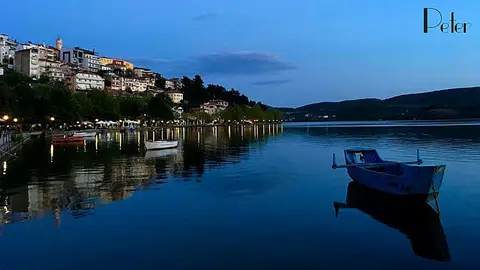
Kastoria sits on a peninsula in Lake Orestiada and has more than 50 Byzantine and post-Byzantine churches, many with frescoes. The Doltso and Apozari neighborhoods, with mansions built by fur merchants, bear witness to the wealth the city's furrier trade brought; Kastoria is still a center of the fur trade today. On the Prespa Lakes you'll find the island of Agios Achillios with the ruins of a basilica, reached by a floating walkway, and hermitages cling to the cliffs of Great Prespa Lake. Florina, a small town on the Sakoulevas River, is the starting point for the mountain village of Nymfaio, whose stone houses and the Arcturos bear sanctuary draw visitors. Siatista is known for its magnificent 18th-century merchants' houses, Kozani for its library and bell tower, and in nearby Aiani a museum displays finds from a Macedonian kingdom. Kastoria also offers a Byzantine Museum, boat trips on the lake, and the Dragon Cave with underground lakes on the shore. Siatista and Kozani carry on the legacy of merchants who did business as far away as Vienna in the 17th and 18th centuries. Florina served several times as a film backdrop for the director Theo Angelopoulos.
Food and Drink
In Krokos near Kozani, the red Krokos Kozanis saffron is grown, one of the finest in the world. Florina is famous for its sweet red peppers, Prespa for large white giant beans, gigantes. Wines made from the Xinomavro grape come from the Amyndeo area, including a rosé sparkling wine. In winter, bean stews, pies, and sausage keep you warm. At carnival time, the fanoi, big bonfires, blaze in Kozani, with singing and dancing around them.
Getting There and Best Time to Visit
The Egnatia Odos highway runs through the region, and Thessaloniki is about two hours away by car. Buses connect the towns with one another. The best time for hiking and bird-watching is May through October; in winter, ski areas such as Vigla near Pisoderi and Christmas customs such as the fire festivals in Florina are the draw. Buses run to Thessaloniki and Athens, but a car is essential for the Prespa Lakes and mountain villages. Bird-watchers come in spring, and in fall the beech forests change color.