Southern Aegean: The Cyclades and the Dodecanese
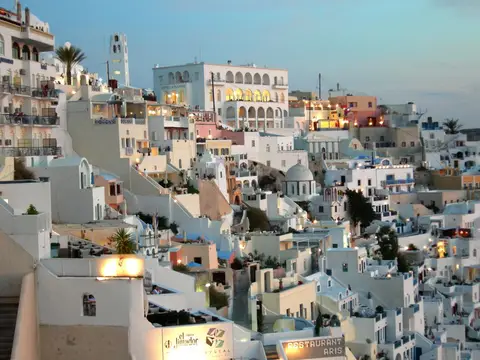
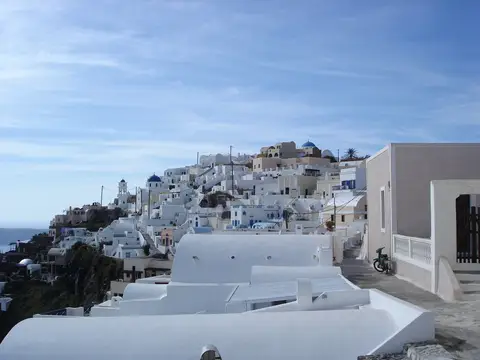
Travel guide · editorialWhite cube-shaped houses, blue domes, and windmills above the sea: the Southern Aegean delivers the images many people associate with Greece. A vacation in the Southern Aegean means island hopping between the Cyclades and the Dodecanese, from Santorini's crater landscape to the knights' city of Rhodes. The region, called Notio Egeo in Greek, comprises almost 80 inhabited islands and countless uninhabited ones.
Two Island Worlds in the Sea
The Cyclades are arranged in a circle around the sacred island of Delos, which is how they got their name. They are barren and rocky and shaped by the meltemi, the strong northerly wind of summer. They include Mykonos, Naxos, Paros, Santorini, Milos, and quiet Syros, home to the administrative seat of Ermoupoli. The Dodecanese stretch south along the Turkish coast and are greener and, historically, more strongly influenced by the Byzantines, the Knights of St. John, the Ottomans, and the Italians; they include Rhodes, Kos, Patmos, Karpathos, and Symi. The climate is dry, with hot summers and mild winters. Between the two groups lie smaller island chains such as the Small Cyclades around Koufonisia, with turquoise bays, and in the far east the Dodecanese reach almost to the Turkish coast with Kastellorizo.
Sights in the Southern Aegean
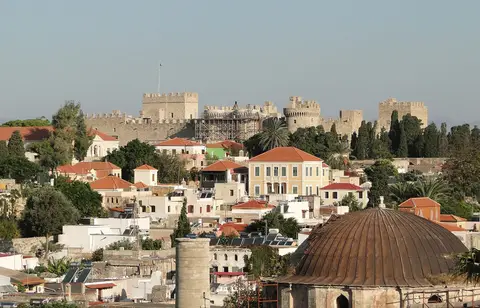
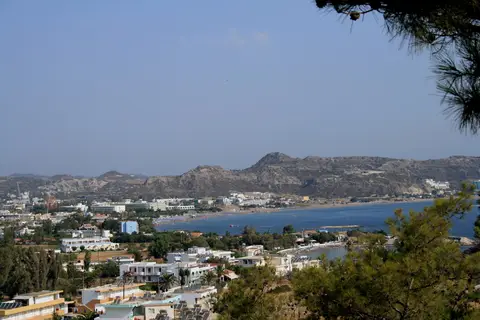
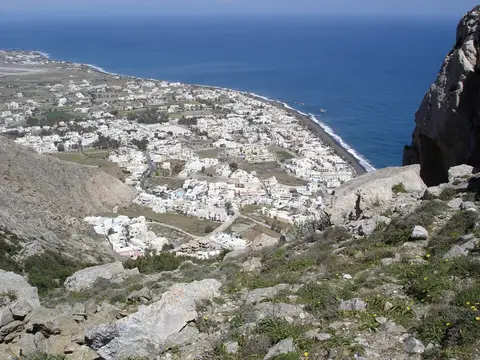
The Old Town of Rhodes is one of the best-preserved medieval cities in Europe: behind massive walls lie the Palace of the Grand Master and the Street of the Knights from the days of the Order of St. John, a UNESCO World Heritage Site. On the island's east coast, the Acropolis of Lindos towers above a bay, not far from the beach resort of Faliraki. On Santorini, the towns of Fira and Oia cling to the rim of the caldera, which was torn open by a volcanic eruption around 1600 BC; at Akrotiri, a Bronze Age town was uncovered beneath the ash. Delos, just a short boat ride from Mykonos, is one vast archaeological site with the famous Terrace of the Lions. Kos honors Hippocrates with the Asklepieion, and Patmos has the Monastery of St. John, where tradition holds that the Book of Revelation was written. On Naxos, the unfinished kouros of Apollonas still lies in the ancient marble quarry, and on Tinos the faithful make pilgrimages to the Church of Panagia Evangelistria, some on their knees from the harbor to the altar.
The Islands and Their Towns
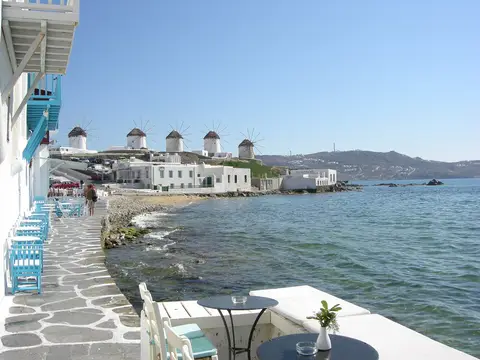
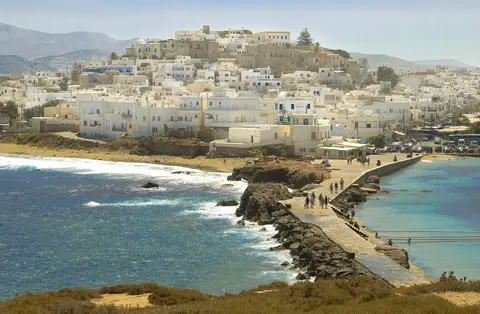
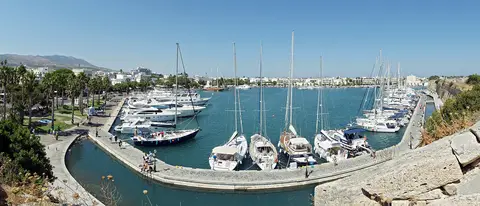
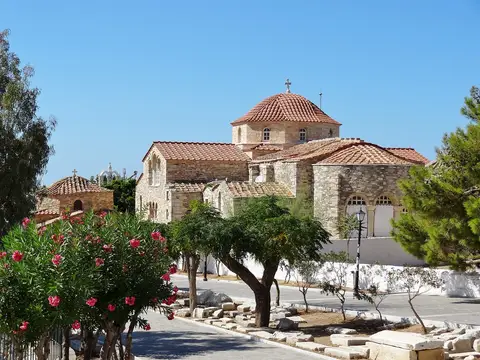
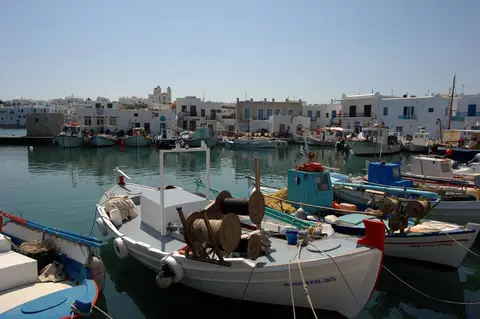
Mykonos is famous for its beaches, nightlife, and the maze of alleys in Chora with the Little Venice quarter. Naxos, the largest of the Cyclades, offers long sandy beaches, mountain villages, and the marble Portara gate above the harbor. On Paros, Parikia is home to the Church of Panagia Ekatontapyliani, and the pretty harbor town of Naousa has fishing boats and tavernas. Milos entices with bizarre rocky bays such as Sarakiniko, Sifnos with its pottery and cuisine, and Amorgos with the Chozoviotissa Monastery built into a sheer cliff face. In the Dodecanese, Symi with its neoclassical captains' houses and the unspoiled island of Karpathos are popular Southern Aegean destinations away from the crowds. Syros with Ermoupoli surprises with neoclassical villas, a town hall by Ernst Ziller, and the Catholic hilltop village of Ano Syros. Folegandros and Sikinos preserve the quiet Cycladic way of life, with Chora villages perched above steep coastlines; Kos offers long sandy beaches and bike paths, and on Rhodes, besides Faliraki, you'll find the Valley of the Butterflies and mountain villages on Mount Attavyros.
Food and Drink
Island cuisine is simple and full of flavor. On Santorini, cherry tomatoes, white eggplants, and fava made from yellow split peas grow in volcanic soil, and the Assyrtiko vines are wound into baskets to protect them from the wind. Naxos is known for graviera cheese and potatoes, Mykonos for kopanisti, a sharp fresh cheese, and Sifnos for chickpea stew cooked in a clay pot. In the harbors you'll find grilled octopus, barbouni, and ouzo, and on Rhodes pitaroudia, chickpea fritters. On Nisyros people drink soumada, an almond syrup, and Santorini's Vinsanto is a sweet dessert wine made from sun-dried grapes.
Getting There, Island Hopping, and Best Time to Visit
Rhodes, Kos, Santorini, Mykonos, and other islands have airports with direct flights from Germany in summer. Ferries and high-speed boats connect the islands with one another and with Piraeus, Rafina, and Lavrio. The best time to visit for hiking and culture is May to June and September to October, when it is warm but not too hot. In July and August the meltemi is at its strongest, the ferries are packed, and prices are high; many accommodations close from November to March. If you're planning to island hop, it's best to combine neighboring islands such as Naxos, Paros, and Santorini and to book early in high season.