The Peloponnese: Mycenae, Nafplio, and the Mani
Travel guide · editorialThe Peloponnese is home to more world-class ancient sites than almost any other region of Greece, along with fortress towns, rugged peninsulas, and olive groves stretching to the horizon. A vacation on the Peloponnese is a road trip through myth and history – from the walls of Mycenae to the tower houses of the Mani. The administrative region comprises Corinthia, Argolis, Arcadia, Laconia, and Messenia.
Landscape and Location
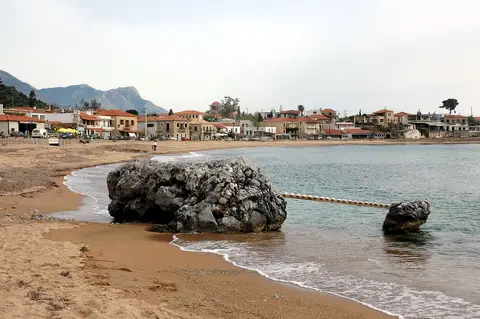
The Peloponnese is connected to the mainland only by the narrow Isthmus of Corinth, which has been cut by the Corinth Canal since 1893. The interior is mountainous: Arcadia with its high plateaus and villages around Tripoli, and in the south the Taygetos Mountains, which rise to almost 2,400 meters between Sparta and Kalamata. The coasts offer long sandy beaches in Messenia and rocky coves in Laconia. Three fingers of land reach south into the sea: the Messenian peninsula with Pylos, Methoni, and Koroni; in the middle the barren Mani with its tower villages; and in the east the Malea peninsula with Monemvasia and the island of Elafonisos. In spring, the hillsides are covered with flowers.
Sights on the Peloponnese
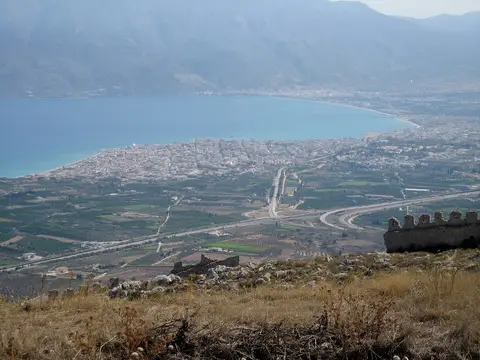
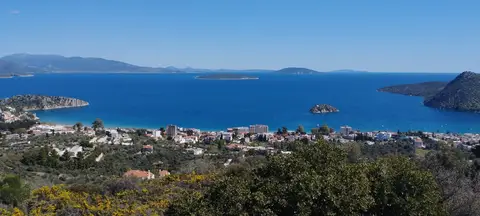
Mycenae, the citadel of the legendary Agamemnon, welcomes you with the Lion Gate and its beehive tombs. Nearby Epidaurus has the best-preserved theater of antiquity, whose acoustics still amaze visitors today; performances are held there in summer. Nafplio, the first capital of modern Greece, is one of the country's most beautiful towns, with the Palamidi fortress, the Bourtzi water castle, and Venetian lanes; the seaside resort of Tolo is close by. Near Sparta, the Byzantine ruined city of Mystras sits enthroned on a mountainside, and on the east coast the rock town of Monemvasia clings to an island rock. Corinth offers the Temple of Apollo and the fortress of Acrocorinth, while Loutraki has a thermal spa and casino. In the Outer Mani near Stoupa and Kardamyli, hiking trails begin, and farther south the Diros Caves hide an underground lake. In Messenia, the Venetian fortresses of Methoni and Koroni stand guard over the sea, Navarino Bay near Pylos was the site of a decisive naval battle in 1827, and Voidokilia beach is considered one of the most beautiful in Greece. In inner Arcadia, villages such as Dimitsana and Stemnitsa cling to the slopes of the Lousios Gorge, with monasteries built into the rock walls. Kalamata has a railway park with vintage locomotives.
Food and Drink
Messenia is the home of the Kalamata olive, and the region's olive oil is among the best in the world. Oranges come from Argolis, and robust red wines made from the Agiorgitiko grape come from Nemea. Typical dishes include lalangia, fried strips of dough; siglino, smoked pork from the Mani; and gogges, small pasta with cheese. In Sparta, a museum tells the story of the olive tree and olive oil.
Getting There and Best Time to Visit
From Athens, you can reach Corinth in a little over an hour via the highway; from there, it's best to continue by rental car. Kalamata has an airport with summer flights from central Europe. The best time to visit is spring, when everything is in bloom, and fall; in high summer it gets very hot at the archaeological sites. The roads are well maintained, but you'll need to allow plenty of time for the winding mountain routes in the Mani and in Arcadia.