Crete: Minoan Palaces, Gorges, and Beaches
Travel guide · editorialCrete is more a miniature continent than an island: more than 250 kilometers long, with peaks above 2,400 meters, deep gorges, palm-fringed beaches, and a culture of its own that Cretans are fiercely proud of. A vacation in Crete means Minoan palaces, Venetian harbors, mountain villages with their kafenia, and beach days at some of the most beautiful shores in the Mediterranean.
Landscape from the Mountains to the Libyan Sea
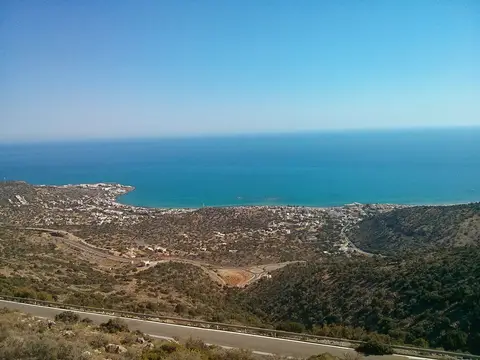
Three great mountain ranges shape the island: the Lefka Ori, or White Mountains, in the west, the Ida range with Mount Psiloritis in the center, and the Dikti massif with the Lassithi Plateau in the east. The north coast is gentler and more densely populated, while the south coast drops steeply into the Libyan Sea and in many stretches can be reached only by boat or on foot. Hundreds of villages lie among olive groves and vineyards, and in spring wild orchids and herbs bloom. In the west, the Gramvousa and Rodopou peninsulas jut out into the sea, and in the south lies the Bay of Matala, with rock caves where hippies lived in the 1960s.
Sights in Crete
Knossos near Heraklion was the center of Minoan culture, Europe's first advanced civilization. The partially reconstructed palace with its red columns and frescoes is linked to the myth of the Minotaur; the originals are in the Heraklion Archaeological Museum, one of the most important in Greece. Other palaces are found at Phaistos and Malia. The Samaria Gorge in the White Mountains is about 16 kilometers long and one of the best-known hikes in Europe, open from May to October. The Balos lagoon and the pink sand beaches of Elafonissi in the west, the palm grove of Vai in the east, and Arkadi Monastery, a symbol of the Cretan struggle for freedom, are among the most popular destinations in Crete. Off the coast of Elounda lies Spinalonga, a former leper island. Besides Samaria, the shorter Imbros Gorge and the Agia Irini Gorge are well worth a visit. The Idaean Cave on Psiloritis is considered the birthplace of Zeus, and the Dictaean Cave above Lassithi his hideout.
Cities and Beach Resorts
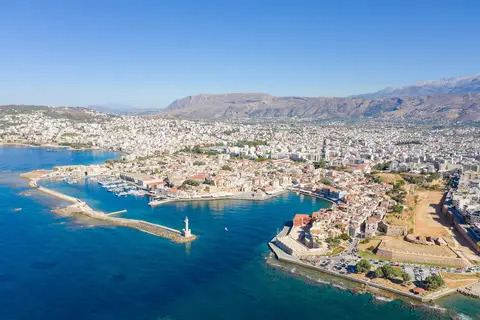
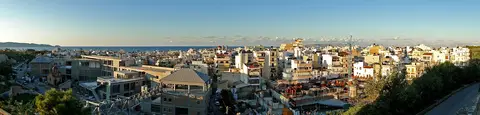
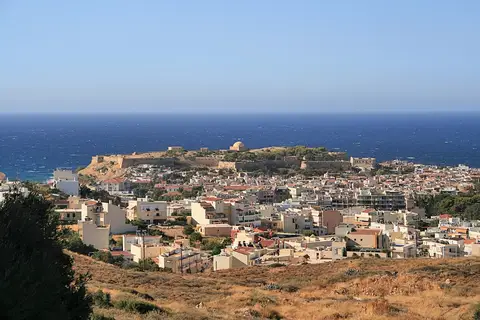
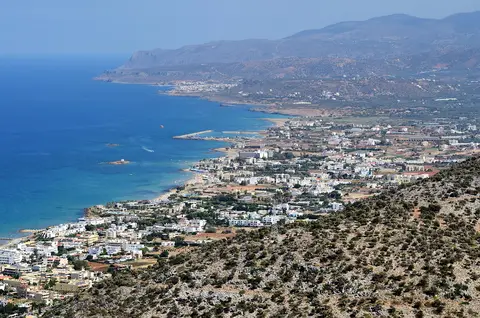
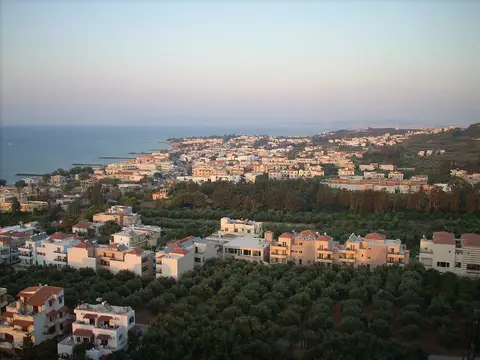
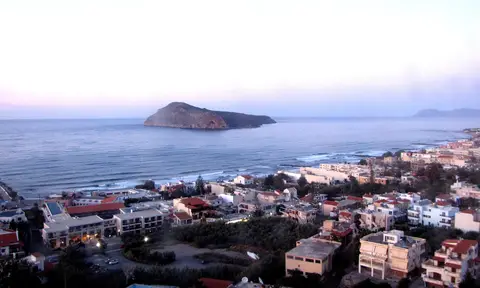
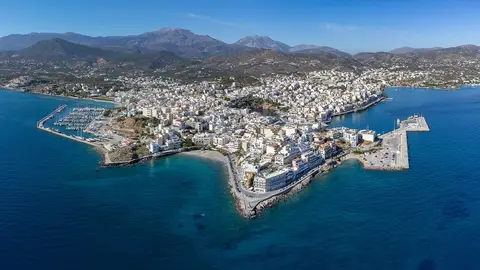
Many consider Chania the most beautiful town on the island: the Venetian harbor with its lighthouse, the Mosque of the Janissaries, and lanes full of workshops create a special atmosphere. To the west, beach resorts such as Platanias and neighborhoods such as Daratsos line the coast. Rethymno has a Venetian fortress, the Fortezza, and an old town with Ottoman wooden balconies. Heraklion, the lively capital, has its Venetian city walls and the Morosini Fountain. To the east lie the resort centers of Limenas Chersonisou, Stalida, and Malia, with long sandy beaches and plenty of nightlife. From Sfakia on the south coast, boats run to car-free villages such as Loutro, and Ierapetra in the southeast is considered the southernmost town in Europe.
Food and Drink
Cretan cuisine is considered the original form of the Mediterranean diet. Olive oil is used generously, along with wild greens such as stamnagathi, dakos (barley rusk topped with tomato and mizithra cheese), and snails in rosemary. Lamb and goat are slow-braised or cooked outdoors, and kalitsounia are small cheese pastries. A meal almost always ends with raki, called tsikoudia in Crete. Cretan wines from grape varieties such as Vidiano and Liatiko are becoming better known. Markets sell thyme honey, herbal teas such as diktamo and malotira, and graviera cheese.
Culture and History
After the Minoans, the Romans, Byzantines, Venetians, and Ottomans ruled the island; Crete did not become part of Greece until 1913. Resistance to the German occupation in World War II is still very much alive in many villages. Lyra music, mantinades verses, and the paniyiria, church festivals with dancing until the early morning hours, are living traditions. Every November, Arkadi commemorates the uprising of 1866, when the monastery's defenders chose to blow themselves up rather than surrender.
Getting There and Best Time to Visit
Heraklion and Chania have international airports with numerous direct flights, and overnight ferries connect both cities with Piraeus. A rental car is recommended for excursions; intercity buses link the larger towns. The best time for hikers is spring, from April to June, and for beach vacations June to October; fall offers warm water and fewer visitors. The north coast road is heavily traveled, while winding mountain roads lead off it to the villages.