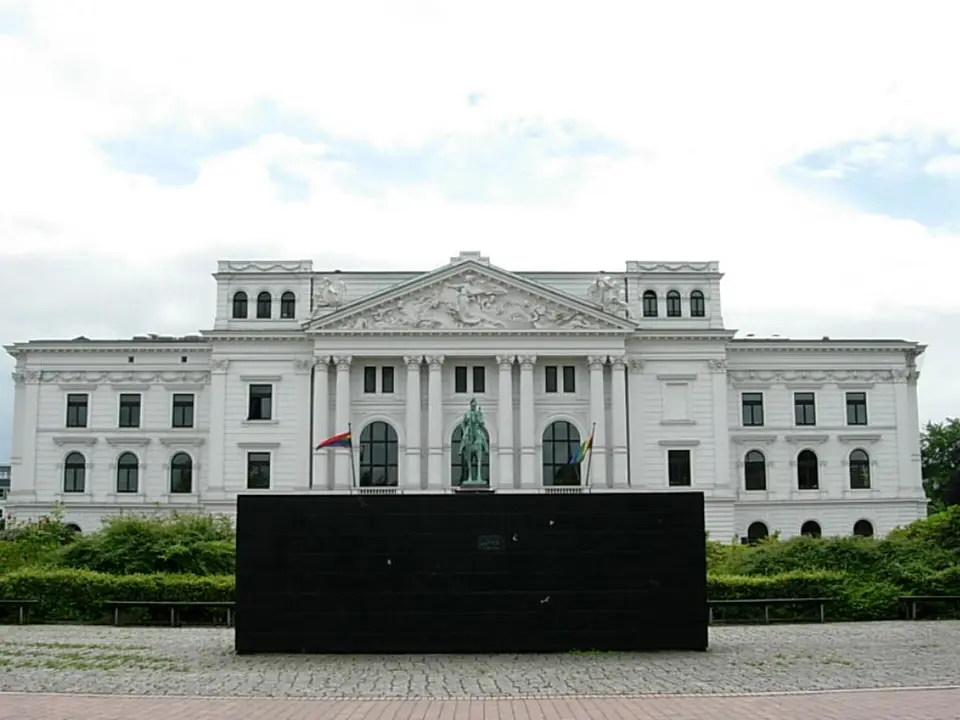
About Altonaer Museum
The Altona Museum is a major cultural institution in the western part of Hamburg, deeply rooted in the history of the former city of Altona. The name Altona itself probably derives from the old designation "Altena," which was first documented in 1537 in connection with a fishermen's inn. Under the patronage of the Counts of Holstein-Pinneberg, the settlement grew into an important center of trade and craftsmanship, known for its religious tolerance and economic freedom. This historical character as an "open city," symbolized in the coat of arms by an open city gate, is also reflected in the museum's focus, which documents the cultural and social development of the region.
The museum's history begins in 1863, when a private society founded a collection on the Palmaille. The city took over the initiative in 1888, paving the way for a public institution. The real breakthrough came in 1901, when the museum opened in a new building in what was then Altona's new city center. At that time, Altona was an independent city with a strong identity of its own, distinct from the neighboring Hanseatic city of Hamburg. The museum was conceived as a regional history collection to preserve and present Altona's specific history and culture.
The museum's location is closely tied to Altona's urban development. In the late 19th century, the city center shifted westward, away from the Elbe and the old core around the fish market. One reason was that the old train station was replaced in 1895 by a new, larger station built about 500 meters north of the old building. The old reception building of the first station now houses Altona City Hall. In this new urban center, between City Hall, the museum, and the new station, a grand square emerged that is now known as Platz der Republik.
A central landmark right next to the museum is the Stuhlmann Fountain, dedicated in 1900. This monumental sculpture shows two centaurs wrestling over a giant fish. The scene is an allegory of the historical rivalry and competition between the neighboring cities of Altona and Hamburg. A few steps from the fountain stands the neo-Gothic St. Petri Church, designed by the architect Johannes Otzen. These architectural and artistic elements shape the museum's surroundings and invite you to explore the historic fabric of the district.
The Altona Museum's collection reflects the diverse history of the district. In the 17th and 18th centuries, Altona was a center of the Enlightenment and an important hub for the press, a development favored by the tolerance of the Danish authorities. Many people who were not tolerated in Hamburg lived and worked here, including Huguenots, Mennonites, and Jews. This cultural diversity and the history of tolerance are important themes the museum takes up. The city was also an important port and industrial center, particularly for fish processing, which likewise plays a role in the presentation of regional history.
At the museum, you can gain insight into Altona's development from a small fishing and craftsmen's settlement into a major city. The exhibition sheds light on its economic heyday, shaped by its status as the first free port in Northern Europe and by freedom from customs duties. At the same time, it addresses difficult times, such as the Swedish fire of 1713, which destroyed a large part of the city, and the destruction of World War II, which hit Altona's historic core hard. The museum also documents the reconstruction and the urban changes of the postwar period, which gave the district a new look.
The historical context is defined by close ties to Denmark and the Holy Roman Empire. Altona was under Danish administration for a long time, which left its mark on the architecture, the laws, and the culture. The granting of city rights by King Frederick III in 1664 was a milestone in the city's history. The religious freedom that Altona granted early on also contributed to its reputation as a liberal city. The museum conveys these aspects through historical documents, artifacts, and multimedia presentations that bring life in Altona in different eras to life.
The area around the museum offers further attractions. The Altona Fish Market, one of Hamburg's best-known squares, is nearby and is a place where past and present meet. The restored Fish Auction Hall, an example of 19th-century industrial architecture, is now a cultural center. The Elbe slope, known as the "Altona Balcony," also offers wide views over the harbor and is a popular spot for walks. The Elbe riverside trail, which begins here, follows the Elbe and connects the historic old town with the green suburbs to the west.
The Altona Museum is thus not only a place for sharing knowledge but also part of the urban fabric that shapes the identity of the district. It recalls the time when Altona was an independent city that saw itself as "Hamburg's beautiful sister." Incorporation into Hamburg in 1938 under the Greater Hamburg Act ended its political independence, but the cultural heritage and the local sense of identity endured. The museum helps preserve this heritage and secure it for the future.
For travelers and locals alike, a visit to the Altona Museum is a chance to look at Hamburg's complex history from a different perspective. It shows how various influences, from the Danish crown to Prussian administration to modern urban planning, have shaped the face of Altona. The collection invites you to discover local peculiarities and to understand the close connection between the history of the place and the lives of its residents. In this way, the museum helps keep the historical memory of the Altona district alive and makes it accessible to the public.
At a glance
- Category
- Museum › History museums
- Rating
- no reviews yet · write a review
- Address
- Museumstraße 23
22765 Hamburg, Germany - District
- Ottensen
- Phone
- +49404281350
- Website
- www.altonaermuseum.de
- info@am.shmh.de
- Coordinates
- 53.54923° N · 9.93470° E
- Data quality
- confidence 1.00
- Identifier
- ID 07043156-91e…
Location & surroundings
Toggle layersRatings & comments
none yetNear Altonaer Museum
closest 5 per category · 2 kmSights
Restaurants
Museums
Hotels
More:History museums in Hamburg (24)All museums in Hamburg (149)
205 places within 2 km loaded.
You need a free account to leave reviews and photos – that keeps comments genuine and lets you edit them later.
Dedicated to Altona's, Hamburg's and northern Germany's cultural history.
Source: Wikivoyage, „Hamburg/Altona-St. Pauli“ · authors per page history · CC BY-SA 4.0 · as of 3/1/2015