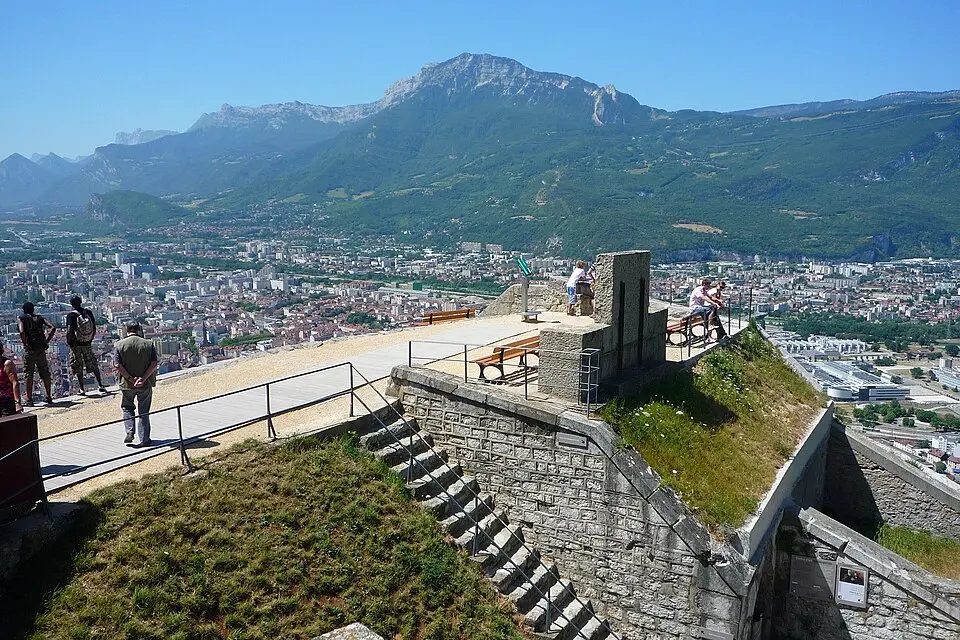
About Fort de la Bastille
The Bastille Fortress in Grenoble is an imposing 19th-century military complex perched on a ledge of rock at Mont Rachais, shaped by the ice ages. It lies north of the city on the border with Saint-Martin-le-Vinoux and offers sweeping views over the valleys of the Isère and the Drac. The site was chosen for strategic reasons, to keep watch over the city and the surrounding area. The present structure came about through the modernization of older defenses dating back to the 15th century. The fortress originally served to protect Grenoble against attacks from the direction of the Chartreuse and later from Savoy. After the end of the Napoleonic Wars, with the border of the Kingdom of Sardinia drawing closer, King Louis XVIII had the outdated structures comprehensively modernized under General Haxo. Construction began in 1824 and was completed in 1847, producing the rectangular main building, the fort, as well as Fort Rabot.
Today you can explore the complex in a variety of ways. Access is via a winding road or a footpath that opened in 1973. The ensemble has been protected as a historic monument since 1989. Inside the casemates, the fortress has housed the Centre d'art Bastille, a center for contemporary art, since 2006, and the Museum of the Mountain Troops since 2009. A particular attraction is the underground passage linking the fortress with the Grottes de Mandrin, which are carved into the rock. These chambers once served as powder magazines and places of refuge. Since 2012, a zip line has connected the highest point of the fortress with the grottoes, making a visit a thrilling adventure. In addition, the Via Ferrata Les Prises de la Bastille invites active visitors to take on a challenging route that ends at a window of the fortress.
The area around the fortress offers further cultural and natural highlights. On neighboring Mont Jalla stands a memorial to the fallen Chasseurs alpins. At the foot of the mountain, near the Porte de France, lies the Jardin des Dauphins. This garden with a Mediterranean microclimate is home to subtropical plants such as monkey puzzle trees and olive trees. The grounds are accessed via tunnels and stairways and offer a peaceful contrast to the Bastille's military history. The fortress itself is a testament to 19th-century military architecture, blending harmoniously into the rocky landscape and camouflaged by vegetation.
At a glance
- Category
- Sight › Historic sites
- Rating
- no reviews yet · write a review
- Address
38000 Grenoble, France- District
- Secteur 2
- Phone
- +33476449183
- Website
- www.bastille-grenoble.fr
- info@bastille-grenoble.com
- Coordinates
- 45.19871° N · 5.72530° E
- Data quality
- confidence 0.98
- Identifier
- ID 73e87e2d-72a…
Location & surroundings
Toggle layersRatings & comments
none yetNear Fort de la Bastille
closest 5 per category · 2 kmSights
Restaurants
Museums
Hotels
More:Historic sites in Grenoble (28)Sights in Secteur 2 (20)All sights in Grenoble (33)
181 places within 2 km loaded.
Don't miss in Grenoble
All sights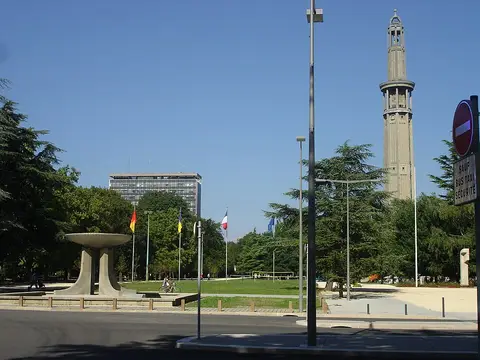 Monuments01
Tour Perret
Tour Perret, Parc Paul Mistral, 15 Bd Jean Pain · Grenoble● Website○ Phone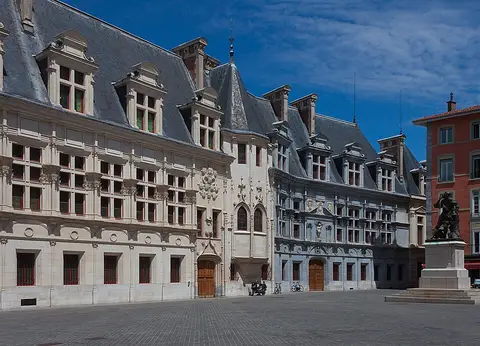 Historic sites02
Palais du Parlement du Dauphiné
4 Pl. Saint-André · Grenoble● Website● Phone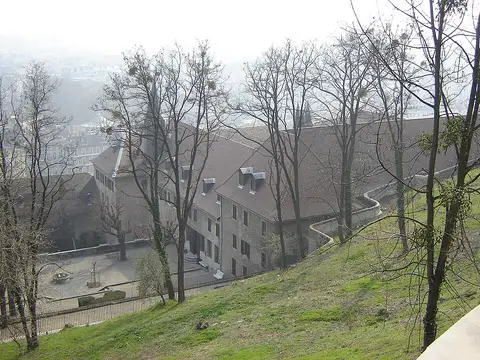 Monuments03
Sainte-Marie d'en-Haut
· Grenoble○ Website○ Phone Historic sites04
You need a free account to leave reviews and photos – that keeps comments genuine and lets you edit them later.