Gansu: Hexi Corridor, Dunhuang and the Rainbow Mountains
Travel guide · editorialGansu is narrow, long and dry – a strip of land more than 1,500 kilometers long between the Tibetan Plateau and the Mongolian desert. The Silk Road ran through this corridor, and a trip to Gansu follows its trail to cave temples, fortresses and colorful rock landscapes.
Sights in Gansu
The Mogao Caves near Dunhuang are among the greatest treasures of Buddhist art: nearly 500 caves preserve murals and sculptures spanning a thousand years. Visitor numbers are limited, so you should reserve tickets early. Right next to Dunhuang, the Singing Sand Dunes rise above Crescent Moon Lake, a small oasis with a pavilion. At Jiayuguan, a mighty Ming-dynasty fortress guards the western end of the Great Wall, with the snowy peaks of the Qilian Mountains towering to the south. Near Zhangye, the Rainbow Mountains of the Danxia Geopark glow in red, yellow and ochre, especially beautiful in the late afternoon. In the south of the province, near Xiahe, lies Labrang Monastery, one of the most important teaching monasteries of Tibetan Buddhism. The Maijishan Grottoes near Tianshui cling to a steep cliff. Near Dunhuang you will also find Yumenguan, the Jade Gate, where the Han-dynasty wall peters out in the desert.
Lanzhou and the Landscape
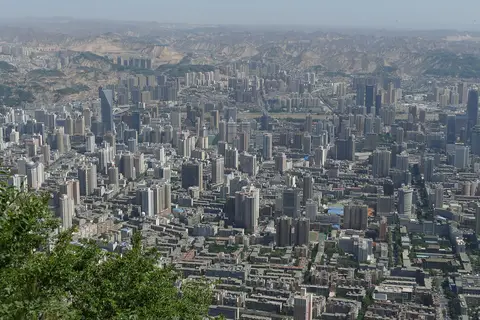
Lanzhou, the capital, sits in a narrow valley with the Yellow River flowing right through the middle of it. The Zhongshan Iron Bridge of 1909 was the first permanent bridge across the river, and giant wooden waterwheels turn along the banks. The Gansu Provincial Museum displays the famous bronze "Flying Horse," which became a symbol of Chinese tourism. West of the city, the Binglin Caves at Liujiaxia Reservoir offer an introduction to early Buddhist art.
Food, Getting There and Best Time to Visit
Lanzhou beef noodles are famous throughout China: hand-pulled noodles served in a clear broth with radish, chili oil and fresh cilantro. The cuisine of the Hui Muslims leaves its mark with lamb dishes, flatbread and Babao tea with dried fruit. A high-speed train runs from Lanzhou through the Hexi Corridor to Zhangye, Jiayuguan and on to Xinjiang, and Dunhuang has its own airport. The best time to visit is between May and October; in high summer it can get very hot in the desert. The Hexi Corridor works well as a multi-day round trip by train or by rental car with a driver; nights in the desert are cool even in summer.