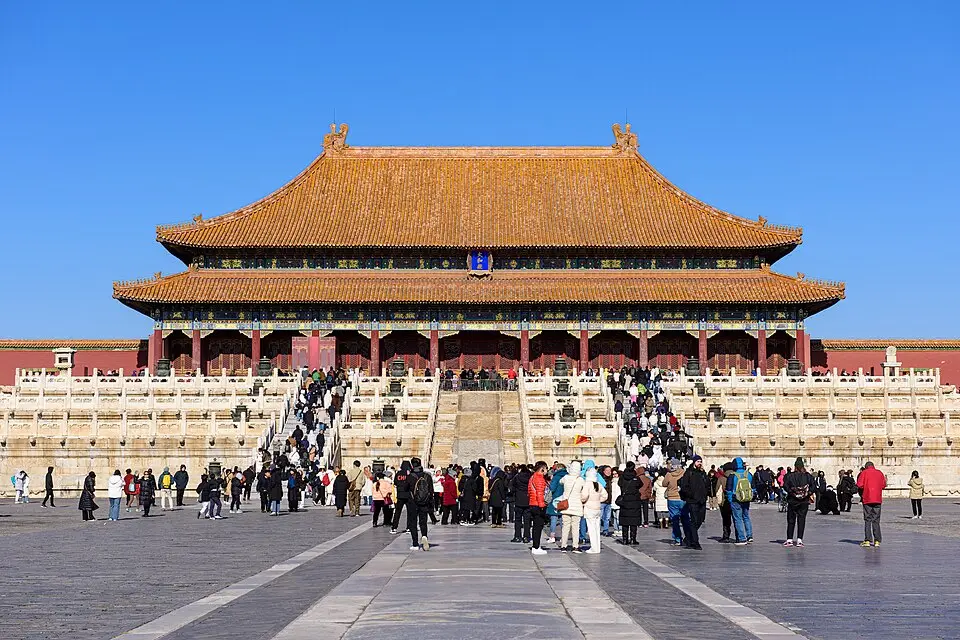
About Forbidden City
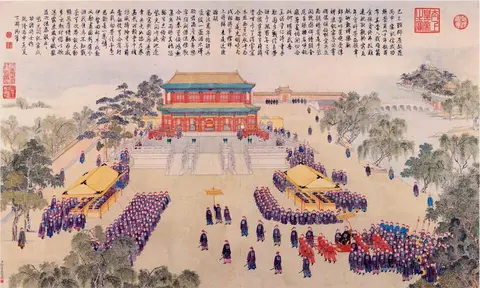
The Forbidden City in the heart of Beijing is one of the most impressive palace complexes in the world. Until the revolution of 1911, it served as the residence and seat of government of the Chinese emperors of the Ming and Qing dynasties. The name comes from the fact that ordinary people were strictly forbidden to enter. A masterpiece of Chinese architecture, the complex reflects the rulers' cosmic view of the world. It is laid out strictly along a north-south axis, in keeping with the principle of yin and yang, and forms the emperor's symbol of power at the center. The roofs of the main buildings are covered with yellow, partially gilded tiles, since yellow was the emperor's symbolic color. No other building in Beijing was allowed to rise above the complex in height. In 1987, UNESCO designated it a World Heritage Site.
Construction began in 1406 under the third Ming emperor, Yongle, and was completed in 1420. The immense effort, which reportedly employed up to a million laborers and more than 100,000 skilled craftsmen at times, made it possible to finish in such a short period. The layout has remained unchanged ever since. The history of the complex is marked by dynastic changes and conflicts. After the fall of the Ming dynasty in 1644, the Manchus set parts of the palace on fire before founding the Qing dynasty. In the 19th and early 20th centuries, the Forbidden City was occupied several times by foreign troops, including during the Boxer Rebellion. After the abdication of the last emperor, Puyi, in 1912, the imperial family left the complex for good in 1924, and the gates were opened to the public. During the Cultural Revolution, the palace was spared destruction thanks to protection by the People's Liberation Army.
Today the Forbidden City houses the Palace Museum in Beijing and is one of China's most popular tourist attractions. The entire complex covers 720,000 square meters with 890 palaces and more than 8,800 rooms. It is divided into an outer court and an inner court. The outer court in the south was the area for official affairs of state. Here you will find great halls such as the Hall of Central Harmony and the Hall of Preserving Harmony. The Gate of Supreme Harmony is guarded by bronze lions and leads to the Hall of Supreme Harmony, a 35-meter-high building where important ceremonies such as enthronements and the announcement of examination results took place. At the center of this hall stands the Dragon Throne, flanked by symbolic elephants.
The inner court in the north was the private realm of the imperial family and the court. The emperor, empress, concubines, and eunuchs lived here in palaces such as the Palace of Heavenly Purity and the Palace of Earthly Tranquility. To the north lies the Imperial Garden. The entire complex is surrounded by a ten-meter-high wall and a wide moat, with distinctive corner towers at its corners. Today you can explore the opulent interiors, the marble terraces, and the sweeping curved roofs. Extensive restoration work, which continued until the 2008 Olympic Games, has helped preserve the historic condition of the site. The museum's collection comprises around 1.5 million objects, including rare items from the Qianlong Emperor's private garden house, which were only rediscovered during the renovations.
At a glance
- Category
- Sight › Monuments
- Rating
- no reviews yet · write a review
- Address
- 4 Jingshan Front St, Dongcheng District
10000 Beijing, China - District
- Donghuamen Subdistrict
- Phone
- —
- Website
- —
- —
- Coordinates
- 39.91472° N · 116.39056° E
- Data quality
- confidence 0.71
- Identifier
- ID 3580e833-4a7…
Location & surroundings
Toggle layersFAQ about Forbidden City
quick answersWhat is the Forbidden City in Beijing?
The Forbidden City in the heart of Beijing is an imperial palace complex that served as the residence and seat of government for the emperors of the Ming and Qing dynasties until the 1911 revolution. Today it houses the Palace Museum and is one of China's most popular tourist attractions. The complex covers 720,000 square meters and includes 890 palaces and more than 8,800 rooms. In 1987, UNESCO designated the Forbidden City a World Heritage Site.
Why is the Forbidden City in Beijing called that?
The Forbidden City in Beijing got its name because ordinary people were strictly forbidden from entering. It was only after the imperial family left the complex for good in 1924 that the gates were opened to the public. The architecture also underscores the emperor's special status: the roofs of the main buildings are covered in yellow, partly gilded tiles, since yellow was his symbolic color, and no other building in Beijing was allowed to rise above the complex.
When was the Forbidden City in Beijing built?
Construction of the Forbidden City in Beijing began in 1406 under the third Ming emperor, Yongle, and was completed in 1420. At times, as many as a million laborers and more than 100,000 skilled craftsmen are said to have been employed, which made the short construction period possible. The layout has remained unchanged ever since. During the Cultural Revolution, the palace was spared destruction thanks to protection by the People's Liberation Army.
What can you see at the Forbidden City in Beijing?
At the Forbidden City in Beijing, you can explore the outer court with its halls of state affairs and the inner court with the residential palaces of the imperial family. In the south, the Gate of Supreme Harmony, guarded by bronze lions, leads to the 35-meter-high Hall of Supreme Harmony with the Dragon Throne; the Hall of Central Harmony and the Hall of Preserving Harmony are also located there. In the north, you'll find the Palace of Heavenly Purity, the Palace of Earthly Tranquility, and the Imperial Garden. The entire complex is surrounded by a ten-meter-high wall with distinctive corner towers and a wide moat.
Where is the Forbidden City in Beijing, and what is nearby?
The Forbidden City is in the center of Beijing at 4 Jingshan Front St in Dongcheng District, in the Donghuamen Subdistrict. travelguide195 lists about 4 restaurants within 500 meters. If you want to combine several highlights, the Forbidden City is part of the tour "Beijing Compact: Imperial Palace, Temple of Heaven, and an Evening at Qianmen."
Ratings & comments
none yetNear Forbidden City
closest 5 per category · 2 kmRestaurants
Hotels
Cocktail bars
More:Monuments in Beijing (25)Sights in Donghuamen Subdistrict (76)All sights in Beijing (438)
216 places within 2 km loaded.
You need a free account to leave reviews and photos – that keeps comments genuine and lets you edit them later.
Think of Beijing, and this might be the first thing that comes to your mind. China's former imperial palace with its 980 buildings is one of the largest museums in the country. Next to the southern gate towards the Tiananmen Square is the famous picture of Mao Zedong.
Source: Wikivoyage, „Monarchies“ · authors per page history · CC BY-SA 4.0 · as of 11/17/2017