Discover Bosnia and Herzegovina
Travel guide · editorialA vacation in Bosnia and Herzegovina takes you to a country where minarets, Catholic church steeples, and Orthodox domes often stand within sight of one another. Between Sarajevo and Mostar you'll find deep river valleys, forested mountains, and villages where coffee is still served in a small copper pot. The country is affordable, hospitable, and easy to reach from Croatia.
Sarajevo: Baščaršija and the Habsburg City
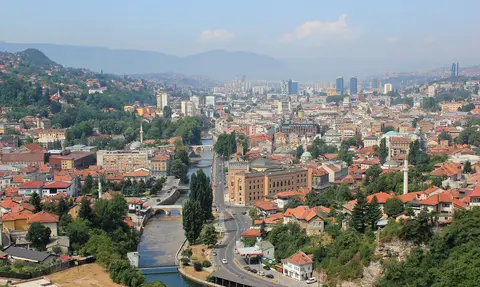
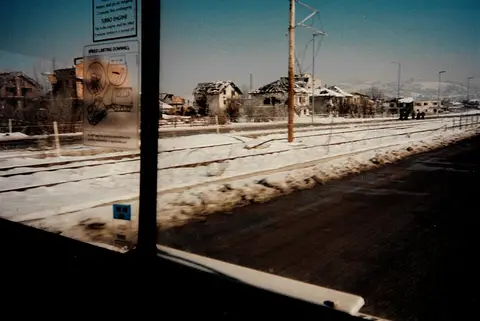
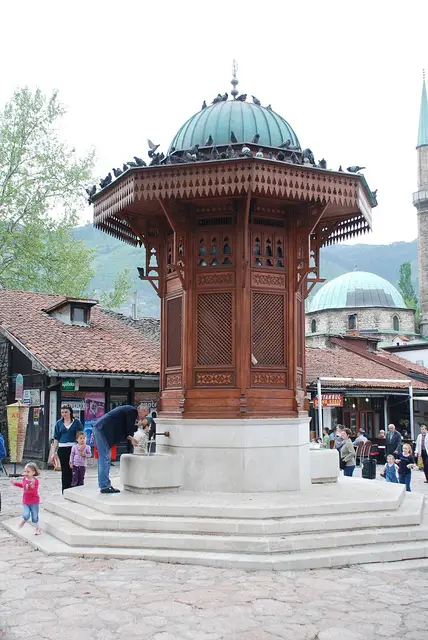
Sarajevo sits in a narrow basin on the Miljacka River, surrounded by mountains. On the east side of the city begins the Baščaršija, the Ottoman bazaar dating from the 15th and 16th centuries, with the wooden Sebilj fountain, coppersmiths on Kazandžiluk Lane, and the Gazi Husrev-beg Mosque. A few steps farther on, the cityscape changes abruptly to facades from the Austro-Hungarian era; a marker in the pavement shows the spot where East meets West. At the Latin Bridge, Austrian Archduke Franz Ferdinand was assassinated in 1914, an event that triggered World War I. Recent history is present everywhere: from 1992 to 1996, Sarajevo was under siege for almost four years. The shell impacts in the asphalt filled with red resin are known as the "Sarajevo Roses," the tunnel under the airport that kept the city supplied is now a museum, and the Gallery 11/07/95 commemorates the victims of Srebrenica. At the same time, Sarajevo is a young, lively city with cafés, pubs, and the Sarajevo Film Festival in August. The cable car up Mount Trebević leads to the decaying bobsled track from the 1984 Winter Olympics.
Mostar and Herzegovina
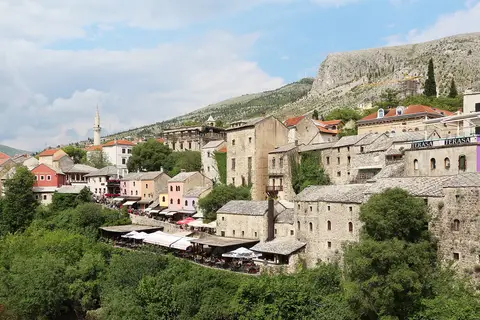
Mostar is the best-known of the sights in Bosnia and Herzegovina. The Old Bridge, Stari Most, was built across the Neretva by Ottoman architects in 1566, destroyed in the war in 1993, and rebuilt by 2004 using stones from the river and from the original quarries. Today, together with the old town, it is a UNESCO World Heritage Site. The bridge jumpers plunge from a height of a good 20 meters into the cold, green water as soon as enough tips have been collected; every summer there is a traditional competition. Nearby, in Blagaj, a dervish monastery stands right at the source of the Buna River, which gushes out from beneath a high rock face. Počitelj, a fortress village on the Neretva, and the Kravice Waterfalls, where you can swim in the pools in summer, lie on the way to the coast. Međugorje has been a Catholic pilgrimage site since the 1980s, drawing hundreds of thousands of pilgrims every year. Herzegovina is warm and arid, and winegrowing is a tradition here: the white Žilavka and the red Blatina thrive in the stony soil.
Bosnia Destinations in the North and West
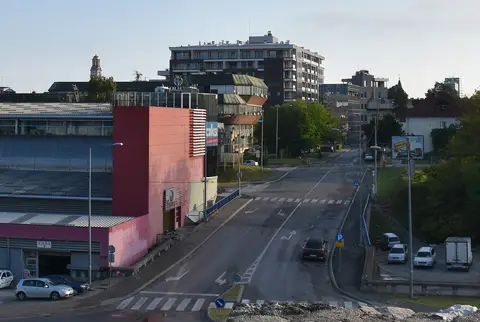
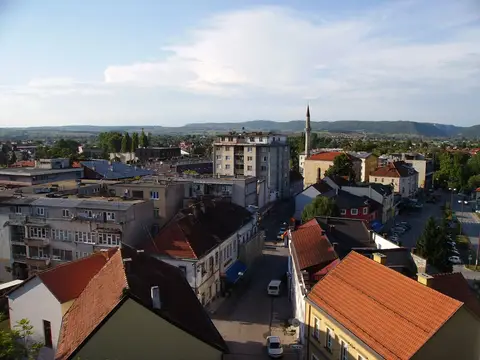
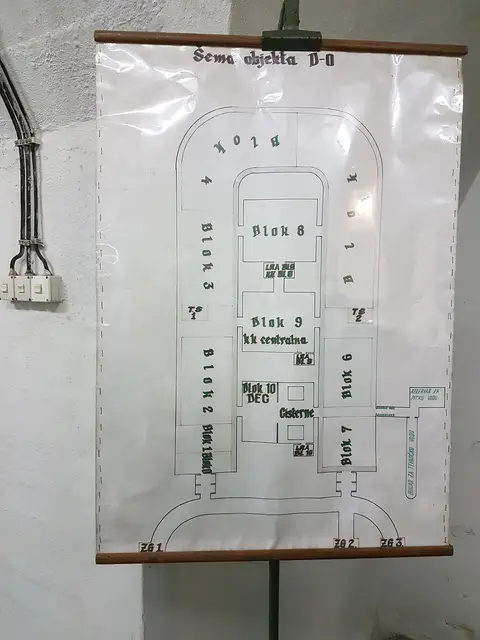
Banja Luka, the second-largest city, is the center of Republika Srpska, one of the country's two entities. The Ferhadija Mosque, blown up during the war, reopened in 2016; you can go rafting on the Vrbas, which flows through the city. Jajce is famous for the waterfall where the Pliva plunges into the Vrbas in the middle of town, and for the fortress of the Bosnian kings. In the far northwest near Bihać, Una National Park protects a river valley with cascades such as Štrbački Buk. Tuzla in the northeast has salt lakes in the middle of the city where you can swim in summer. In the east, in Višegrad, the Mehmed Paša Sokolović Bridge spans the Drina, immortalized by Ivo Andrić in his novel "The Bridge on the Drina." Konjic on the Neretva draws visitors with an old stone bridge and Tito's former nuclear bunker, which is now open for tours and art exhibitions.
Food and Drink
Ćevapi are the national dish: small grilled minced-meat rolls, served in somun, a soft flatbread, with raw onions and kajmak, a cream that falls somewhere between butter and cream cheese. The ćevabdžinicas in the Baščaršija have had regular customers for decades. Burek with ground meat is simply called burek here; with cheese it's called sirnica, with spinach zeljanica. Begova čorba, a creamy chicken soup with okra, and Bosanski lonac, a stew slow-cooked in clay pots, are part of the home-style cooking. For dessert there's baklava or tufahija, an apple poached in sugar syrup with a walnut filling. Bosnian coffee is brewed in a džezva, served with a sugar cube and a piece of Turkish delight, and drunk at a leisurely pace.
Getting There and Getting Around
The main airport is Sarajevo (SJJ); Tuzla (TZL) and Banja Luka (BNX) are also served, mainly by low-cost carriers, and Mostar (OMO) seasonally. Many travelers combine the trip with Croatia and arrive via Split or Dubrovnik. A national ID card is enough for entry; the country belongs to neither the EU nor the Schengen Area, and there are border checks. Long-distance buses connect all the cities, and the train line from Sarajevo to Mostar along the Neretva is especially scenic. If you're driving, allow extra time on the mountain roads; tolls apply only on a few highway sections. Payment is made in convertible marks, which are pegged to the euro. Minefields from the war still exist in rural areas, so it's important to stay on marked paths and take warning signs seriously.
Best Time to Visit Bosnia and Herzegovina
The best time to visit Bosnia and Herzegovina is May and June, as well as September and October. Temperatures are then between 68 and 79°F, the rivers run high, and the forests are green or tinged with fall colors. In Mostar it often gets hotter than 95°F in July and August, while Sarajevo is somewhat more pleasant thanks to its elevation. In winter, the mountains get plenty of snow, and skiing is inexpensive on Jahorina and Bjelašnica, the 1984 Olympic ski areas.