Lower Austria: Wachau, Abbeys and the Weinviertel
Travel guide · editorialLower Austria is Austria's largest federal state and surrounds Vienna on all sides. A vacation in Lower Austria takes you to the Wachau with its vineyard terraces and apricot orchards, to Baroque abbeys such as Melk and Göttweig, into the Vienna Woods and up to the Limestone Alps with Schneeberg and Rax.
Four Quarters
Traditionally, the state is divided into four quarters. The Waldviertel in the northwest is a rugged granite highland of forests, ponds and castles. The Weinviertel in the northeast is Austria's largest wine-growing region, with cellar lanes where press houses stand shoulder to shoulder. The Mostviertel in the southwest is known for its pear trees and perry, while the Industrieviertel in the southeast stretches from the Vienna Basin along the Thermenlinie to Schneeberg, Rax and the Semmering. The Danube crosses the state from west to east and, between Melk and Krems, forms the Wachau, one of Europe's most beautiful river landscapes.
Towns and Cities
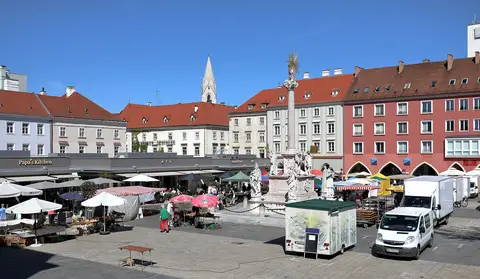
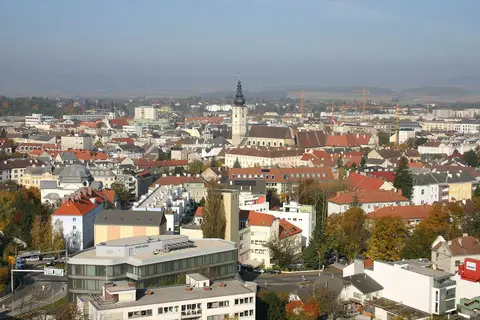
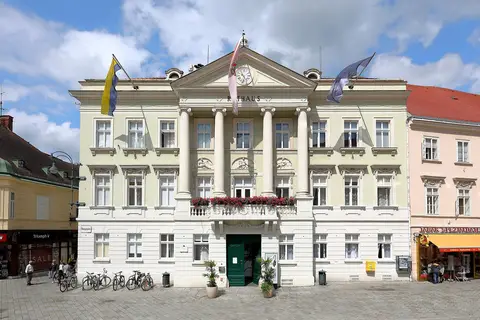
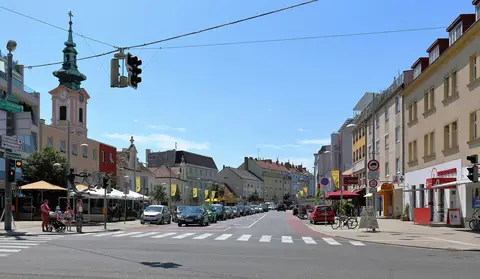
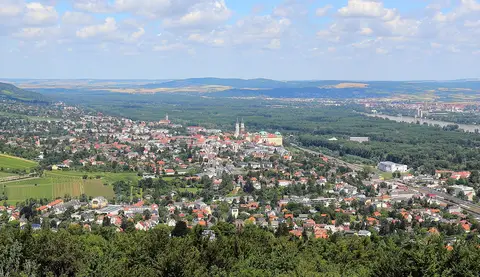
St. Pölten has been the state capital since 1986, with a Baroque old town and a modern government district. Wiener Neustadt, the second-largest city, was the residence of Emperor Frederick III and is home to the Theresian Military Academy. Baden is a spa town with sulfur springs, Biedermeier architecture and a casino, where Beethoven worked on his Ninth Symphony. Klosterneuburg is dominated by the Augustinian canons' abbey with the Verdun Altar, and Tulln an der Donau is a garden town with the "Die Garten Tulln" garden show and the birthplace of Egon Schiele. Krems an der Donau combines a medieval old town with the Kunstmeile, an art district that includes the Landesgalerie and the Kunsthalle. Schwechat lies next to the airport and is a brewing center, and Amstetten is the hub of the Mostviertel.
Away from the Danube, you'll find plenty worth seeing: the Waldviertel with Zwettl, Gmünd and Rappottenstein Castle, the cellar lanes of the Weinviertel around Poysdorf and Falkenstein, and the Ötscher-Tormäuer Nature Park with its gorges in the Mostviertel. The Vienna Woods, a UNESCO biosphere reserve, offer special excursion destinations in the Seegrotte Hinterbrühl, an underground lake, and Mayerling, where Crown Prince Rudolf died in 1889.
Sights in Lower Austria
The Benedictine abbey of Melk sits golden above the Danube and holds a magnificent library. Other sights in Lower Austria include Göttweig Abbey on a hill opposite Krems, the ruins of Dürnstein Castle, where Richard the Lionheart is said to have been held prisoner, and the Cistercian abbey of Heiligenkreuz in the Vienna Woods. The Semmering Railway, the world's first mountain railway, is a UNESCO World Heritage Site, as is the Wachau. The Roman town of Carnuntum has reconstructed houses and baths, Schloss Hof in the Marchfeld is Austria's largest country palace, and Kreuzenstein Castle looks like something out of a fairy tale. The Salamander cog railway runs up Schneeberg.
Families head to the Erlebnisarena at Hochkar, up the Rax on Austria's first cable car, dating from 1926, or to the Haag wildlife park. In Tulln, the Egon Schiele Museum honors the painter, who was born in the town; in Krems, the Caricature Museum shows works by Manfred Deix; and in Gugging near Klosterneuburg, the Museum Gugging exhibits Art Brut. Other Lower Austria destinations along the Danube include Spitz, Weißenkirchen and Dürnstein with its blue-and-white abbey tower.
Food and Drink
Grüner Veltliner is Lower Austria's signature grape; in the Wachau it is classified by quality level as Steinfeder, Federspiel and Smaragd. You'll also find Riesling from the Wachau and Kamptal, and red wine from Carnuntum and the Thermenregion. At a Heuriger (wine tavern), you can order a Brettljause, a platter of cured bacon, spreads and farmhouse bread. Wachau apricots are made into dumplings, jam and brandy, the Waldviertel is known for poppy seeds, potatoes and carp, and the Mostviertel for pear cider.
Culture and Festivals
The Donaufestival in Krems, the Grafenegg Festival with open-air concerts, and the summer festivals in Melk and Reichenau are cultural highlights. In fall, winemakers celebrate the new wine with cellar-lane festivals, and during the apricot blossom in spring, the Wachau turns into a sea of white flowers.
Getting There and Best Time to Visit
Lower Austria is well served from Vienna by S-Bahn and regional trains; St. Pölten lies on the Westbahn line and is 25 minutes from Vienna. Boats cruise through the Wachau, and a cycling path follows the Danube. The best time to visit is April for the apricot blossom, summer for bike tours, and fall for the grape harvest.