About Cenotaph
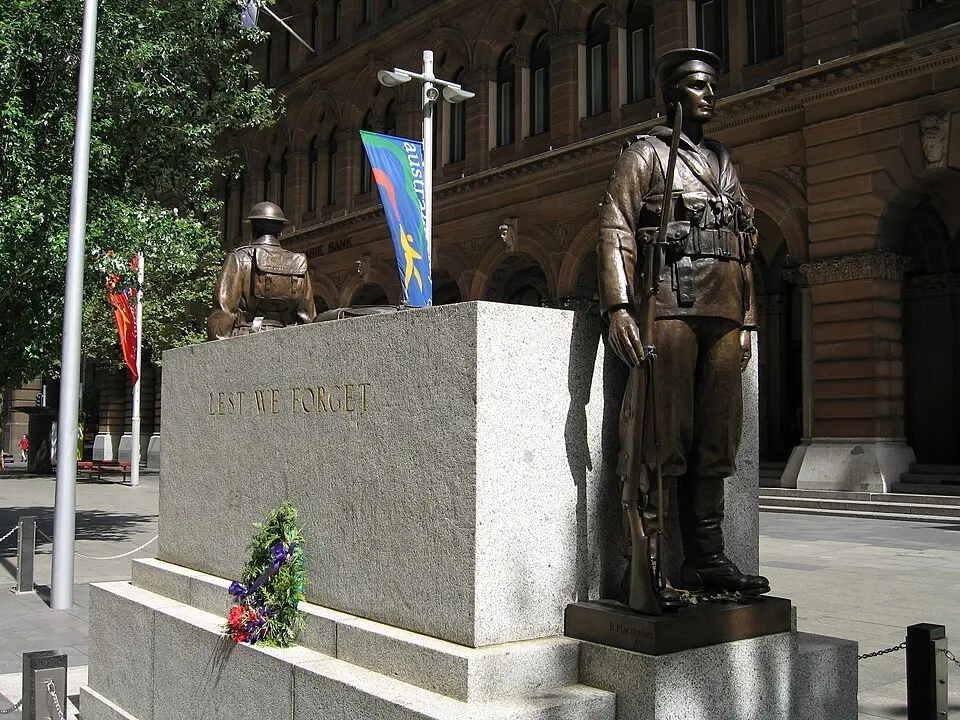
The Cenotaph in Sydney's Martin Place is a significant war memorial commemorating the casualties of World War I. Designed by the Australian sculptor Bertram Mackennal and built between 1927 and 1929, it is one of the oldest memorials of its kind in the heart of the city. Unlike many other Australian monuments, it bears no individual names but honors the collective sacrifice of all the fallen. The architecture follows the model of Edwin Lutyens' Cenotaph in London and consists of a massive block of granite in the shape of a sarcophagus. At the two short ends stand life-size bronze statues of a soldier and a sailor, who stand guard over the monument. The inscriptions "To Our Glorious Dead" and "Lest We Forget" are carved into the longer sides. The memorial was funded by the state of New South Wales, which was unusual at the time, since memorials were mostly supported by volunteer committees.
The site has deep historical significance, as Martin Place hosted numerous recruitment events and memorial services during the war. The Cenotaph is especially well known as the origin of the traditional Anzac Dawn Service ceremonies. These commemorations, which begin at first light to symbolize the landing of the troops at Gallipoli, were first held officially here in 1928 and are now a central part of Australia's culture of remembrance. Thousands of people gather every year on April 25 and November 11 to lay wreaths and observe a moment of silence. The statues are modeled on real war veterans, an infantryman from Gallipoli and a signalman of the Royal Australian Navy, and are shown in realistic poses.
Today the Cenotaph is a protected cultural heritage site and a silent yet powerful place of mourning and remembrance in Sydney's pedestrian zone. The simple design of the granite altar, flanked by two soldier figures, provides a dignified setting for the ceremonies. Here visitors experience not just a historic monument but a living place of national identity, where the casualties of all conflicts are honored. The presence of poplar trees and the close enclosure of low posts underscore the sacred character of the site, which has been tended and visited by the community since its dedication in 1929.
At a glance
- Category
- Sight › Monuments
- Rating
- no reviews yet · write a review
- Address
- 2001 Martin Place
2000 Sydney, Australia - District
- Sydney
- Phone
- —
- Website
- www.cityofsydney.nsw.gov.au
- —
- Coordinates
- -33.86751° N · 151.20778° E
- Data quality
- confidence 0.99
- Identifier
- ID 7eedbe22-ea8…
Location & surroundings
Toggle layersFAQ about Cenotaph
quick answersWhat is the Cenotaph in Sydney?
The Cenotaph at Martin Place in Sydney is a major war memorial commemorating the casualties of World War I. Designed by Australian sculptor Bertram Mackennal, it was built between 1927 and 1929 and dedicated in 1929. Unlike many other Australian memorials, it bears no individual names but honors the shared sacrifice of all the fallen. It was funded by the state of New South Wales, which was unusual at the time, since memorials were usually paid for by volunteer committees.
What does the Cenotaph at Martin Place in Sydney look like?
The Cenotaph in Sydney consists of a massive granite block in the shape of a sarcophagus, modeled on Edwin Lutyens' Cenotaph in London. At the two short ends stand life-size bronze statues of a soldier and a sailor, based on real veterans: an infantryman from Gallipoli and a signals officer of the Royal Australian Navy. The longer sides are inscribed with the words "To Our Glorious Dead" and "Lest We Forget." Poplar trees and a border of low posts underscore the dignified character of the site.
What role does the Cenotaph in Sydney play on Anzac Day?
The Cenotaph at Martin Place in Sydney is considered the origin of the traditional Anzac Dawn Service ceremonies. These commemorations begin at first light to recall the troops' landing at Gallipoli, and were first held officially here in 1928. To this day, thousands of people gather every year on April 25 and November 11 to lay wreaths and remember in silence. Even during World War I, Martin Place hosted numerous recruitment rallies and memorial events.
What can you see around the Cenotaph in Sydney?
Around the Cenotaph at Martin Place in Sydney, several historic buildings and memorials are within walking distance. travelguide195 lists the Challis House about 17 meters away, the Sydney Post Office about 52 meters away, and the Westpac Heritage Museum about 90 meters away, among others. The Royal Australian Regiment Memorial stands just 115 meters away, and the historic AWA Tower is about 178 meters away.
Which tours go to the Cenotaph in Sydney, and are there restaurants nearby?
The Cenotaph at Martin Place in Sydney is part of several tours, including "Sydney Remembers: From the First Settlement to the City's Memorials" and "Sydney on Foot: From The Rocks to Hyde Park." The tours "Sydney CBD Food Tour: Dim Sum, Kopi and Cocktails" and "Sydney at Night: From the Harbor to the City's Cocktail Bars" also pass by this spot. For a break after your visit, travelguide195 lists around 473 restaurants within 500 meters of the Cenotaph.
Ratings & comments
none yetNear Cenotaph
closest 5 per category · 2 kmSights
Restaurants
Museums
Hotels
More:Monuments in Sydney (70)Sights in Sydney (92)All sights in Sydney (1,401)
294 places within 2 km loaded.
Don't miss in Sydney
All sights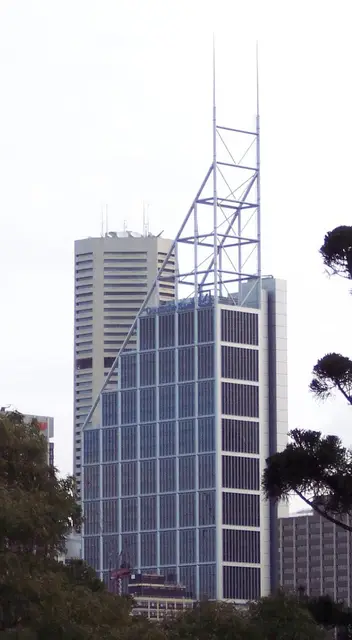 Historic sites01
Deutsche Bank Place
Level 16 Corner of Hunter and, Phillip St · Sydney● Website● Phone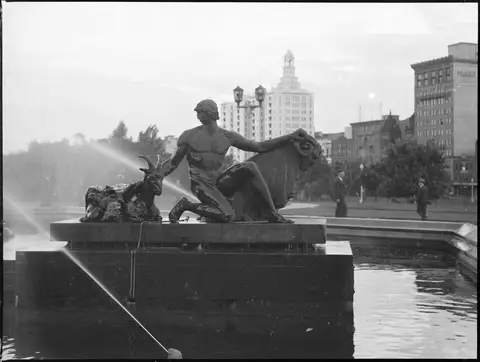 Monuments02
Archibald Fountain
Prince Albert Rd · Sydney● Website● Phone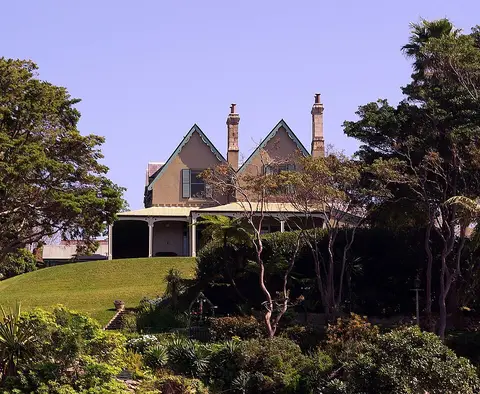 Historic sites03
Kirribilli House
109 Kirribilli Ave · Sydney● Website● Phone Historic sites04
You need a free account to leave reviews and photos – that keeps comments genuine and lets you edit them later.