

Australian Capital Territory: Discovering Canberra
Travel guide · editorialWhen Sydney and Melbourne couldn't agree on which city should be the capital of the young Commonwealth of Australia, the country simply built a new one: Canberra. A vacation in the Australian Capital Territory is a trip to a planned city with national museums, plenty of greenery, and mountains right on the doorstep. The small territory lies about a three-hour drive southwest of Sydney, completely surrounded by New South Wales.
A City Drawn on the Drafting Table
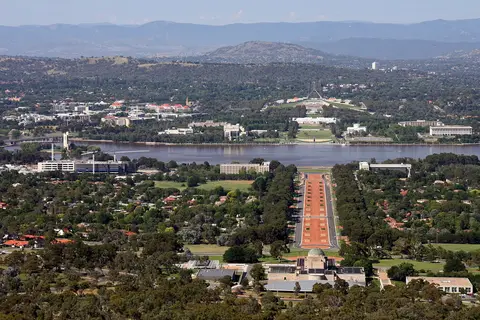
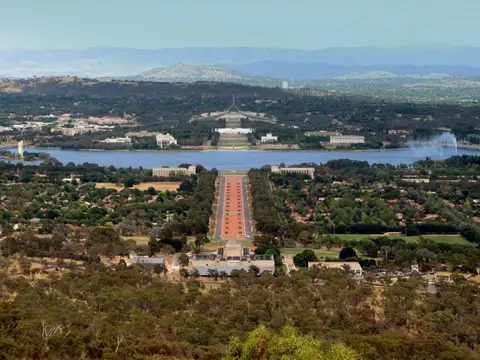
The design for Canberra came in 1912 from the American architects Walter Burley Griffin and Marion Mahony Griffin. Their idea: axes linking mountains, buildings, and water. At the center lies the artificially dammed Lake Burley Griffin, ringed by bike paths. The city is divided into districts, each with its own center: the District of Canberra Central with the government quarter and university, Belconnen in the northwest, the young district of Gungahlin in the north, and Tuggeranong in the south, nestled against the mountains. If you're coming from the big metropolises, Canberra feels quiet and spacious – exactly what residents love about their "Bush Capital," where kangaroos sometimes graze on the lawns.
Sights in the Australian Capital Territory
Parliament House, opened in 1988, is built into a hill, and you can stand on its grass-covered roof; visitors can watch sessions of the House of Representatives and the Senate. The old Parliament House is home to the Museum of Australian Democracy, in front of which the Aboriginal Tent Embassy has stood since 1972. The Australian War Memorial is one of the most visited places in the country, and its evening commemoration ceremony is moving. The National Gallery of Australia displays one of the largest collections of Indigenous art in the world, the National Museum tells the story of the continent, and at the National Portrait Gallery you'll meet familiar faces from Australian life. For families, the Questacon science museum is a big draw. From the Telstra Tower on Black Mountain you can take in the entire layout of the city.
Nature Around Canberra
More than half of the territory is protected natural area. Namadgi National Park in the south offers hikes through eucalyptus forests and to rock art by the Ngunnawal, the original inhabitants of the region. At Tidbinbilla Nature Reserve you can see koalas, emus, and platypuses, and the National Arboretum showcases trees from around the world. The wineries around Murrumbateman, just across the border, are known for Shiraz and Riesling.
Festivals, Food, and Daily Life
Floriade in spring, a big flower festival in Commonwealth Park, and the Enlighten balloon festival in March, with hot-air balloons floating over the lake, are the highlights of the year. The city's food scene has come a long way: in Braddon and the new district of New Acton you'll find cafés, breweries, and restaurants serving regional produce. Many residents work in the public service or at the Australian National University.
Best Time to Visit and Getting There
Canberra has a pronounced inland climate with hot summers and frosty winters. The best time to visit is fall, from March to May, when the deciduous trees change color, or spring in October and November. Canberra Airport (CBR) is served by flights from all major cities; buses and trains run from Sydney, and the drive takes about three hours.