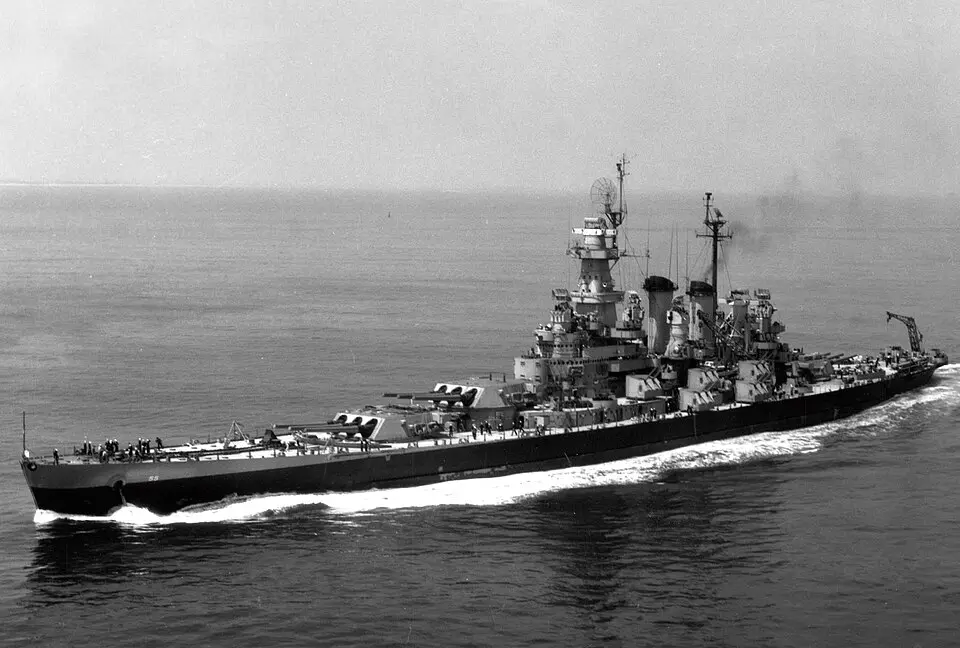
About Battleship North Carolina
The USS North Carolina (BB-55) is a historic battleship of the United States Navy that now serves as a museum ship on the banks of the Cape Fear River in Wilmington, North Carolina. As the lead ship of the North Carolina class, she was the first new battleship of her kind built for the U.S. Navy in thirteen years, since the West Virginia was completed in 1923. The ship served from 1941 to 1947 and took part in nearly all of the U.S. Navy's major operations in the Pacific during World War II. She has been open to the public since 1962 and serves as a memorial to the maritime history of the United States.
Planning for this new ship began in 1933, based on the terms of the Washington Naval Treaty. Congress authorized construction in June 1936, and on October 27, 1937, Navy Day, her keel was laid at the Brooklyn Navy Yard. After three years and eight months of construction, the ship was christened and launched on June 13, 1940. The christening was performed by Miss Isabel Young Hoey, the daughter of the governor of North Carolina. Ten months later, on April 9, 1941, the North Carolina was officially commissioned under the command of Captain Olaf M. Hustvedt. Building the warship cost $76,885,750 at the time.
Technically, the North Carolina represented a new generation of battleships, one that differed markedly from its predecessors because of the long gap in construction. The ship is 222.1 meters (729 feet) long and 33 meters (108 feet) wide, with a displacement of 36,600 tons and a draft of 8.1 meters (27 feet). She was powered by four General Electric geared turbines that delivered a total of 121,000 horsepower to four propellers. This gave the ship a top speed of 27.3 knots and a range of 14,200 nautical miles at a cruising speed of 15 knots. During sea trials, it turned out that the propulsion plant caused heavy vibrations at high speed, which made some decks uninhabitable and threatened the sensitive radar equipment.
The battleship's armament was impressive for its time. The main battery consisted of nine 16-inch guns housed in three triple turrets, two forward and one aft. The secondary battery comprised 20 5-inch guns in ten twin mounts. For anti-aircraft defense, the ship originally carried 1.1-inch quadruple mounts and .50-caliber machine guns, which proved unreliable and too light, respectively. Over the course of the war, these were replaced by 40 mm guns and 20 mm cannons. By the end of the war, the ship carried 15 quadruple 40 mm mounts and 36 20 mm guns.
After the Japanese attack on Pearl Harbor in December 1941, preparations for combat deployment began. In June 1942, the ship left Norfolk and passed through the Panama Canal to operate in the Pacific. On July 11, 1942, she became the first ship to arrive at Pearl Harbor from the United States, which greatly boosted the morale of the Pacific Fleet. Her first combat mission took the North Carolina to Guadalcanal, where she saw her baptism of fire in August 1942. During the Battle of the Eastern Solomons, she laid down a protective barrage over the attacked aircraft carrier Enterprise, drawing Japanese attacks onto herself. Despite several near misses, the ship came through the engagement unscathed.
In September 1942, the North Carolina was hit by a torpedo from the Japanese submarine I-19, which tore a large hole in her port side. Despite taking in nearly 1,000 tons of water and listing, the ship remained operational and was able to continue her mission. After repairs at Tongatabu and later at Pearl Harbor, she returned to the waters around the Solomon Islands in mid-December 1942 to protect aircraft carriers and transports. During 1943, the ship took part in various operations, including covering the invasions of Bougainville, Munda, and New Georgia.
The North Carolina was active in the central Pacific from November 1943. She took part in the U.S. Marine landing on Tarawa, where the battleships shelled the beaches to break enemy resistance. In January 1944, the ship supported the Battle of Kwajalein and joined in the bombardment of Truk as part of Operation Hailstone. In June 1944, she covered the landing on Saipan and took part in the Battle of the Philippine Sea, which ended in a devastating defeat for the Japanese navy.
In the second half of the war, the ship operated in the western Pacific. She supported the landings in the Philippines, including Mindoro, and was caught in the severe Typhoon Cobra, which capsized three destroyers. In February 1945, the North Carolina took part in air strikes on the Japanese home island of Honshu and covered the landing on Iwo Jima. In April 1945, the ship provided fire support for ground troops during the Battle of Okinawa. After the war, she returned to the Atlantic Fleet via Hawaii and the Panama Canal and served, among other roles, as a training ship for cadets of the United States Naval Academy before being decommissioned in June 1947.
The ship was saved from the scrapyard by a citizens' initiative in the state of North Carolina that formed in 1958. After donations were successfully collected, the ship was turned over to the USS North Carolina Battleship Commission and struck from the Navy's register in 1960. On September 6, 1960, she was transferred to the State of North Carolina and towed to Wilmington at the end of September. On October 2, 1961, she was moored at her current berth on the Cape Fear River, and on April 29, 1962, she opened her doors to visitors. Today she is a popular attraction that offers a glimpse into the history of World War II and the technology of the era.
At a glance
- Category
- Museum › History museums
- Rating
- no reviews yet · write a review
- Address
- 1 NE Battleship Rd
28401-2577 Wilmington, USA - Phone
- +19103999100
- Website
- tickets.battleshipnc.com
- marketing@battleshipnc.com
- Coordinates
- 34.23644° N · -77.95431° E
- Data quality
- confidence 0.93
- Identifier
- ID d9c4673e-c3f…
Location & surroundings
Toggle layersRatings & comments
none yetNear Battleship North Carolina
closest 5 per category · 2 kmSights
Restaurants
Museums
Hotels
More:All museums in Wilmington (25)
160 places within 2 km loaded.
Don't miss in Wilmington
All sights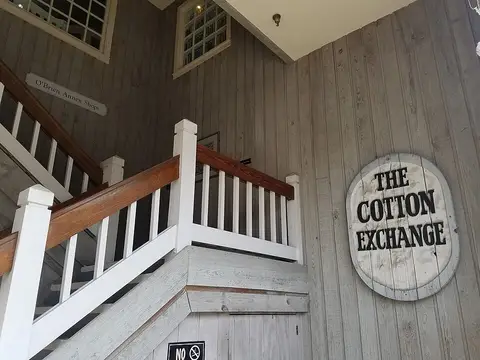 Historic sites01
Haunted Cotton Exchange
321 N Front St · Wilmington● Website● Phone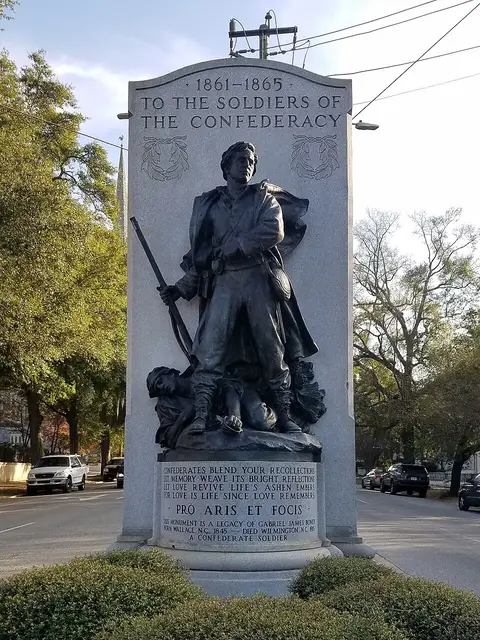 Historic sites02
Confederate Memorial
S 3rd St @ Dock St · Wilmington● Website○ Phone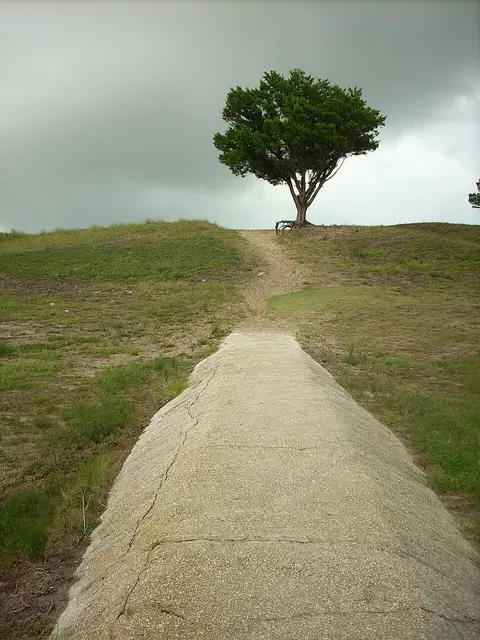 Historic sites03
North Carolina National Estuarine Research Reserve
No address · Wilmington● Website○ Phone Historic sites04
You need a free account to leave reviews and photos – that keeps comments genuine and lets you edit them later.
Moored across the river from downtown Wilmington, this battleship offers visitors the chance to envision the daily life and fierce combat her crew faced in the Pacific Theatre during World War II. Exhibits tell the story of the ship's crew through their oral histories, photographs, and mementos. The tour is self-guided and is well-marked so that you can tour at your own pace. Allow at least two hours for the tour, but for the true enthusiast, you can spend much more than that.
Source: Wikivoyage, „Wilmington (North Carolina)“ · authors per page history · CC BY-SA 4.0 · as of 2/16/2025