About USS Midway Museum
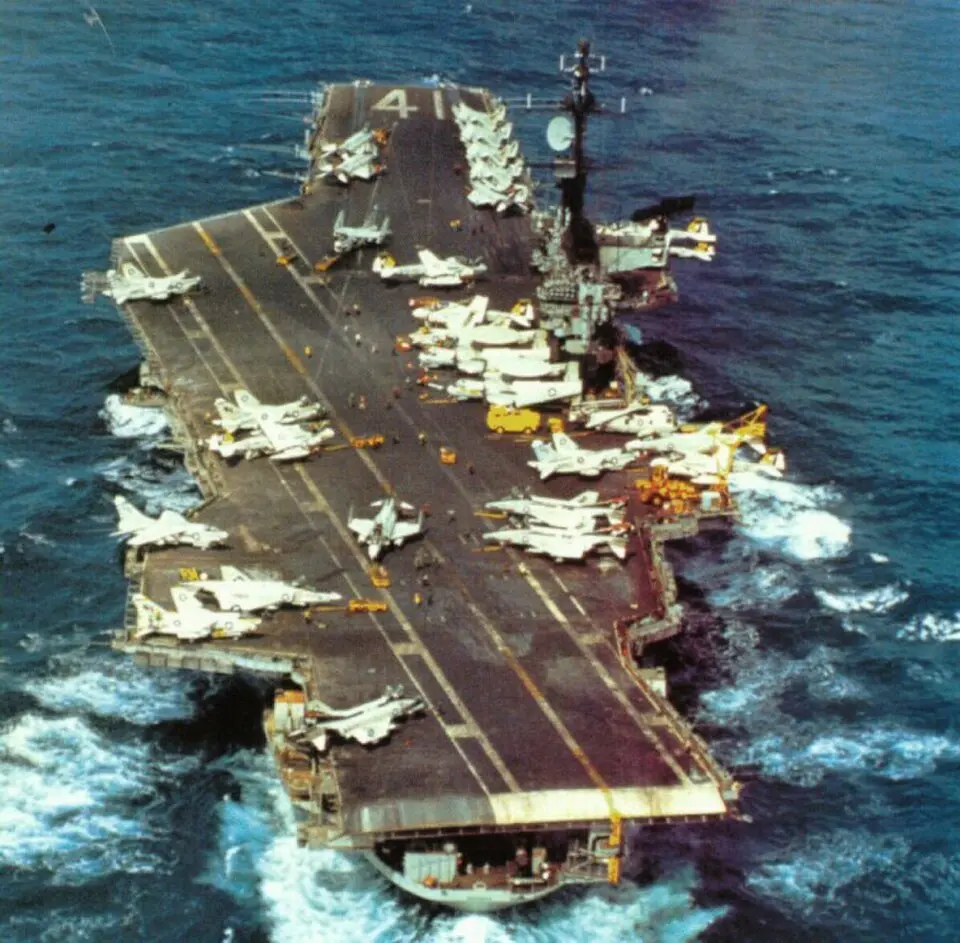
The USS Midway Museum in San Diego houses one of the most impressive witnesses to United States maritime history. The aircraft carrier USS Midway, hull number CV-41, was the lead ship of its class and served in the U.S. Navy for almost forty years. Today the museum invites you to experience the dimensions of a modern warship up close and explore the story of a ship that took part in decisive conflicts of the twentieth century. The third ship to bear the name Midway, it carries on the tradition of one of the most important battles of the Pacific War, which gives it special symbolic significance.
The carrier's story began immediately after the attack on Pearl Harbor, when the U.S. Navy recognized the need for large aircraft carriers. After lengthy planning and debate over the optimal size, the keel was laid in 1943 in Newport News. The construction was a logistical masterstroke: in just eighteen months, using three shifts and modern welding methods, 29,000 tons of steel were processed. The christening ceremony took place in March 1945, only a few months before the end of World War II. On September 10, 1945, eight days after Japan's surrender, the Midway was officially commissioned. At that point, at almost 300 meters (nearly 1,000 feet) long, she was the largest warship in the U.S. Navy and too wide to pass through the Panama Canal.
Unlike many other ships of her era, the Midway was designed for real combat from the start. She had unusually heavy armor based on experience with Japanese kamikaze attacks. The flight deck was armored with 76 millimeters of steel, and the bulkheads in the hull reached a thickness of up to 203 millimeters. This design provided passive protection that was more reminiscent of a battleship than an aircraft carrier. The hull was divided into more than 1,750 watertight compartments, which greatly improved resistance to flooding. Despite this robustness, the ship suffered from pronounced rolling and pitching, which earned her the crew's nickname "USS Rock & Roll."
During her active service, the Midway underwent several comprehensive modernizations that fundamentally changed her appearance and capabilities. Originally designed with a straight flight deck, she received an angled flight deck in 1957. This innovation made it possible to conduct takeoffs and landings simultaneously and increased safety for increasingly fast aircraft. Another major overhaul in the late 1960s doubled the area of the flight deck and moved the elevators to the deck edge. This modernization was so extensive and costly that it prevented the planned refitting of her sister ships. The ship thereby became a highly modern platform for naval aviation.
The Midway's operational history is marked by deployments in nearly every conflict region in the world. After her commissioning, she took part in exercises in the North Atlantic and Mediterranean, where she served as part of the Cold War deterrent. A special moment was Operation Sandy in 1947, in which a ballistic missile was launched from the deck of a ship for the first time. Although the flight was a failure, the test proved the feasibility of such launches. Later, the Midway saw action in the Korean War and the Vietnam War. In Vietnam, her aircraft flew strikes against targets in North and South Vietnam and scored the first American air victories of the conflict.
An important part of the carrier's history is her stationing in Yokosuka, Japan, from 1973 to 1991. As a forward-deployed aircraft carrier, the Midway was able to respond quickly to crises in the Pacific and the Middle East. During this time she took part in the evacuation of Saigon in 1975, when helicopters operating from her deck rescued thousands of refugees. The Midway also played a central role in the Gulf War. She operated in the Persian Gulf and supported Operation Desert Shield and Desert Storm. During this period she became the first aircraft carrier ever to dock at a port in the Persian Gulf, underscoring her strategic importance.
The Midway's crew lived under conditions that are hard to imagine today. The original plan called for a crew of more than 3,500, which later grew to almost 5,000. Comfort was minimal, as the ship was optimized for combat. Only the command center was air-conditioned, and in later years drinking water had to be rationed because production capacity was not sufficient for the larger crew. The six galleys served around 13,000 meals a day. Life on board was shaped by strict discipline and harsh conditions, which fostered resilience among the sailors.
The carrier's armament changed considerably over the decades. At the beginning, the Midway carried the heaviest gun armament ever installed on an aircraft carrier, with 18 guns of 127 millimeters caliber. These were gradually removed, however, as air defense was replaced by missiles and modern electronics. Later, systems such as Sea Sparrow missiles and the Phalanx CIWS were added for close-in defense. The radar systems were upgraded several times to increase detection range and precision. This technical evolution reflects the shift in naval warfare from the cannon to the missile.
Today the Midway is a museum that invites the public to experience the history of the U.S. Navy. You can step onto the huge flight deck, explore the superstructure, and tour the ship's various decks. The museum shows not only the technical aspects of the carrier but also the lives of the crew. Interactive exhibits and historical artifacts give you a sense of the hardship and pride that came with serving on an aircraft carrier. The Midway stands as a symbol of the technological and military power of the United States in the twentieth century.
A visit to the USS Midway Museum offers a unique perspective on maritime history. The ship's size only becomes truly tangible on site, when you take in the expanse of the flight deck and the height of the superstructure. The Midway's story is closely tied to the great conflicts of her time and shows how technology and strategy influenced each other. As a museum ship in San Diego, she is a major draw for history buffs and technology enthusiasts. She commemorates the people who served aboard and the events that shaped the fate of the ship and the world.
The Midway is more than just an old ship; she is a living memorial. Her history stretches from the final days of World War II through the Cold War and beyond. The numerous refits the ship underwent testify to the Navy's ability to adapt to new threats and technologies. For visitors, the Midway is an opportunity to understand the past and grasp the complexity of modern warfare. The museum in San Diego preserves this legacy for future generations and ensures that the stories of the crew and the carrier's historic achievements are not forgotten.
At a glance
- Category
- Museum › Museums (general)
- Rating
- no reviews yet · write a review
- Address
- 910 N Harbor Dr
92101-5811 San Diego, USA - Phone
- +16195449600
- Website
- www.midway.org
- social@midway.org
- Coordinates
- 32.71380° N · -117.17503° E
- Data quality
- confidence 0.91
- Identifier
- ID f312c8fa-5cc…
Location & surroundings
Toggle layersRatings & comments
none yetNear USS Midway Museum
closest 5 per category · 2 kmSights
Restaurants
Museums
Hotels
More:All museums in San Diego (140)
256 places within 2 km loaded.
Don't miss in San Diego
All sights Historic sites01
Beth-Sarim
4440 Braeburn Rd · San Diego○ Website○ Phone Historic sites02
Mount Soledad
No address · San Diego○ Website○ Phone Historic sites03
Old Mission Dam
1 Father Junipero Serra Trail · San Diego● Website● Phone Historic sites04
You need a free account to leave reviews and photos – that keeps comments genuine and lets you edit them later.