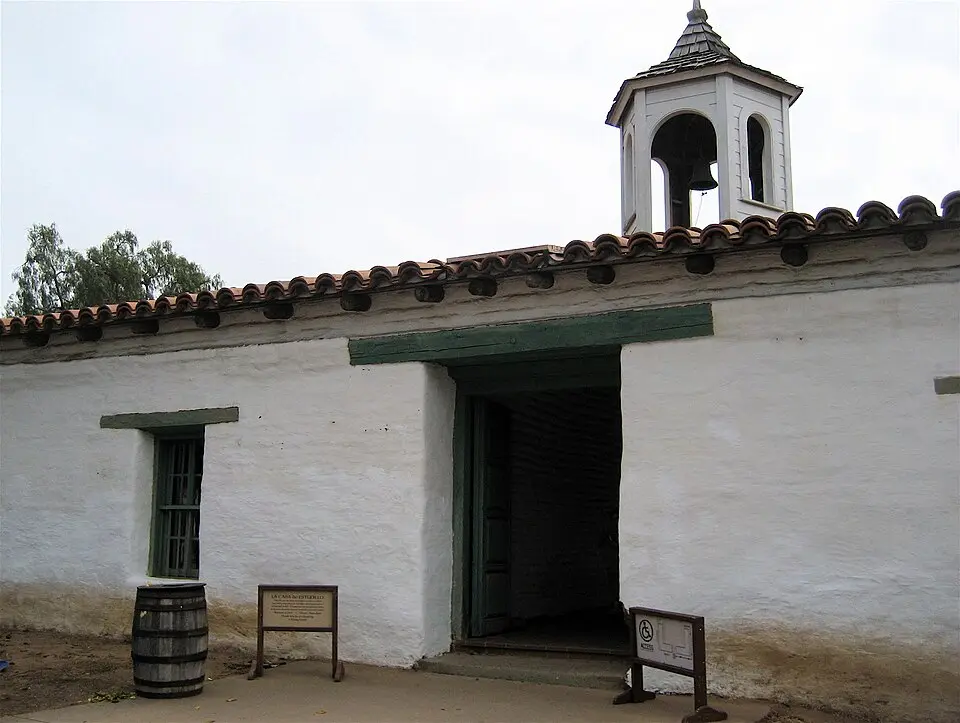
About Casa de Aguirre Museum
The Casa de Estudillo, also known as the Estudillo House, is a historic adobe house in San Diego, California, built in 1827 by José María Estudillo and his son José Antonio. As one of the city's earliest settlers, the Estudillo family belonged to the prominent upper class of Mexican California, and in its day the estate was considered one of the finest homes in the region. The building stands in Old Town San Diego State Historic Park and is designated both a National Historic Landmark and a California Historical Landmark. Architecturally, the house represents the Spanish Colonial style and is one of the oldest surviving examples of this type of construction in California. It is a U-shaped structure whose thirteen rooms are connected not by interior hallways but by an exterior, covered corridor. The central section with the west-facing entrance originally housed a chapel and a classroom, while the wings contained bedrooms, a living area, and a dining room. A cupola on the roof allowed residents to watch bullfights and festivals on the adjacent plaza.
The house owes its special fame above all to the novel "Ramona" by Helen Hunt Jackson, published in 1884, which romanticized the life of the Californios after the American takeover. Although the author never visited the house, in the public mind it became "Ramona's Marriage Place." This association led to an enormous influx of tourists, which also contributed to the building's severe neglect, as the caretaker at the time sold parts of the house as souvenirs. After the San Diego Electric Railway Company purchased the property in 1906, it was extensively renovated under the direction of architect Hazel Wood Waterman. The goal was to design the house to match the descriptions in the novel, which led to the removal of the original cupola and the relocation of windows and doors. The 1910 restoration turned the building into a popular tourist destination that was also used for weddings.
After the caretaker, Tommy Getz, died in 1934, his daughter continued the business until the house was donated to the State of California in 1968. The state park service then restored the building to its pre-Ramona-era condition, rebuilding the cupola in the process. Today the Casa de Estudillo serves as a museum and is furnished as it likely looked during the time of the original owner, including a kitchen area added later. While the connection to the novel was barely mentioned in official presentations in the 1970s, the state has again acknowledged the historical significance of this association since the 1990s. For visitors, the house offers a glimpse into Spanish Colonial architecture and the history of San Diego's early settlers.
At a glance
- Category
- Museum › History museums
- Rating
- no reviews yet · write a review
- Address
- 2640 San Diego Ave
92110 San Diego, USA - Phone
- +12133733038
- Website
- —
- —
- Coordinates
- 32.75372° N · -117.19596° E
- Data quality
- confidence 0.74
- Identifier
- ID b1a6674f-f97…
Location & surroundings
Toggle layersRatings & comments
none yetNear Casa de Aguirre Museum
closest 5 per category · 2 kmSights
Restaurants
Museums
Hotels
Cocktail bars
More:History museums in San Diego (40)All museums in San Diego (140)
162 places within 2 km loaded.
Don't miss in San Diego
All sights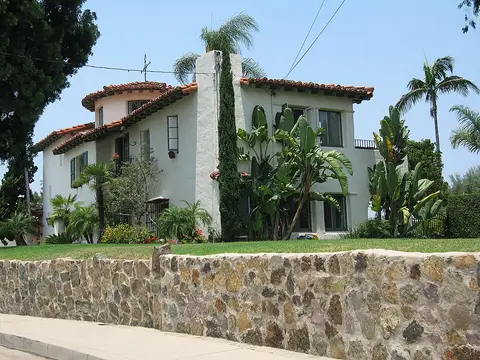 Historic sites01
Beth-Sarim
4440 Braeburn Rd · San Diego○ Website○ Phone Historic sites02
Mount Soledad
No address · San Diego○ Website○ Phone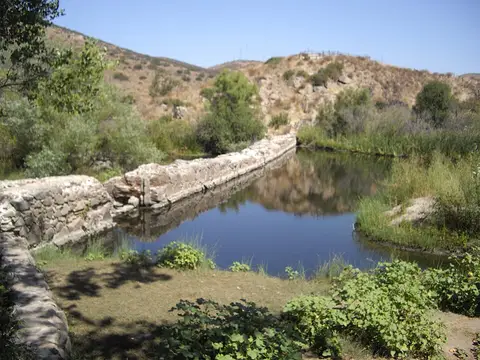 Historic sites03
Old Mission Dam
1 Father Junipero Serra Trail · San Diego● Website● Phone Historic sites04
You need a free account to leave reviews and photos – that keeps comments genuine and lets you edit them later.