About USS Lexington Museum
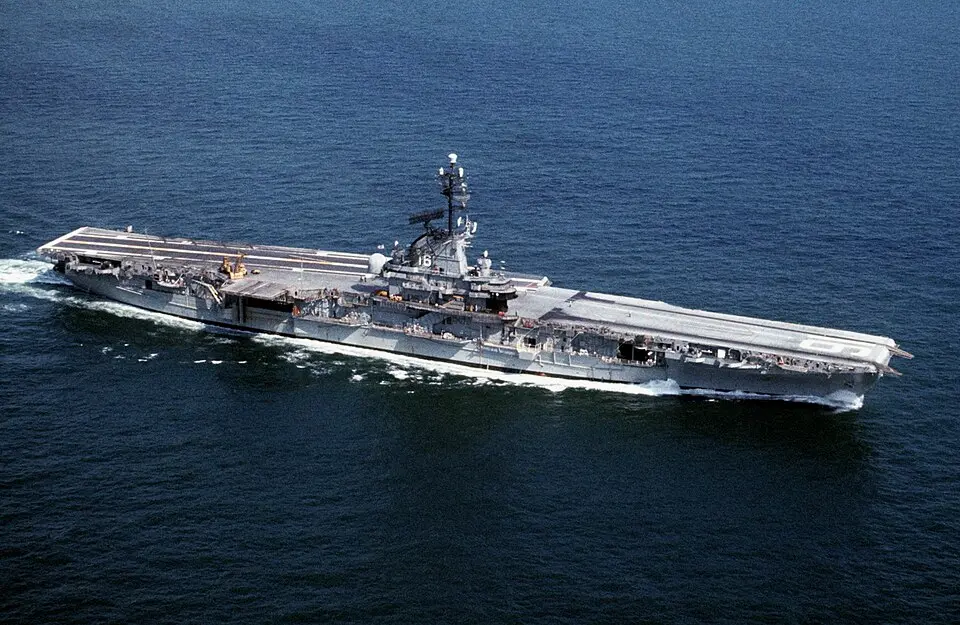
The USS Lexington, originally designated CV-16, is a historic Essex-class aircraft carrier that now serves as a museum ship in Corpus Christi, Texas. The ship has an eventful history, stretching from its commissioning in 1943 to its decommissioning in 1991. As the last carrier of its class registered in the U.S. Navy's Naval Vessel Register, the Lexington holds special historical significance. For more than four decades it served in a variety of roles, including as an attack carrier, an anti-submarine warfare carrier, and a training platform for naval aviators. Today, the ship invites visitors to take a look back at naval history and trace the technical and military developments of the past decades.
The Lexington was named in honor of an earlier carrier that sank in the Coral Sea during World War II. The new ship was originally to be called Cabot, but the name was changed after its launch in September 1942. After being fitted out in Boston, the carrier was commissioned in February 1943 and sent through the Panama Canal into the Pacific. There it took part in numerous combat operations, including the Battle of the Gilbert Islands and attacks on Japanese bases. Despite heavy damage from a torpedo hit and kamikaze attacks, the ship survived the war and was repaired several times, which underscores both its toughness and the efficiency of naval support operations.
During World War II, the Lexington played a central role in the Pacific strategy. It took part in the recapture of territory in New Guinea and the Marianas and contributed significantly to victories in the Battle of the Philippine Sea and the Battle of Leyte Gulf. The carrier's aircraft destroyed numerous enemy planes and ships, while the ship itself often remained undamaged despite intense attacks. After the war ended, the Lexington supported the occupation of Japan and took part in Operation Magic Carpet, bringing servicemen home. This phase marked the transition from active combat to peacetime missions and humanitarian aid.
After the war, the carrier was modernized and fitted with an angled flight deck and steam catapults so it could handle more powerful aircraft. In the 1950s and 1960s, the Lexington served in the 7th Fleet and carried out operations in the Far East, including reinforcement missions during the Lebanon crisis and the Taiwan Strait crisis. It was later reclassified as an anti-submarine warfare carrier and finally as a training aircraft carrier. Operating out of its home base in Pensacola for almost thirty years, it served in the Gulf of Mexico as a seagoing training platform for new and experienced naval aviators. More than 493,000 aircraft landings were made on its deck, making it one of the most heavily used carriers in history.
Today, the USS Lexington is docked in Corpus Christi and is protected as a National Historic Landmark. The museum lets you tour the ship and explore the various areas used during its years of service. The carrier's architecture, including the flight deck, the superstructure, and the interior spaces, offers insight into its technical complexity and the living conditions on board. The exhibits highlight the ship's historical significance and its role in U.S. naval history. As you wander through the decks and cabins, you can get a sense of the carrier's sheer size and the challenges of life aboard.
The USS Lexington has received several honors, including the Presidential Unit Citation and eleven battle stars for its service in World War II. These awards reflect the achievements of the crew and the strategic importance of the carrier. As a museum ship, the Lexington serves not only to commemorate the past but also to educate visitors and foster an understanding of maritime history. It is a major draw for tourists and history buffs in the region and contributes to the cultural identity of Corpus Christi. Preserving the ship as a historic monument ensures that the stories of its crew and the Navy's technological advances will be kept alive for future generations.
A visit to the USS Lexington offers a unique chance to experience U.S. Navy history up close. The combination of historical documentation, hands-on exploration, and educational programs makes the museum a worthwhile destination for travelers. Its location in Corpus Christi lets you view the ship in a calm harbor basin, which heightens the impression of its imposing size. Whether as part of a family trip or a history-themed excursion, the USS Lexington offers a captivating journey into the past and a deeper appreciation of the sacrifices and achievements of naval aviators.
At a glance
- Category
- Museum › Aviation museums
- Rating
- no reviews yet · write a review
- Address
- 2914 N Shoreline Blvd
78402 Corpus Christi, USA - Phone
- +13618884873
- Website
- usslexington.com
- community@usslexington.com
- Coordinates
- 27.81475° N · -97.38869° E
- Data quality
- confidence 0.89
- Identifier
- ID f4b4cf9f-9cb…
Location & surroundings
Toggle layersRatings & comments
none yetNear USS Lexington Museum
closest 5 per category · 2 kmSights
Restaurants
Museums
Hotels
Cocktail bars
More:All museums in Corpus Christi (19)
72 places within 2 km loaded.
Don't miss in Corpus Christi
All sights Historic sites01
Simon Gugenheim House
1601 N Chaparral St · Corpus Christi○ Website● Phone Historic sites02
You need a free account to leave reviews and photos – that keeps comments genuine and lets you edit them later.
World War II aircraft carrier become museum. See naval life, the ship, and aircraft complement.
Source: Wikivoyage, „A Taste of Coastal Texas“ · authors per page history · CC BY-SA 4.0