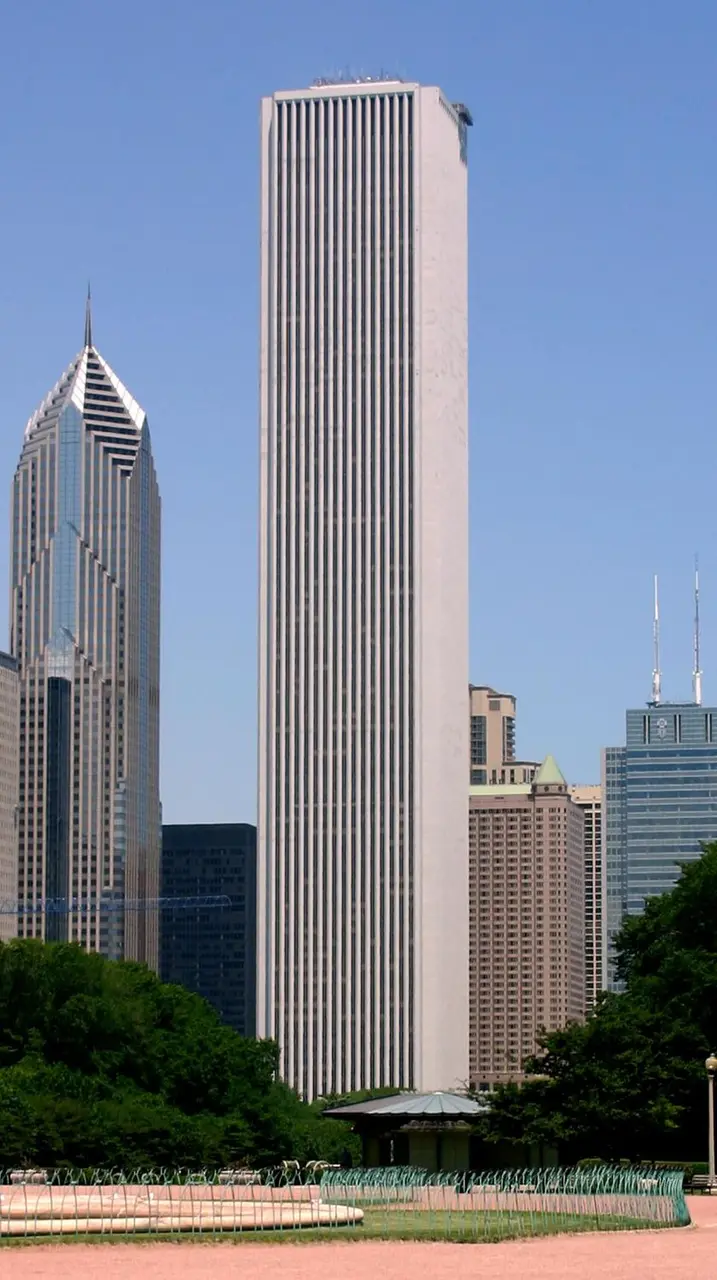
About Aon Center
The Aon Center is a 1,135-foot (346-meter) skyscraper in Chicago's Loop neighborhood, built between 1970 and 1973 by the architecture firm Edward Durell Stone & Associates for the Standard Oil Company of Indiana. With 83 floors, it briefly held the title of Chicago's tallest building after its completion, before being surpassed by the Willis Tower. Today it ranks among the four tallest skyscrapers in the city. The design recalls the former World Trade Center in New York, though the Aon Center is shorter. Originally clad in Carrara marble, the facade was replaced with white granite panels in the early 1990s because of cracking. The entire building serves exclusively as office space and houses no public facilities. The tower is also known as one of the most energy-efficient and environmentally friendly office towers in the United States.
At a glance
- Category
- Sight › Historic sites
- Rating
- no reviews yet · write a review
- Address
- 200 E Randolph St
60601 Chicago, USA - District
- New East Side
- Phone
- +13123811000
- Website
- www.aoncenter.info
- —
- Coordinates
- 41.88512° N · -87.62152° E
- Data quality
- confidence 0.97
- Identifier
- ID 47a918c1-55a…
Location & surroundings
Toggle layersFAQ about Aon Center
quick answersWhat is the Aon Center in Chicago?
The Aon Center is a 346-meter-tall, 83-story skyscraper at 200 E Randolph St in Chicago. The architecture firm Edward Durell Stone & Associates built it between 1970 and 1973 for the Standard Oil Company of Indiana. When it was completed, the Aon Center briefly held the title of Chicago's tallest building until the Willis Tower surpassed it, and today it ranks among the city's four tallest skyscrapers.
Can you tour the inside of the Aon Center in Chicago?
No, the Aon Center in Chicago serves exclusively as office space and has no public facilities. You'll mainly experience the skyscraper from the outside as part of the skyline. The Aon Center is a stop on tours such as "Architecture Walk Through the Loop: From the Riverfront to Michigan Avenue" and "Chicago at Night: Skyline, Dinner and Cocktails in the Loop."
Why does the Aon Center in Chicago have a white granite facade?
The original Carrara marble cladding of the Aon Center in Chicago cracked and was therefore replaced with white granite panels in the early 1990s. The tower's design recalls the former World Trade Center in New York, though it is shorter. The Aon Center is also considered one of the most energy-efficient and environmentally friendly office towers in the United States.
What can you see around the Aon Center in Chicago?
Several attractions lie within walking distance of the Aon Center in Chicago. The Art Institute of Chicago museum is about 147 meters away, Exelon Pavilion about 136 meters, and Millennium Monument about 234 meters. Architecture fans will also find the Blue Cross Blue Shield Tower (about 121 meters), One Prudential Plaza (about 135 meters), and the Aqua skyscraper (about 189 meters) nearby.
Are there restaurants near the Aon Center in Chicago?
Yes, travelguide195 lists around 147 restaurants within 500 meters of the Aon Center in Chicago. If you want to combine dining and sightseeing, you'll also find the Aon Center on the tour "Chicago à la Carte: From Beer Hall Lunch to Late-Night Bar."
Ratings & comments
none yetNear Aon Center
closest 5 per category · 2 kmSights
Restaurants
Museums
Hotels
More:Historic sites in Chicago (1,530)All sights in Chicago (1,606)
300 places within 2 km loaded.
Don't miss in Chicago
All sights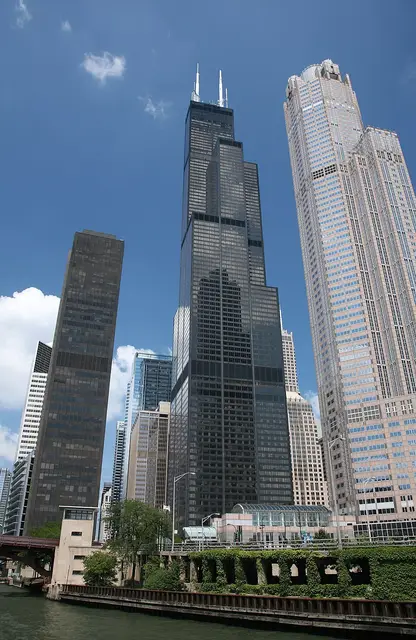 Historic sites01
Sears Tower
233 S Wacker Dr · Chicago● Website● Phone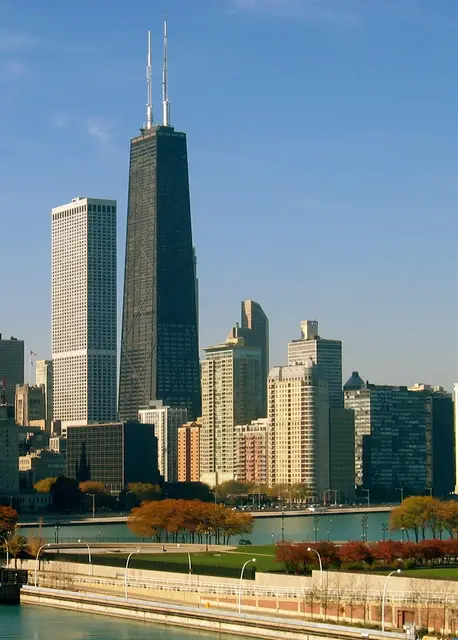 Historic sites02
875 North Michigan Avenue
875 N Michigan Ave · Chicago● Website● Phone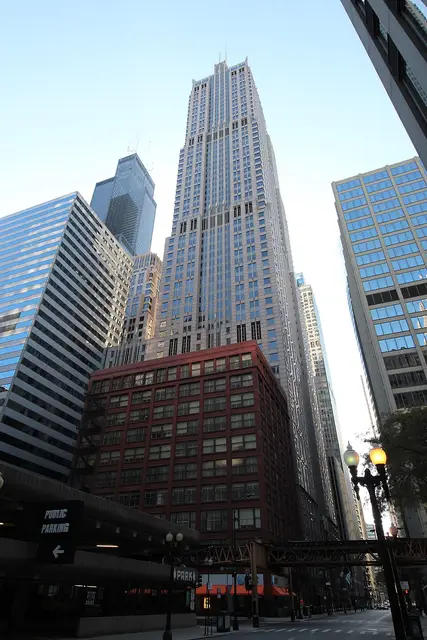 Historic sites03
Corporate Leadership Center
20 S Clark St · Chicago● Website● Phone Monuments04
You need a free account to leave reviews and photos – that keeps comments genuine and lets you edit them later.
1136 ft. Originally known as the Standard Oil Building, The Aon Center is America's fifth tallest building from base to roof, and sixth by architectural detail. It was built by Standard Oil of Indiana in 1972 by architect Edward Stone. The building was later renamed the Amoco Building when Standard Oil of Indiana rebranded itself. The building was initially faced with marble, but the windy city began to blow the marble off the sides of the building—or so the legend goes. Actually, the Italian Carrara white marble slabs had undergone significant hysteresis as a result of the winter/summer seasonal changing temperature, and the marble was removed as a defensive measure to avoid potential liability from injury and damage if any of the slabs did fall. The entire building was refaced with granite, a costly job at around half of the original cost of the entire building! It is now named after its biggest tenant, the Aon Corporation, a risk management firm.
Source: Wikivoyage, „Chicago skyline guide“ · authors per page history · CC BY-SA 4.0