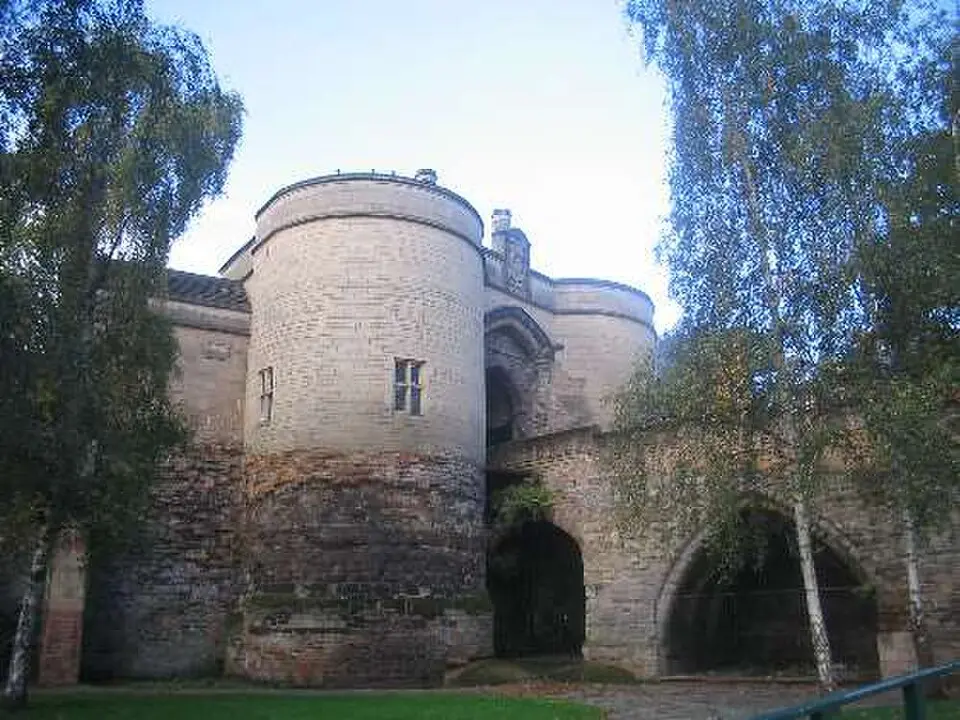
About Nottingham Castle
Nottingham Castle sits atop a prominent outcrop of rock known as Castle Rock, which is flanked on its south and west sides by steep cliffs up to 39 meters (128 feet) high. This natural fortress in the county seat of Nottinghamshire was one of the most important royal castles in medieval England. Its strategic position near a crossing of the River Trent, along with its proximity to the royal hunting grounds of the Peak District, Barnsdale, and Sherwood, made the site a favorite residence of the monarchy. Today the complex is a mix of medieval ruins and a later mansion that serves as a museum and art gallery. Here you'll experience a place deeply rooted in English history that is also a vibrant cultural center of the city.
The castle's history goes back to 1067, when William the Conqueror ordered the construction of a wooden motte after the Battle of Hastings. Under Henry II, this was replaced by a fortified stone castle consisting of an upper bailey at the highest point of the rock, a middle bailey with royal living quarters, and a large outer bailey to the east. Over the centuries, the fortress served not only military purposes but also provided the setting for political intrigue and historic events. In 1194, King Richard the Lionheart besieged the castle to put down the rebellion of his brother John. Edward III wrote another dramatic chapter in 1330, when he used a secret tunnel, known as Mortimer's Hole, to arrest the regent Roger Mortimer and thereby secure his own rule.
Over time, the castle lost its military importance, as the development of artillery in the 16th century made the old stone walls vulnerable. During the English Civil War, Castle Rock briefly served as a defensive position for the Parliamentarians, who under John Hutchinson repelled several Royalist attacks. After the execution of Charles I in 1649, the castle was largely demolished to prevent its further use as a fortress. Only a few remnants of the original medieval complex survive today, including the gatehouse and parts of the outer bailey walls, which served as the garden wall of the later mansion. The surviving foundations and rock pits nevertheless give a sense of how imposing the original structure must have been.
After the Restoration under Charles II, Henry Cavendish, the 2nd Duke of Newcastle, had a new mansion built on the foundations of the old castle between 1674 and 1679. The builder Samuel Marsh designed the building in the Mannerist style, which makes it a rare example in England. The mansion lost its appeal in the 19th century, however, as the Industrial Revolution turned Nottingham into a city with severe social problems. In 1831, rioting citizens burned the building down, leaving it a burned-out shell. Not until 1875 did Thomas Chambers Hine begin its restoration, and in 1878 the Prince of Wales opened the complex as a museum. It thus became the first municipal art gallery in the United Kingdom outside London.
The museum's interior was fundamentally altered during the restoration in order to create a large, skylit painting gallery modeled on the Louvre. The new pitched roofs and the raised balustrade on the facade changed the building's appearance considerably. Behind the balustrade there was originally a walkway above the lead roofs, which offered visitors a panoramic view of the city and the Trent Valley. A dramatic event occurred on Christmas Day 1996, when a landslide caused by a broken water main sent 80 tons of earth and masonry sliding from the terrace to the foot of the rock. In the process, original castle foundations came to light, and these were taken into account when the terrace was restored in 2005.
Today the Nottingham Castle Museum houses the most important art and decorative arts collections of the city and its surroundings. Highlights include 15th-century sculptures in Nottingham alabaster, watercolors by Richard Parkes Bonington and Paul Sandby, and a collection of Jasperware by Josiah Wedgwood. The long gallery displays works by British and continental European artists, including masterpieces by Edward Burra, L.S. Lowry, and Stanley Spencer. The offering is rounded out by the regimental museum of the Sherwood Foresters and a costume collection celebrating Nottingham's famous lace-making tradition. A combined admission ticket also lets you visit the Museum of Nottingham Life at the foot of the rock, which is housed in historic 17th-century farm buildings.
A visit to Nottingham Castle offers a fascinating glimpse into the city's eventful history. Guided tours lead through the historic passage of Mortimer's Hole, which runs from the castle to Brewhouse Yard and links the medieval and modern parts of the complex. Annual events such as the Nottingham Beer Festival and the Robin Hood Pageant add further life to the grounds and connect the site's historical significance with present-day city life. The combination of architectural remains, artful collections, and the picturesque setting on the rocky outcrop makes Nottingham Castle a must-see destination for travelers who want to discover English culture and history.
At a glance
- Category
- Sight › Castles
- Rating
- no reviews yet · write a review
- Address
- Lenton Rd
NG1 6EL Nottingham, United Kingdom - Phone
- +441158763100
- Website
- www.nottinghamcastle.org.uk
- nottingham.castle@nottinghamcity.gov.uk
- Coordinates
- 52.94955° N · -1.15486° E
- Data quality
- confidence 1.00
- Identifier
- ID 486ef927-370…
Location & surroundings
Toggle layersFAQ about Nottingham Castle
quick answersWhat is Nottingham Castle?
Nottingham Castle is a castle complex in Nottingham, Great Britain, that today consists of medieval ruins and a later-built mansion housing a museum and art gallery. It sits on Lenton Rd atop Castle Rock, a rocky outcrop whose cliffs on the south and west sides rise as high as 39 meters (128 feet). In the Middle Ages, Nottingham Castle was one of England's most important royal castles, partly because of the nearby crossing of the River Trent and the royal hunting grounds in Sherwood, Barnsdale and the Peak District.
How old is Nottingham Castle and what happened there historically?
The history of Nottingham Castle in Nottingham dates back to 1067, when William the Conqueror had a wooden motte built after the Battle of Hastings. Under Henry II it was turned into a stone castle with an upper and middle bailey and a large outer bailey to the east. In 1194, Richard the Lionheart besieged the castle to put down the rebellion of his brother John. During the English Civil War, Parliamentarians under John Hutchinson defended Castle Rock, and after the execution of Charles I in 1649, the castle was largely razed.
What is Mortimer's Hole at Nottingham Castle?
Mortimer's Hole is a secret tunnel in Castle Rock beneath Nottingham Castle in Nottingham. It is named after Roger Mortimer, whom Edward III had arrested in 1330 with the help of this tunnel. With this move, Edward III ended Mortimer's regency and secured his own rule.
What remains of the medieval Nottingham Castle today?
Only a few remnants of the medieval complex of Nottingham Castle in Nottingham survive, including the gatehouse and sections of the outer bailey walls, which later served as a garden wall. Foundations and rock pits still hint at the castle's former size. Between 1674 and 1679, Henry Cavendish, 2nd Duke of Newcastle, had a mansion built on the old foundations, designed by the master builder Samuel Marsh in the Mannerist style, which is rare in England.
What can you see around Nottingham Castle?
Around Nottingham Castle in Nottingham, several museums and monuments lie within walking distance. travelguide195 lists, among others, the Museum of the Mercian Regiment right at the castle, the Statue of Captain Albert Ball about 86 meters away, The Museum of Nottingham Life at Brewhouse Yard about 158 meters away, the Museum of Costume & Textiles about 220 meters away, and the historic site Greyfriars about 320 meters away. travelguide195 also lists around 60 restaurants within 500 meters of Nottingham Castle.
Ratings & comments
none yetNear Nottingham Castle
closest 5 per category · 2 kmSights
Museums
Hotels
More:All sights in Nottingham (97)
242 places within 2 km loaded.
Don't miss in Nottingham
All sights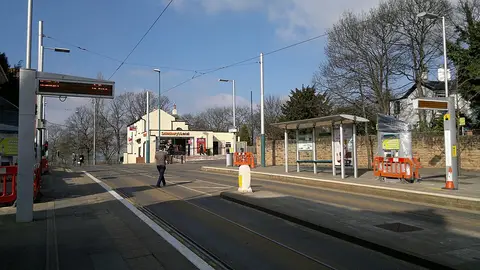 Historic sites01
High School Tram Stop
Waverley St · Nottingham● Website● Phone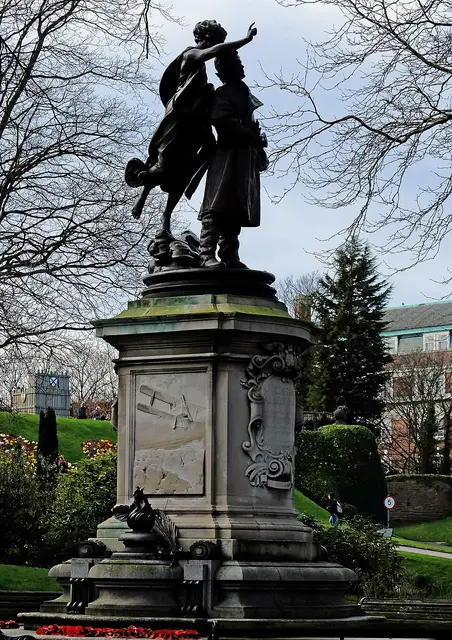 Monuments02
Statue of Captain Albert Ball
· Nottingham○ Website○ Phone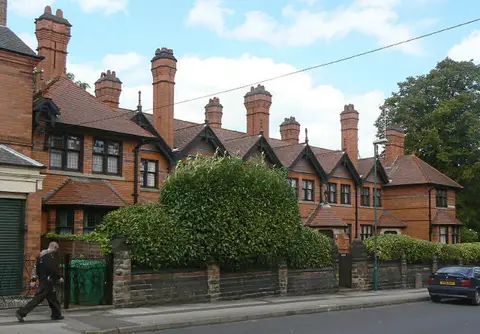 Historic sites03
Norris Almshouses
No address · Nottingham○ Website○ Phone Historic sites04
You need a free account to leave reviews and photos – that keeps comments genuine and lets you edit them later.
Visitors with Hollywood expectations of Robin Hood films should be aware that this is not a medieval castle, but a small stately home with only the gatehouse remaining from the original castle. The castle includes grounds with a children’s play area and extensive views over the region, and a museum with various exhibitions inside the house itself (including the country's first municipal art gallery). After a refurbishment the castle reopened in 2021 with a number of interactive exhibits and games. A tour of the caves under the castle can also be booked for an additional fee.
Source: Wikivoyage, „Nottingham“ · authors per page history · CC BY-SA 4.0 · as of 7/17/2025