About The Exchange
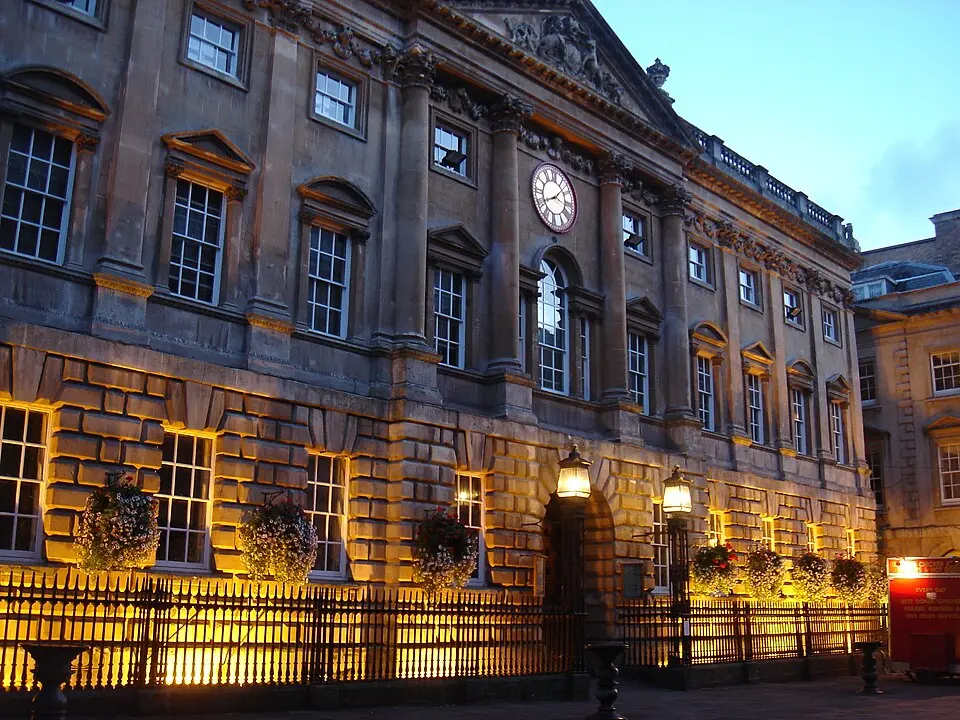
The Exchange in Bristol is a historically significant building on Corn Street, built between 1741 and 1743 by the architect John Wood the Elder. As the only surviving 18th-century exchange building in England, it holds special importance, since similar structures in Liverpool and London were destroyed by fires. The facade has an elegant design, with Corinthian columns in the center and pilasters at the sides, while a central round arch with lion-head door knockers marks the entrance. A frieze of human and animal heads and the royal coat of arms in the pediment underscore the building's trading heritage. Originally, the building housed an open courtyard with a colonnade as well as coffeehouses, taverns, and offices used by merchants from around the world.
Inside, you'll mostly find offices and the St Nicholas Market today, as the building has been remodeled several times since the 19th century. A major renovation in 1872 added a roof over the courtyard, while later alterations in the early 20th century made it possible for the city's valuation department to move in. After World War II, the clock tower was removed and the roof was lowered. One interesting piece of history is the building's connection to the era of the slave trade: the stucco work in the main hall depicts the four continents, and the exterior decoration also features figures from Africa, America, Asia, and Europe, symbolizing Bristol's international trade. In the 1960s, the building also served as a popular concert venue for well-known bands.
In front of the entrance stand four bronze tables known as nails, dating from the 16th and 17th centuries. These portable trading tables with raised edges once gave merchants a secure surface for coins and contracts. One of the pillars bears the name of the wealthy merchant John Barker, who was mayor of Bristol under Charles I. The facade also features a historic clock, installed in 1822. It shows two different time zones: the red hand indicates Bristol local time, while the pink hand shows Greenwich Mean Time. This dual display was introduced when the city officially adopted the standard time needed for railway timetables in 1852, to illustrate the difference from London time.
At a glance
- Category
- Sight › Historic sites
- Rating
- no reviews yet · write a review
- Address
- Corn St
BS1 1JH Bristol, United Kingdom - Phone
- +448704440654
- Website
- —
- —
- Coordinates
- 51.45440° N · -2.59350° E
- Data quality
- confidence 0.87
- Identifier
- ID eb0b5c56-a92…
Part of the tour
Bristol in a Day: Old Town, Harbor and Brandon Hill →Location & surroundings
Toggle layersRatings & comments
none yetNear The Exchange
closest 5 per category · 2 kmSights
Museums
Hotels
More:Historic sites in Bristol (176)All sights in Bristol (193)
268 places within 2 km loaded.

You need a free account to leave reviews and photos – that keeps comments genuine and lets you edit them later.
The Palladian Corn Exchange, built in 1743, boasts a clock on its frontage that ingeniously tells time both in the new-fangled GMT and the old Bristol time. In front are nails (in reality Bronze pillars) over which the local merchants did business; from these come the expression 'cash on the nail'.
Source: Wikivoyage, „Bristol“ · authors per page history · CC BY-SA 4.0