Lucerne: Chapel Bridge, Lake Lucerne and Mount Pilatus
Travel guide · editorialFor many visitors, Lucerne is the quintessential picture of Switzerland: a covered wooden bridge, a mountain lake and, behind them, the peaks of Pilatus and Rigi. But a vacation in Lucerne also takes you into the Entlebuch, a UNESCO biosphere reserve with raised bogs, and to small country towns such as Sursee and Willisau.
From the Lake to the Hill Country
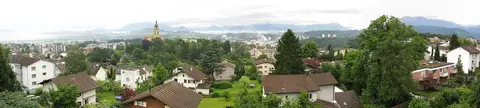
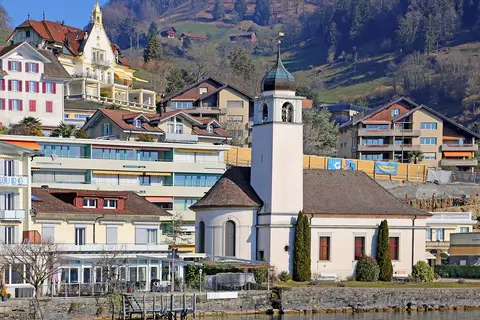
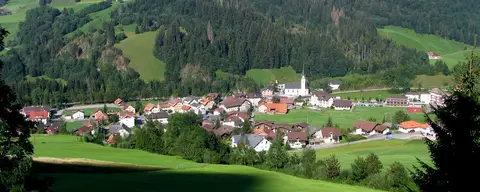
The canton lies on the western shore of Lake Lucerne, whose branching arms stretch out between steep mountains. To the north and west, green hill country follows, with Lake Sempach and Lake Baldegg. In the southwest lies the Entlebuch, where Flühli and Sörenberg are starting points for bog hikes and for the Brienzer Rothorn. Thanks to its mild climate, Weggis on the southern side of the Rigi is considered the "Riviera" of the lake.
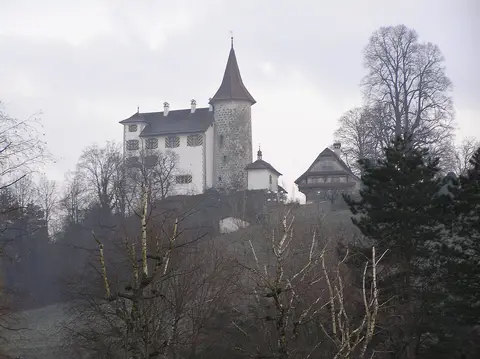
In the north of the canton lies the Lucerne Hinterland with Willisau, Zell and the Napf region, a landscape of ridges, deep ravines and scattered farmsteads. In the past, gold was washed out of the streams on the Napf, and amateur prospectors still try their luck today. The Seetal valley with Lake Baldegg and Heidegg Castle offers vineyards, rose gardens and bike paths.
The City of Lucerne
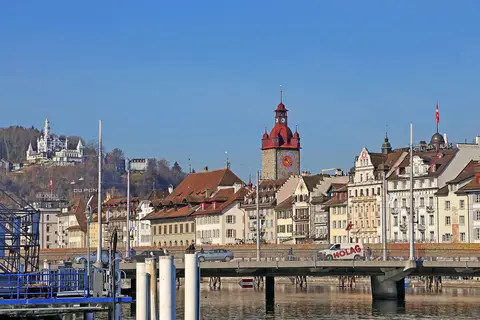
The Chapel Bridge, dating from the 14th century, with its octagonal Water Tower is the city's landmark. It was reconstructed after a fire in 1993, and some of the triangular gable paintings survived. The Spreuer Bridge downstream features a Dance of Death. In the Old Town, the painted facades on the Weinmarkt stand out, and the Museggmauer, with its towers, marks the northern edge of the city. On the lakefront stands the KKL by Jean Nouvel, home to the Lucerne Festival in summer. Kriens and Emmen are established suburbs; the cable car up Pilatus starts in Kriens.
Sights in Lucerne
The sights in Lucerne include the Lion Monument, which commemorates the Swiss Guards who fell in Paris in 1792, and the Swiss Museum of Transport with its locomotives, aircraft and planetarium. The world's steepest cogwheel railway climbs Pilatus from Alpnachstad, and Europe's first mountain railway, built in 1871, runs up the Rigi. If you're looking for peace and quiet, visit the Hofkirche, the Rosengart Collection with works by Picasso and Klee, or the Old Town of Sursee on Lake Sempach.
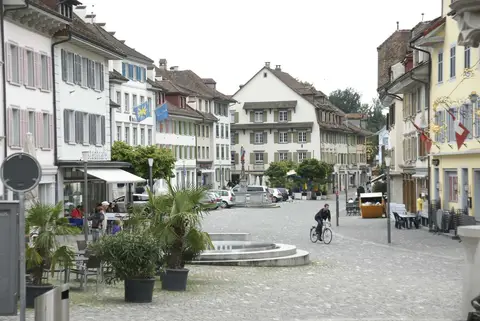
Other Lucerne destinations include the small town of Sursee with its town hall and lakeside promenade on Lake Sempach, where the Swiss Ornithological Institute in Sempach tells you about native birds, as well as the Battle Monument near Sempach, which commemorates the Swiss Confederates' victory over the Habsburgs in 1386. The Entlebuch Biosphere is well suited to bog hikes and snowshoe tours.
Fasnacht and Cuisine
The Lucerne Fasnacht begins with a bang at 5 a.m. on Dirty Thursday and is one of the largest folk festivals in Switzerland; Guggenmusik bands parade through the alleys for days. Culinarily, the Chügelipastete takes center stage, a puff pastry pie filled with veal meatballs in a cream sauce. Willisau is known for its hard Willisauer Ringli cookies, and coffee often comes as a "Kafi Luz" with schnapps.
Getting There and Best Time to Visit
The train from Zurich to Lucerne takes about 45 minutes, and from Bern one hour. Paddle steamers of the lake shipping company connect the towns along the lake. The best time to visit is May to October; Fasnacht fans come in February.