Västmanland: Silver Mine, Ironworks and the Shores of Lake Mälaren
Travel guide · editorialVästmanland is one of Sweden's smallest provinces, yet it packs more than a thousand years of history into a compact area: Viking graves, an ironworks with World Heritage status and a silver mine that once helped finance Sweden's era as a great power. A vacation in Västmanland also means summer days on Lake Mälaren and canoe trips along old canals.
Landscape and Location
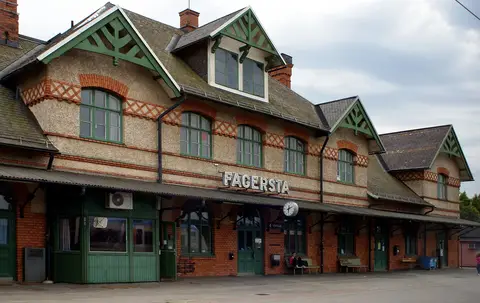
The south of the province lies on the northern shore of Lake Mälaren, with bays, islands and fertile farmland. Farther north the terrain becomes hillier and more heavily forested; this is where Bergslagen begins, with lakes, forests and traces of mining. The Strömsholm Canal runs for about 100 kilometers (62 miles), linking the mining region around Smedjebacken with Lake Mälaren, and is popular today with canoeists and recreational boaters. In the north, lakes such as Åmänningen near Fagersta stretch far into the forests. The north is characterized by old mine ponds, woodland and marked hiking trails.
Sights in Västmanland
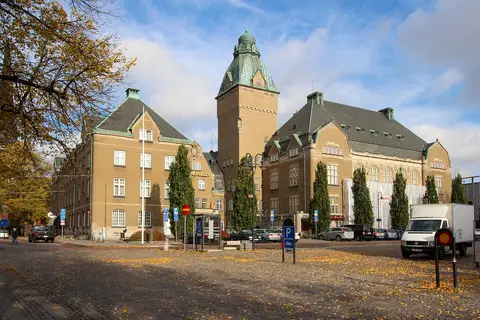
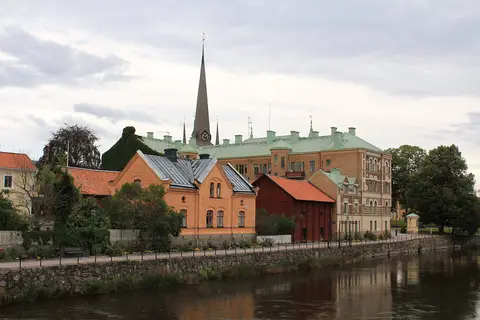
Västerås, the largest city, has a cathedral containing the tomb of King Eric XIV, an old town with wooden houses around Kyrkbacken and a harbor with boats to the islands of Lake Mälaren. On the edge of town lies Anundshög, Sweden's largest burial mound, surrounded by ship settings and runestones. The Sala Silver Mine was the country's most important source of silver in the 16th and 17th centuries; guided tours descend as far as 155 meters (509 feet), and you can even spend the night in a cavern in the mine. The Engelsberg Ironworks near Fagersta is one of the best-preserved ironworks in the world and a UNESCO World Heritage Site, with a manor house, blast furnace and workers' houses from the 17th and 18th centuries. Arboga is a medieval small town with wooden buildings along the river, Köping is a harbor town at the western end of Lake Mälaren, and Strömsholm Palace with its equestrian center was a favorite retreat of the royal family. Västerås also has the Vallby open-air museum, with farmsteads and workshops from around the province, and in Sala the Aguéli Museum honors the painter Ivan Aguéli. Near Norberg, Lapphyttan, one of the oldest known blast furnaces in Europe, has been excavated, and a former mining complex hosts an electronic music festival. Strömsholm Palace has also been a center of horsemanship for centuries, with a renowned riding school.
Culture and Economy
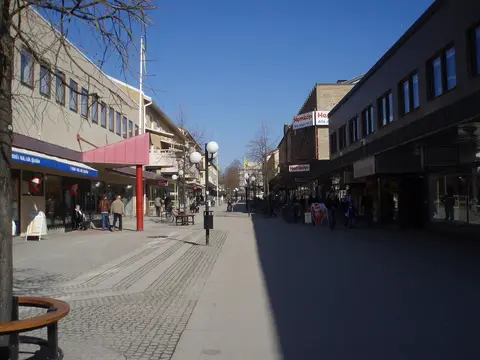
Västerås is a major industrial center; electrical engineering companies such as ABB have a long tradition here. At the same time, the region is rich in cultural events, from summer festivals to markets in old Arboga. In Sala, the townscape and waterways recall the mining era, when an ingenious system of ponds and canals powered the mine's pumps. In 1435, Arboga hosted an assembly often regarded as the first Swedish parliament.
Food, Getting There and Best Time to Visit
The cuisine is down-to-earth Swedish, with fish from Lake Mälaren such as pikeperch and perch, dishes made with products from farm shops, and cucumbers from Västerås, long known as pickling cucumbers. Västerås is just under an hour from Stockholm by train, and the small airport mainly handles charter flights. The best time to visit is between May and September. In summer, a canoe trip on the Strömsholm Canal is well worth it, with small cafés beside its locks. The region is about an hour from Stockholm and makes a good weekend getaway.