Norrbotten: Northern Lights, Midnight Sun, and Lapland
Travel guide · editorialNorrbotten is Sweden's largest and northernmost province, covering a quarter of the country's land area yet home to only about 250,000 people. A vacation in Norrbotten means northern lights above frozen lakes, dog sled rides, the midnight sun over mountain peaks, and encounters with Sami culture.
Landscapes from the Gulf of Bothnia to the Fjäll
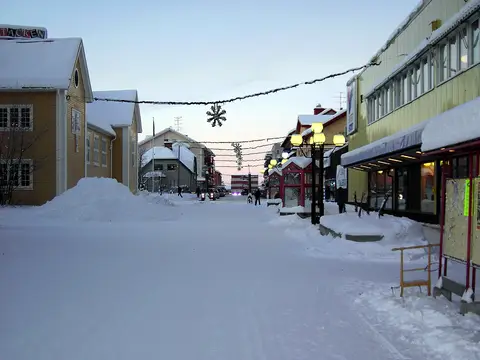
The province stretches from the archipelago coast on the Gulf of Bothnia to the high mountains along the Norwegian border, where Kebnekaise, at just over 2,000 meters (about 6,600 feet), is Sweden's highest peak. In between lie endless forests, bogs, and the great rivers Torne, Kalix, Lule, and Pite. Much of the province lies north of the Arctic Circle: in summer the sun doesn't set for weeks, and in winter it stays below the horizon for just as long in the far north. The national parks Sarek, Padjelanta, and Stora Sjöfallet together form the Laponia World Heritage Site. In the east, the Torne River forms the border with Finland; Haparanda and the Finnish town of Tornio have almost grown together into a single city. The archipelago off Luleå is a popular swimming destination in summer.
Sights in Norrbotten
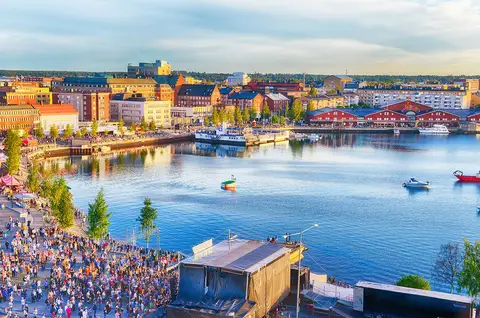
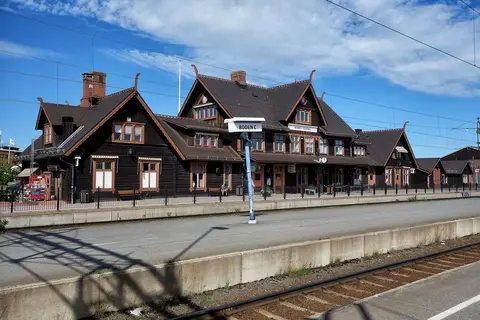
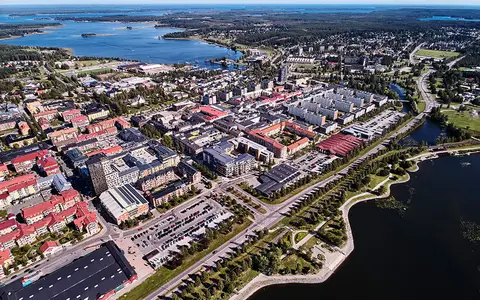
Luleå sits on a peninsula in an archipelago of more than 1,000 islands, which can be reached by ice roads in winter. The church town of Gammelstad, with more than 400 small red wooden houses where farmers once stayed overnight when attending church, is a UNESCO World Heritage Site. Kiruna, Sweden's northernmost city, is being relocated eastward because of iron ore mining; the town hall and church have already been moved. In nearby Jukkasjärvi, the Icehotel is rebuilt from river ice every winter. Abisko is considered one of the best places in the world to see the northern lights, and in summer it is the starting point of the Kungsleden trail. Gällivare has one of Europe's largest ore mines, Boden has a massive fortress from the early 20th century, and Piteå draws summer visitors with the sandy beaches at Pite Havsbad. Near Harads you'll find the Treehotel, with tree houses designed by various architects in the middle of the forest, and in winter, icebreaker cruises on the Gulf of Bothnia offer a special experience.
Sami Culture and Tornedalen
The Sami have lived in Sápmi for thousands of years and still herd reindeer today. Jokkasmok hosts a large winter market every year in early February, and the Ájtte Museum explains the culture and nature of the fjäll. In Tornedalen on the Finnish border, people speak Meänkieli, a distinct variety of Finnish. Many Sami families still follow their reindeer between winter pastures in the forest and summer pastures in the fjäll. The Silver Museum in Arjeplog displays Sami silver jewelry.
Food, Getting There, and Best Time to Visit
Typical foods include reindeer meat, Kalix löjrom (the orange roe of the vendace, with protected designation of origin), cloudberries, and palt, potato dumplings with a bacon filling. Luleå and Kiruna have airports with connections to Stockholm, and night trains run from Stockholm via Boden and Kiruna to Narvik. The best time to visit for northern lights and snow is February to March, and for hiking and the midnight sun, June to August. The Inlandsbanan railway ends in Gällivare and runs south through forests and Lapland in summer. For the northern lights, a clear sky and a spot away from street lamps are usually all you need.