Jönköping County: On the Southern Shore of Lake Vättern
Travel guide · editorialJönköping County covers the northern part of Småland, with its forests, lakes, and red wooden farmsteads, and borders Lake Vättern, Sweden's second-largest lake, to the north. A vacation in Jönköping County leads you to towns with a tradition of industry and craftsmanship, to the island of Visingsö, and through a landscape straight out of a Swedish picture book.
Landscape and Location
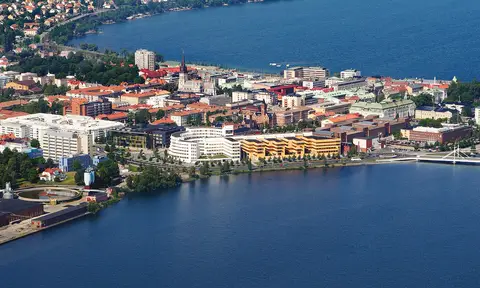
The southern Swedish highlands rise here to more than 370 meters (1,214 feet), and their highest point, Tomtabacken, lies near Nässjö. Dense conifer forests, bogs, and countless lakes shape the scenery, with pastures edged by stone walls in between. Along the northern edge, Lake Vättern forms a steep fault scarp, so Jönköping sits on the shore like an amphitheater. To the west, the Lagan River flows through Värnamo, where the Store Mosse wetland is protected as a national park and is one of the largest bogs in southern Sweden. To the east lies the Höglandet, with dark forests and lakes around Eksjö and Vetlanda. Lake Vättern is so clear that its water is used as drinking water in many places. In the west, the Nissan River flows through Gislaved, and the Isaberg ski area is near Hestra.
Sights in Jönköping County
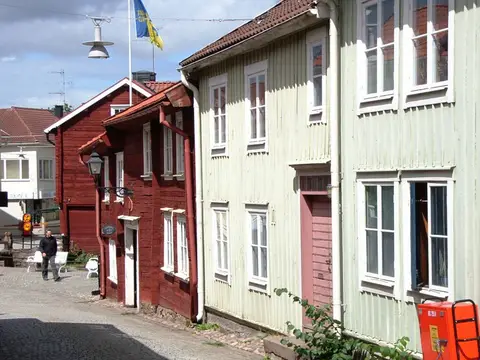
Jönköping was the birthplace of the safety match; the Match Museum in the old factory tells the story. Along the lakeshore and in the old town around Sofia Church, cafés and promenades invite you to linger, while the Elmia fairgrounds draw visitors to major events such as the DreamHack LAN party. Huskvarna, which has grown together with Jönköping, is home to the manufacturer of the same name, known for weapons, sewing machines, and chainsaws, and its factory museum offers a look inside. To the north lies Gränna, famous for its red-and-white striped polkagris candy canes and as the port for the ferry to Visingsö, a long, narrow island with a castle ruin, oak forest, and horse-drawn carriages. Eksjö is considered one of Sweden's best-preserved wooden towns, with lanes dating from the 17th century. Vetlanda is a gateway to the lakes and forests of the highlands, and Nässjö is an important railway junction. From Jönköping's city park, with its small open-air museum, you have a sweeping view across the lake. On Visingsö, horse-drawn carriages known as remmalag travel through an oak forest planted in the 19th century for the navy's shipbuilding. In Värnamo, the Bruno Mathsson Center honors the famous furniture designer. Above Gränna, the Brahehus castle ruin offers one of the finest views over Lake Vättern and Visingsö.
Culture and Economy
The region around Gnosjö and Värnamo is known for its entrepreneurial spirit; hundreds of small industrial firms make wire, metal goods, and furniture. The area also has a strong free-church tradition, and Jönköping is sometimes called the "Jerusalem of Sweden." In Huskvarna, the river of the same name tumbles down into the valley in waterfalls that once powered the factories. In Gnosjö, an industrial museum explains how wire drawing grew into a network of small businesses.
Food, Getting There, and Best Time to Visit
Typical of Småland are ostkaka, a cheesecake made from curdled milk with almonds, served with cream and jam, and isterband, a mildly tangy sausage. Arctic char and whitefish come from Lake Vättern. Jönköping lies on the E4 motorway, trains connect Nässjö with Stockholm and Malmö, and the small airport serves a few routes. The best time to visit is from June to September. In Gränna, you can watch the candy makers pull the polkagris.