Dalarna: Lake Siljan, Wooden Horses, and Midsummer
Travel guide · editorialMany Swedes consider Dalarna the most Swedish place in Sweden: red wooden houses by the lake, painted wooden horses, fiddle music, and Midsummer dances around the maypole. A vacation in Dalarna takes you to Lake Siljan, to the old mining town of Falun, and up into the mountains, where the country's largest ski resorts lie in winter.
Landscape from Siljan to the Mountains
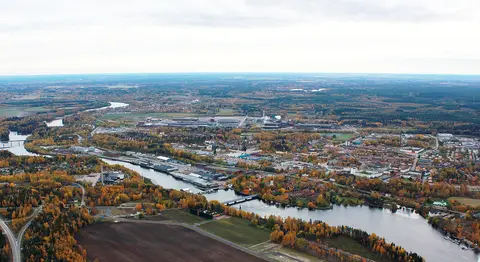
Lake Siljan, in the middle of the province, fills the rim of a meteorite crater that formed around 377 million years ago and is surrounded by villages, meadows, and hills. The Dalälven River, formed by the Österdalälven and Västerdalälven, flows through the province to the Baltic Sea. In the northwest, the land rises toward the mountains, with ski areas such as Sälen and Idre and Fulufjället National Park, where Njupeskär, Sweden's highest waterfall, plunges more than 90 meters. In the south, in Bergslagen around Ludvika and Avesta, old ironworks and mines mark the forests. The Dalälven continues southeast past Avesta, where a giant Dala horse stands at the edge of town.
Sights in Dalarna
In the 17th century, the Falun copper mine was the most important in Europe and supplied the pigment for the typical Falu red paint on wooden houses; the mine and the mining landscape are a UNESCO World Heritage Site and can be visited with a helmet and lamp. On Lake Siljan you'll find Rättvik with its 628-meter-long wooden pier reaching into the lake, Leksand with its church and Midsummer festival, and Mora, the finish line of the Vasaloppet, the oldest and longest cross-country ski race in the world. In Mora, the Zorn Museum commemorates the painter Anders Zorn, and in nearby Nusnäs the red-painted Dala horses are still carved by hand. Carl Larsson's home in Sundborn near Falun is a classic of Scandinavian interior style. Borlänge, an industrial city on the Dalälven, is the starting point for Dalhalla, a music festival venue in a former limestone quarry near Rättvik. Ludvika in Bergslagen is an industrial town with the Gammelgården open-air museum, and in summer Leksand draws visitors with the open-air play Himlaspelet, which has been performed since 1941.
Culture and Tradition
Nowhere in Sweden is Midsummer celebrated as exuberantly as at Lake Siljan, with traditional costumes, folk dances, and church boat races. Kurbits painting, an ornamental peasant style, decorates chests and the walls of farmhouses. In summer, cows move up to the fäbodar, the mountain pastures, where you can sample cheese. The folk music scene is vibrant: at the Musik vid Siljan festival, fiddlers and choirs perform in summer in churches and meadows. In villages such as Våmhus near Mora, people remember the hair art for which the women of the region were once known even abroad. The Vasaloppet in early March covers 90 kilometers from Sälen to Mora and commemorates Gustav Vasa's flight in the winter of 1520/21.
Food, Getting There, and Best Time to Visit
Typical local foods include fäbod cheese, messmör (a sweetish whey spread), crispbread, and grilled Arctic char from mountain lakes; moose and cloudberries come from the forest. Trains from Stockholm reach Falun, Borlänge, Leksand, Rättvik, and Mora, and Sälen-Trysil Airport serves mainly winter visitors. The best time to visit is summer around Midsummer and in July; February and March are ideal for downhill and cross-country skiing.