Discover Bilbao: Guggenheim, Casco Viejo and Pintxos
Travel guide · editorialFew cities have reinvented themselves as radically as Bilbao: in just a few decades, a soot-stained industrial port town became a destination for architecture fans and food lovers. The turning point came in 1997 with the opening of the Guggenheim Museum – experts have spoken of the "Bilbao effect" ever since. A city break in Bilbao combines art, Basque cuisine and green hills.
Sights in Bilbao
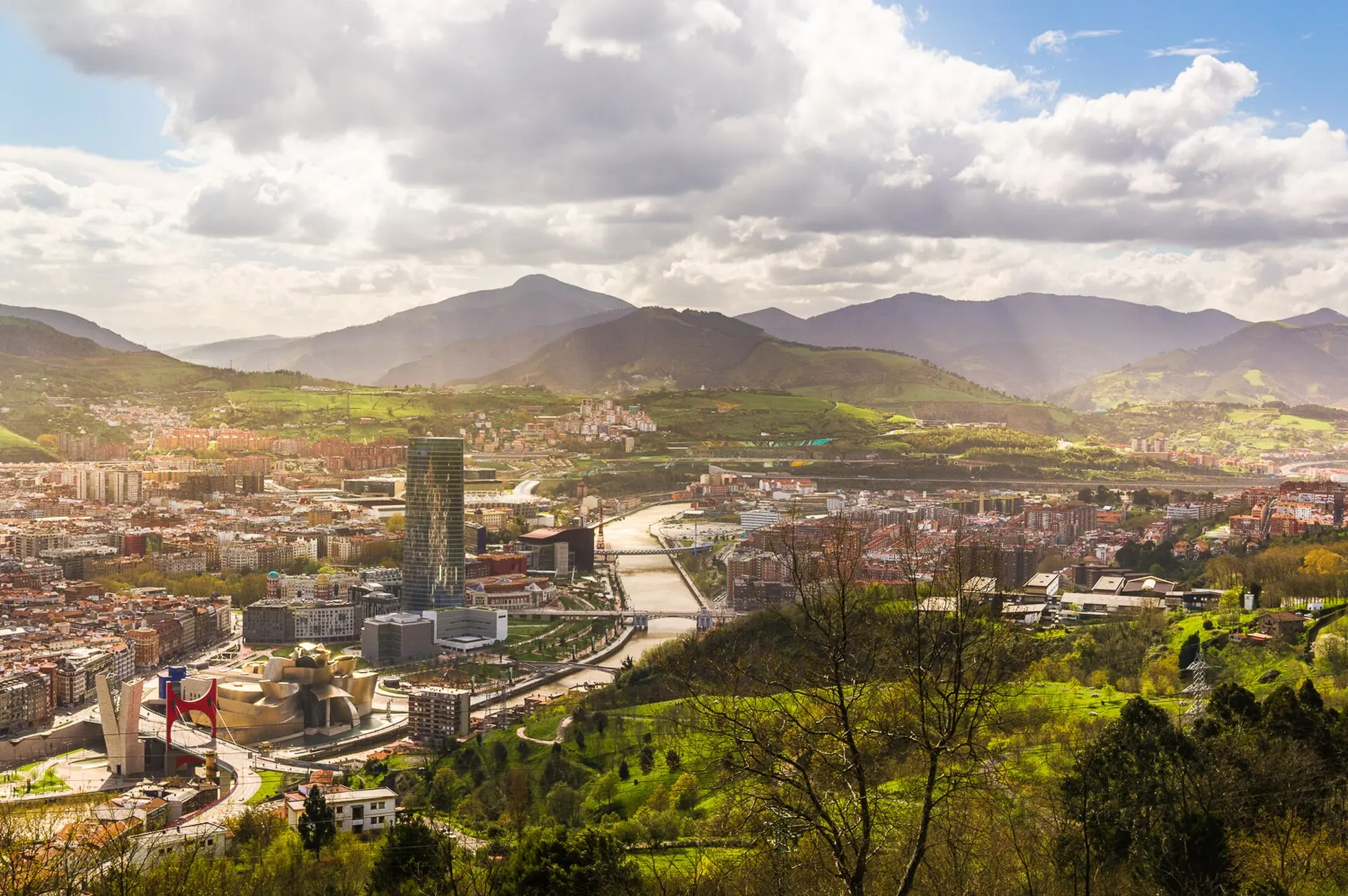
Frank Gehry's Guggenheim Museum, with its curving titanium panels on the banks of the Nervión, is a sculpture in its own right. Out front, "Puppy," a 40-foot-tall dog made of flowers by Jeff Koons, stands guard, and on the water side you'll find Louise Bourgeois's giant spider "Maman." Inside, large-scale installations such as Richard Serra's steel spirals are on permanent display. The Museo de Bellas Artes, just a few steps away, shows works from El Greco to Goya. Santiago Calatrava's Zubizuri bridge spans the river. If you want to see the city from above, take the funicular up Mount Artxanda. In the Abando district, the Teatro Arriaga and La Concordia station, with its Art Nouveau facade, are worth a look.
Casco Viejo and Neighborhoods
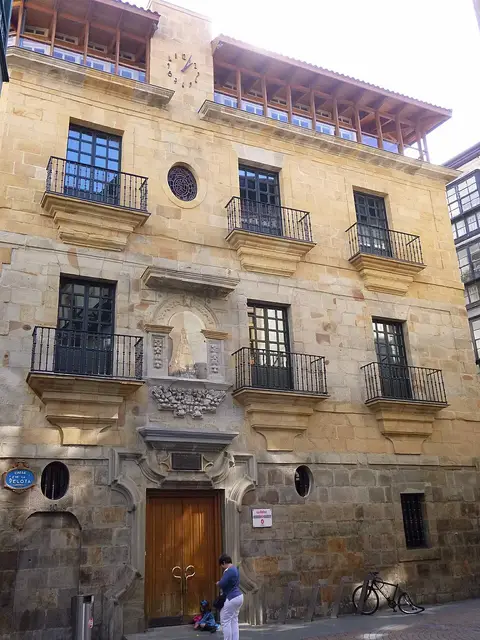
The old town, Casco Viejo, also called Siete Calles ("Seven Streets") after its seven original lanes, lies on the right bank of the Nervión. Here you'll find the Gothic Santiago Cathedral, the Mercado de la Ribera, one of the largest covered market halls in Europe, and the arcaded Plaza Nueva. Abando is the bourgeois center with the Gran Vía and elegant shops. Deusto, home to a university with a long tradition, has transformed into a creative district along with the Zorrotzaurre peninsula. San Francisco and Bilbao La Vieja across the river are multicultural, with galleries, small bars and a young scene. High above the city stands the Basilica of Begoña, in the neighborhood that takes its name from the city's patron saint.
Pintxos and Basque Cuisine
Bilbao eats standing up: at the bar counters in Plaza Nueva and the Casco Viejo, pintxos pile up – small bites served on bread, from the classic Gilda with olive, anchovy and chili to elaborate miniature creations. You wash them down with a glass of txakoli, a lightly sparkling white wine from the region, or a small beer called a zurito. Bacalao al pil-pil, cod in an emulsion of olive oil and garlic, and txangurro, stuffed spider crab, are among the classics. The restaurants in Bilbao and the surrounding area rank among the best in Spain; the Basque Country has numerous Michelin-starred kitchens. In August the city celebrates Aste Nagusia, nine days of festivities with concerts and fireworks.
Soccer and the River
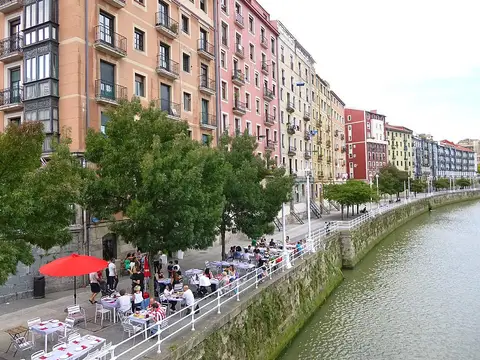
Athletic Club is more than a team: it traditionally fields only players who come from the Basque Country or were trained there, and the San Mamés stadium, the "Cathedral," is a cauldron on match days. Along the banks of the Nervión, a long promenade runs from the Guggenheim to the Casco Viejo, lined with sculptures and bridges – ideal for an evening stroll.
Getting Around and Best Time to Visit
Bilbao Airport (BIO) is about 7.5 miles to the north, and buses run to the center. The metro, designed by Norman Foster, is recognizable by its glass entrances, nicknamed "Fosteritos," and runs out to the beaches at the river mouth. A tram runs along the river. The best time to visit is from May to October; rain is a part of every season, though, so pack an umbrella. Day trips lead to the Vizcaya Bridge, a UNESCO World Heritage Site, to the rocky island of San Juan de Gaztelugatxe, or to San Sebastián.