Prahova: Royal Castles, Bucegi Peaks, and Oil
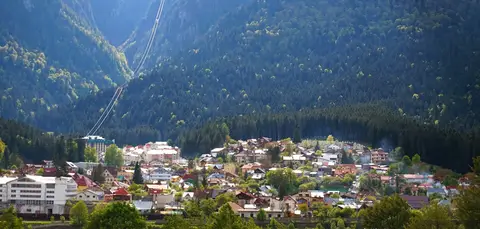
Travel guide · editorialBetween the Wallachian Plain and the Carpathian ridge, Prahova County climbs from oil fields to rocky peaks above 2,000 meters in just a few dozen miles. A vacation in Prahova usually leads to the Prahova Valley, where kings built their summer residence and where people from Bucharest still head for weekend getaways.
Sinaia and Peleș Castle
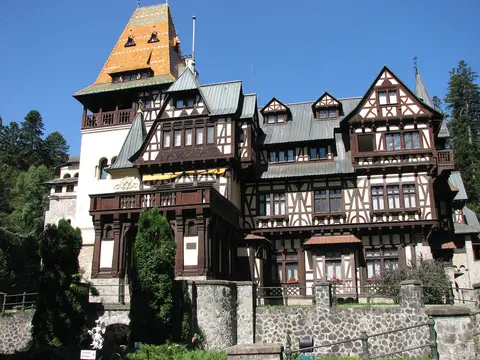
Sinaia grew up around a monastery and became the royal court's summer retreat in the 19th century; its real draw is Peleș Castle. King Carol I had it built starting in 1873 in the German Neo-Renaissance style, with wood-paneled halls, an armory, and one of the first electrically lit residences in Europe. A few steps away stands the smaller Pelișor Castle, with Art Nouveau interiors designed for Queen Marie. The Sinaia Monastery, which gave the town its name, dates from the 17th century. In winter, skiers take the gondola up to Cota 2000.
Bucegi: Sphinx, Babele, and the Heroes' Cross
From Bușteni, a cable car glides up to the Bucegi Plateau, where wind and weather have carved rock formations such as the Sphinx and the Babele, the "Old Women." On Caraiman Peak stands the Heroes' Cross, a memorial to those who fell in World War I, visible from the valley in clear weather. In Bușteni, the Cantacuzino Castle, with its terrace overlooking the valley, is also worth a visit. Farther up lies Azuga, a small ski resort with long runs. The sights in Prahova can easily be linked on foot, provided you bring stamina and sturdy shoes; sudden changes in the weather are common in the mountains.
Ploiești, Câmpina, and Wine Country
The southern part of the county feels entirely different. Ploiești became the center of Romanian oil production in the 19th century, and in World War II it was the target of heavy air raids because of its refineries. An oil museum tells this story, and the Clock Museum has a surprisingly rich collection. Suburbs such as Blejoi are growing with housing developments and business parks. In Câmpina stands the enchanted Hasdeu Castle, which the scholar Bogdan Petriceicu Hasdeu had built for his daughter Iulia, who died young. To the east begins the Dealu Mare wine region, whose red wines made from Fetească Neagră and Cabernet are among the best in Romania; many wineries offer tastings.
Off the Main Road
Many visitors combine a day in Sinaia with a hike to the Babele Chalet or a side trip to Azuga, known for its long-established brewery and its ski slopes. In summer, the Sinaia Casino hosts concerts and exhibitions, and the building recalls the heyday of the summer resort. In Câmpina and the surrounding villages, you come across traces of the early oil industry: old pumps, workers' houses, and small museums. If you want fewer crowds, stay in guesthouses in the Doftana Valley or in Cheia, where the forests are denser and the roads quieter.
Getting There and Best Time to Visit
Prahova lies on the country's most important north-south corridor. Trains from Bucharest to Brașov stop in Ploiești, Câmpina, Sinaia, and Bușteni, which makes getting there easy; the DN1 national road, by contrast, is notoriously clogged on weekends. The nearest airport is Bucharest Otopeni. The best time for hiking is June through September, and for skiing, January through March. In autumn, the vineyards of Dealu Mare are ideal for day trips, when the harvest is under way and fresh must is served in the villages.