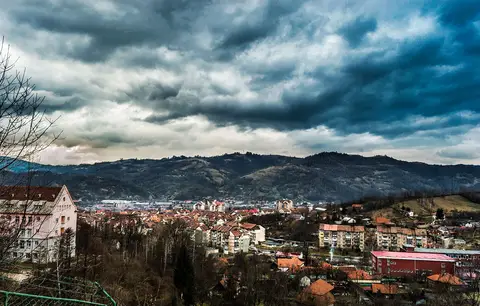
Hunedoara County: Castles, Dacian Fortresses, and the Retezat Mountains
Travel guide · editorialHunedoara County is the heartland of the ancient Dacians and one of the most history-rich regions in Romania. On a trip to Hunedoara, you can stand before the fairy-tale Corvin Castle, hike in the country's oldest national park, and search the Hațeg Country for traces of dwarf dinosaurs.
Landscape Between the Mureș and the Retezat
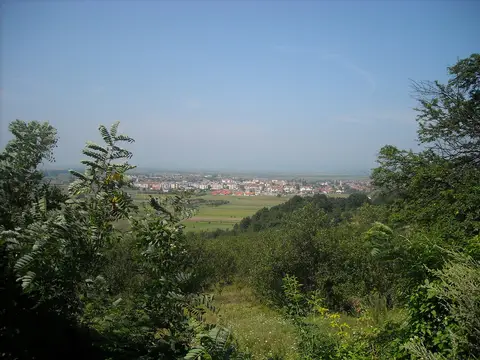
In the north, the Mureș River flows through a broad valley, while to the south the Southern Carpathians rise with the Retezat Mountains. Founded in 1935, Retezat National Park is the oldest in Romania: granite peaks over 2,500 meters, around 80 glacial lakes such as Lake Bucura, and extensive primeval forests. To the east lies the Jiu Valley with Petroșani and Lupeni, for decades the country's most important hard coal mining region. Today the towns are betting on tourism, for example at the Straja ski area above Lupeni or in the Parâng Mountains. Between these two worlds lies the Hațeg Basin, a wide depression ringed by mountains, with hay meadows, stone churches, and small villages.
Things to See in Hunedoara County
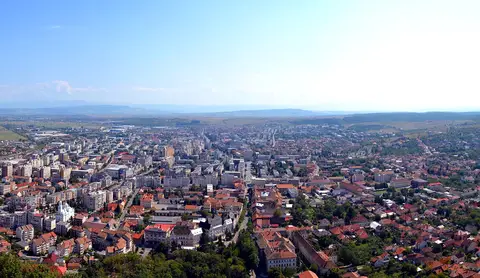
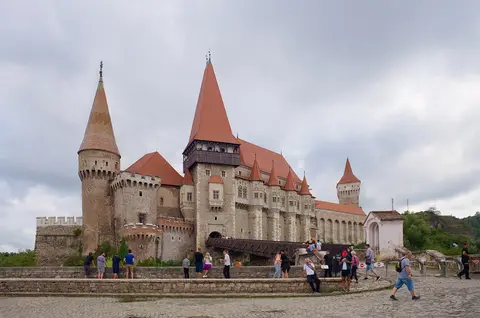
Corvin Castle in Hunedoara is among the most impressive castles in Europe. John Hunyadi, a military commander against the Ottomans, had it expanded in the 15th century into a Gothic residence with pointed towers, a Knights' Hall, and a high wooden bridge. In Deva, the castle ruin sits on a volcanic cone above the town, reachable by funicular or on foot. In the Orăștie Mountains you'll find the Dacian fortresses, above all Sarmizegetusa Regia with its limestone sanctuary, a UNESCO World Heritage Site since 1999. After conquering Dacia around 106, the Romans built their provincial capital, Ulpia Traiana Sarmizegetusa, in the Hațeg Country, where the amphitheater and forum have been excavated.
Hațeg: Dinosaurs and a Church Built from Roman Stones
The Hațeg Country UNESCO Geopark stretches around Hațeg. Here researchers found fossils of dwarf dinosaurs that lived on an island about 70 million years ago and therefore stayed unusually small. Visitor centers in several villages explain the finds. A curiosity is the church of Densuș, one of the oldest stone churches in Romania, built from salvaged Roman masonry. European bison once again roam the Hațeg bison reserve.
Culture, Food, and Daily Life
Iron gave the county its name: the Dacians were already smelting ore here, and Hunedoara was a major steel town until the 1990s. In the villages at the foot of the Retezat, sheep's cheese is aged in spruce bark, served with polenta, bacon, and plum brandy (țuică). The mountain farming tradition of the Pădureni region west of Hunedoara shows in its black-and-red folk costumes. In the Jiu Valley, a mining museum in Petroșani tells of the hard work underground and of the miners' strikes that shook the entire country in the 1970s and 1990s. Deva, meanwhile, is known nationwide as the training center of Romania's women's gymnasts.
Getting There and Best Time to Visit
The A1 motorway connects Deva with Timișoara and Sibiu, and the nearest airports are in those two cities. Deva is easy to reach by train, and a rail line runs to the Jiu Valley via Simeria. Hikers are best off coming between June and September, when the huts in the Retezat are open and the passes are free of snow; Corvin Castle and the Dacian fortresses are worth a visit from May to October, and in winter Straja and Parâng draw skiers.