Viseu District: Dão Wine and Granite Towns
Travel guide · editorialA vacation in the Viseu district takes you into the granite highlands of the Beira Alta, where Dão wine grows and Baroque churches rise above small towns. To the north, the district reaches the vineyard terraces of the Douro; to the south, the slopes of the Serra da Estrela.
Landscape and Location
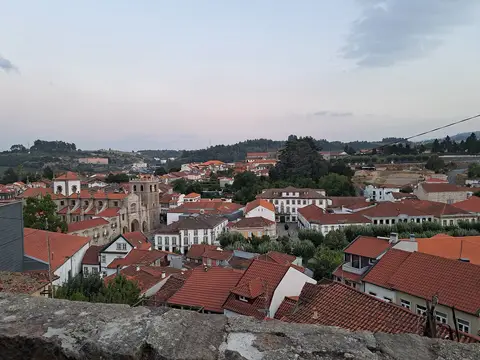
The district lies in the interior of northern Portugal between the Douro and Mondego rivers. Plateaus with pine forests, granite outcrops, and vineyards shape the landscape, cut through by the valleys of the Dão, the Paiva, and the Vouga. In the west rise the Serra da Arada and the Serra do Caramulo; in the north the land drops steeply to the Douro, where the terraces of the port wine region begin near Lamego and Resende. Winters are cool, summers hot and dry.
Viseu and Lamego
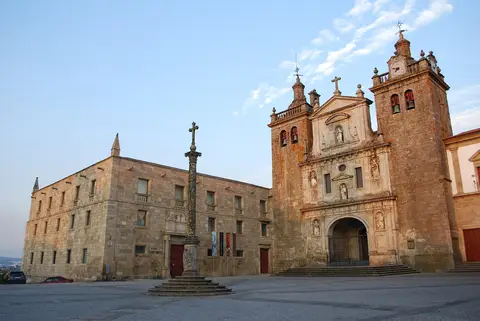
Viseu, the district capital, regularly ranks in surveys as one of the most livable cities in Portugal. At the highest point of the old town stands the cathedral with a Manueline vault, next to it the Museu Grão Vasco, named after the country's most important Renaissance painter, who worked here. Around the Rossio, with its tile pictures, and in the granite lanes you'll find wine bars and cafés. According to legend, the Lusitanian war leader Viriathus hid in the Cava de Viriato, a large octagonal earthwork on the edge of town. Lamego in the north is known for the sanctuary of Nossa Senhora dos Remédios: a Baroque staircase of around 600 steps, with fountains and azulejos, leads up to the church, which is the destination of a major pilgrimage in September.
Sights in the Viseu District
São Pedro do Sul has one of the oldest thermal baths on the Iberian Peninsula; the Romans bathed here, and the remains of the Roman baths lie next to the modern spa facilities. Around Várzea and Baiões you can hike through forests and river valleys, and the Paiva Gorge can be explored by canoe. Near Lamego, the Raposeira winery has been producing sparkling wine by the traditional method since the 19th century. In the Douro Valley you'll find medieval monasteries such as the Mosteiro de São João de Tarouca, one of the first Cistercian monasteries in Portugal.
Food and Drink
Dão wine, especially reds made from Touriga Nacional, is among the best in Portugal. It pairs well with Vitela de Lafões, tender veal from the area around São Pedro do Sul, Lamego ham, and Bôla, a bread filled with meat. For something sweet, try the Viriatos from Viseu. In fall, chestnuts are roasted, and in winter hearty stews come to the table.
Getting There and Best Time to Visit
Viseu has no train connection but is easy to reach via the A24 and A25 highways, about an hour and a half from Porto. A car is handy for excursions. The best time to visit is from May to October; in August, Viseu hosts the Feira de São Mateus, one of the country's oldest folk festivals, and the grape harvest begins in September. Many quintas in the Dão then open their cellars for tastings, and some offer rooms among the vines. In winter it can get frosty in the highlands, and snow occasionally falls in the mountains.