Portalegre District: Marvão, Elvas, and São Mamede
Travel guide · editorialA vacation in the Portalegre District takes you to the north of the Alentejo, right on the Spanish border. Here you'll find fortified villages perched on rocky ridges, some of the mightiest bastion fortresses in Europe, and a stud farm that has been breeding horses since the 18th century.
Landscape and Portalegre
The district links the broad plains of the Alentejo with the Serra de São Mamede mountain range, which rises to over 1,000 meters in the northeast. Chestnut and oak forests, springs, and a cooler climate set the mountains apart from the hot plains to the south. The district capital, Portalegre, lies at the foot of the Serra. It is known for its tapestries, which are woven using a special knotting technique from designs by well-known artists; a museum displays large wall hangings. The cathedral and Baroque noble palaces shape the old town, whose houses make up the main parish of Sé e São Lourenço.
Sights in the Portalegre District
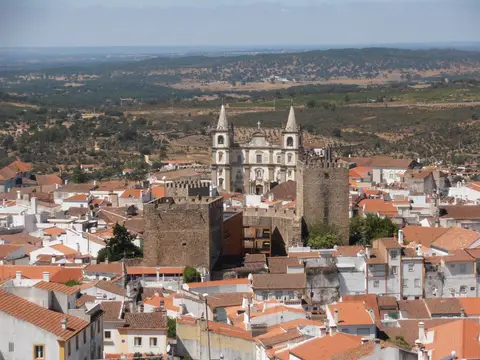
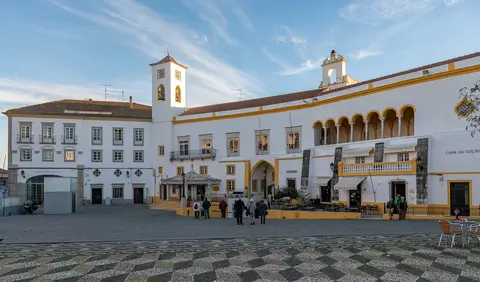
Marvão is a walled village on a granite crag more than 800 meters high, and its castle offers sweeping views far into Spain; a chestnut festival takes place here in the fall. In neighboring Castelo de Vide, lanes lead through the old Jewish quarter, with its small synagogue, to the Fonte da Vila, a Renaissance fountain. Elvas, on the border opposite Badajoz, has been a UNESCO World Heritage Site since 2012 thanks to its star-shaped bastions, forts, and the Amoreira Aqueduct; the garrison town is among the largest fortification complexes of its kind. In Alter do Chão, Lusitano horses are bred at the Coudelaria de Alter, founded in 1748, and in some years Campo Maior decorates its streets with paper flowers for the Festa do Povo; the Delta coffee roastery is also based there.
Food, Getting There, and Best Time to Visit
Typical fare includes lamb and pork dishes, migas, sheep's-milk cheese from Nisa, and candied Elvas plums. The red wines from the Serra de São Mamede are fresher than those from the plains. Portalegre is a good two and a half hours by car from Lisbon, and buses run regularly. The best time to visit is spring and fall, when the Serra is green and the fortified villages enjoy pleasant temperatures.