Aveiro District: Lagoon, Moliceiros and Ovos Moles
Travel guide · editorialA vacation in the Aveiro District revolves around water: the canals of the city of Aveiro with their brightly painted boats, the sprawling Ria de Aveiro lagoon, and long Atlantic beaches lined with striped fishermen's houses. Inland, you'll find castles, vineyards and spectacular wooden walkways above river gorges.
Location and Landscape
The district lies on the coast between Porto and Coimbra. Its defining feature is the Ria de Aveiro, a lagoon about 45 kilometers (28 miles) long that is separated from the sea by a narrow sand spit. Salt pans, rice fields, canals and reed islands form a flat, light-filled landscape that is home to storks and flamingos. Inland, the terrain rises into hills covered with eucalyptus and pine forests, reaching the mountains around Arouca in the east. To the south, the Bairrada wine region begins.
Aveiro and the Coast
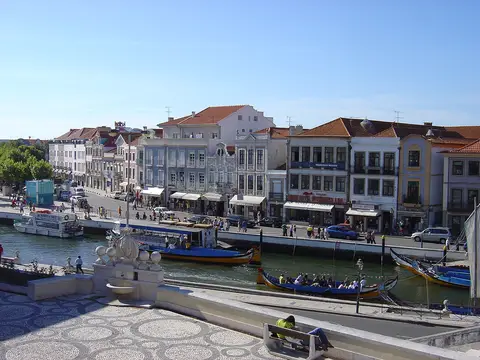
The district capital, Aveiro, is often called the "Venice of Portugal." Canals run through the center, plied by moliceiros, narrow boats with a high, curved bow that once hauled seaweed and are painted with naive, often cheeky pictures. Art Nouveau houses with tiled facades line the banks, the old train station is decorated with azulejos, and the Convent of Jesus houses the city museum. Nearby is Costa Nova with its red, blue and yellow striped wooden houses, the palheiros. In neighboring Ílhavo, with the port town of Gafanha da Nazaré, the Maritime Museum tells the story of cod fishing off Newfoundland, and the Vista Alegre porcelain manufactory shows its history dating back to 1824. Farther north, Espinho is a seaside resort with a casino and streets laid out like a chessboard.
Sights in the Hinterland
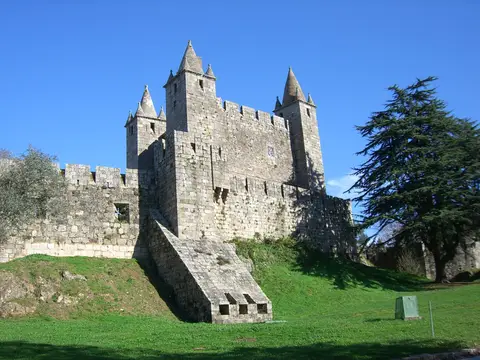
Santa Maria da Feira has a fairy-tale castle with pointed towers; every summer, the town turns into a medieval city during the Viagem Medieval festival. São João da Madeira is the center of the shoe industry and recalls its past with a hat museum. Ovar is known for its Carnival and its tile-clad houses, Oliveira de Azeméis for its parks. In Águeda, colorful umbrellas are strung above the alleys in summer. In Arouca, the Passadiços do Paiva, wooden walkways, run for about eight kilometers (5 miles) along a wild river gorge, and the 516 Arouca suspension bridge spans the valley at a dizzying height.
Food and Drink
Aveiro is famous for ovos moles, a cream of egg yolk and sugar encased in wafer-thin shells shaped like seashells and fish. Ovar is the home of a light pão-de-ló sponge cake that is still moist inside. In the Bairrada around Mealhada, people eat leitão, crispy roast suckling pig, and wash it down with sparkling wine or robust red wine made from the Baga grape. By the lagoon, eel stew and grilled fish are on the menu.
Getting There and Best Time to Visit
Aveiro is on the Lisbon–Porto rail line; express trains stop here, and the trip to Porto takes about 45 minutes. The nearest airport is Porto. Buses run to Costa Nova, and a car is handy for Arouca and the castles in the hinterland. The best time to visit is from May to September, when you can swim at the coast and take a boat out on the lagoon. In spring and fall, the light over the Ria is especially beautiful.