Warmia-Masuria: The Land of a Thousand Lakes
Travel guide · editorialWarmia-Masuria is Poland's lake region par excellence: more than two thousand lakes, linked by canals and rivers, lie scattered between pine forests and gently rolling hills. A vacation in Warmia-Masuria means sailing on Lake Śniardwy, paddling the Krutynia River, and strolling through towns of the former East Prussia.
Lakes, Forests, and Old Teutonic Castles
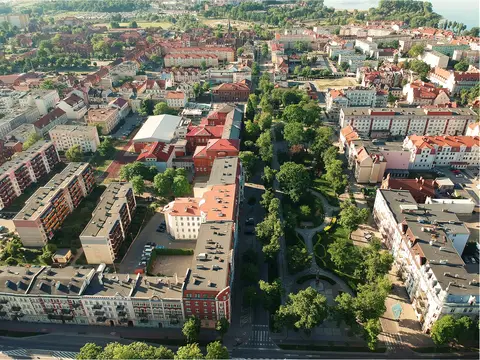
The voivodeship lies in northeastern Poland on the border with the Russian exclave of Kaliningrad. In the west it reaches the Vistula Lagoon, with Elbląg and Frombork; in the east it takes in the Masurian Lake District around Giżycko, Mikołajki, Węgorzewo, and Ełk. Between them lies Warmia around Olsztyn, which was historically Catholic, while Masuria was Protestant. The region is sparsely populated, with around 1.3 million inhabitants spread across more than 24,000 square kilometers. Until 1945 it was part of East Prussia; visitors still encounter reminders of that past in churches, manor houses, and cemeteries.
Sights in Warmia-Masuria
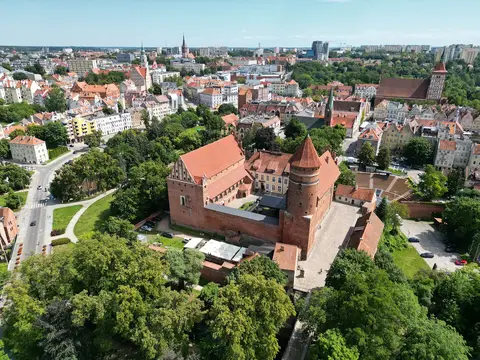
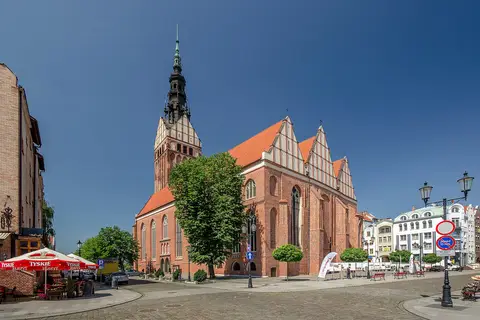
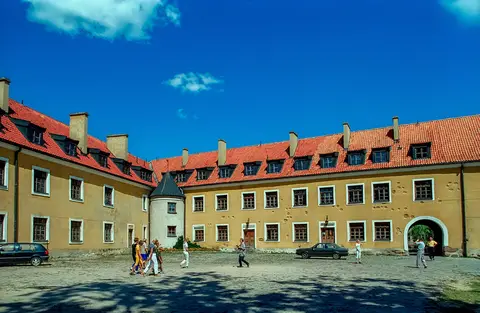
Olsztyn has an old town with the High Gate and a castle of the Warmia cathedral chapter, where Nicolaus Copernicus lived as administrator; his table for determining the equinox can still be seen on the wall. In Frombork on the lagoon, where he wrote his works, stands the cathedral in which his grave was rediscovered in 2005. Lidzbark Warmiński with its Bishop's Castle and the pilgrimage church of Święta Lipka, with its organ whose angel figures move, are Baroque highlights. The Elbląg Canal is a technical curiosity: ships are hauled overland on rail carts along inclined planes. Near Kętrzyn lie the ruins of the Wolf's Lair, Hitler's headquarters, where Stauffenberg carried out his assassination attempt in 1944.
At Grunwald, known in German historiography as Tannenberg, a Polish-Lithuanian army defeated the Teutonic Order in 1410; every July, thousands of reenactors restage the battle. Elbląg rebuilt its old town, destroyed in the war, modeled on old gabled houses, and the open-air museum in Olsztynek, German Hohenstein, displays farmhouses and windmills from Warmia and Masuria.
Masuria: Water and Nature
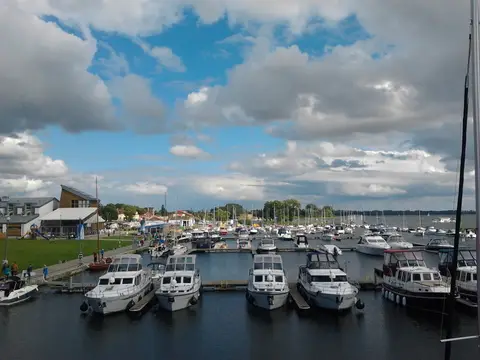
Mikołajki is the sailing center on Lake Śniardwy, Poland's largest lake, with harbors, pubs, and boat rentals. Giżycko on Lake Niegocin has the Prussian Boyen Fortress and is likewise a water sports town. In Masurian Landscape Park, the Krutynia, one of Poland's most beautiful canoe rivers, winds through forests; in Ruciane-Nida begins the Pisz Forest, a vast woodland area. Lake Łuknajno is a biosphere reserve home to mute swans. Węgorzewo and Ełk are starting points for bike tours and excursions into the forests. In Wojnowo, German Eckertsdorf, a church and former monastery recall the Philipponians, Russian Old Believers who immigrated in the 19th century.
Food, Getting There, and Best Time to Visit
Fish from the lakes (pike, zander, whitefish, and smoked eel) appear on every menu. Potato pancakes and pierogi with mushrooms are staples, and in autumn there are game dishes. Olsztyn-Mazury Airport (SZY) near Szczytno has a few connections; more often, travelers arrive via Gdańsk or Warsaw. By car, it's roughly eight hours from Berlin. The best time to visit is June through September, when the water is warm enough for swimming. In late summer the storks leave their nests, and in autumn the forests turn color.