Silesia: Industrial Heritage, Jasna Góra and the Beskids
Travel guide · editorialSilesian Voivodeship has the image of a coal-mining region, and headframes and workers' housing estates do still shape its center today. But a vacation in Silesia offers far more: the national shrine of Jasna Góra in Częstochowa, castle ruins in the Kraków-Częstochowa Upland, and the ski slopes of the Silesian Beskids around Wisła and Szczyrk.
Coal Country, Uplands and Mountains
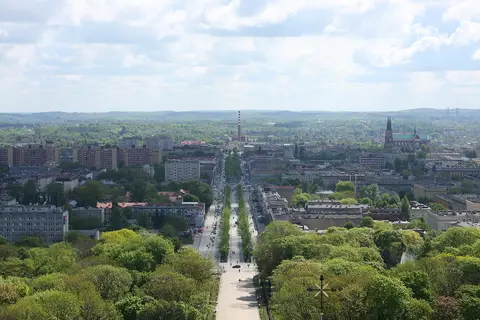
The region lies in southern Poland on the border with the Czech Republic and Slovakia. Its core is the Upper Silesian Industrial Region, a conurbation of more than two million people that includes Katowice, Sosnowiec, Gliwice, Zabrze, Bytom and other cities; since 2017 they have formed a metropolitan region together. To the north stretches the Kraków-Częstochowa Upland, a limestone landscape of rock formations and caves. To the south rise the Silesian and Żywiec Beskids, with the source of the Vistula on Barania Góra. With around 4.3 million inhabitants, Silesia is the most densely populated voivodeship in Poland. Large parts of it belonged to Germany until 1922 or 1945, and Silesian dialect and identity are very much alive.
Katowice and the Coal Country
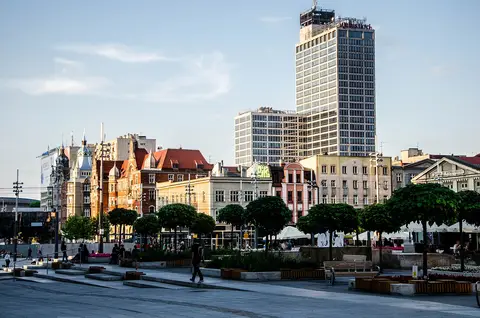
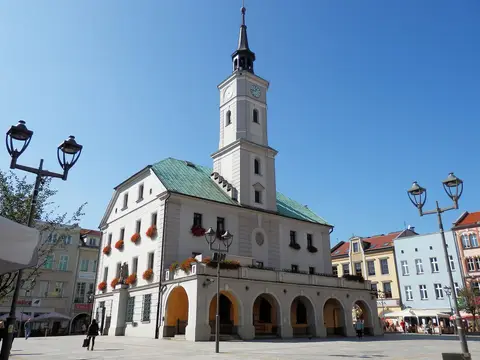
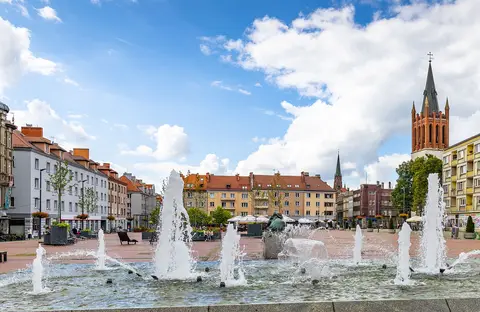
Katowice has transformed itself from a gray mining center into a city of culture. On the site of the former Katowice coal mine, the Cultural Zone was built, with the Silesian Museum, which lies largely underground, the concert hall of the National Polish Radio Symphony Orchestra, and the convention center. The Spodek, a sports arena shaped like a flying saucer, is a landmark of the 1970s. In the Nikiszowiec district stand red-brick workers' housing estates from around 1910, whose courtyards and church have become a protected monument. In Zabrze you can descend 320 meters into the Guido coal mine, and in Tarnowskie Góry the silver mines, with underground boat rides, are a UNESCO World Heritage site. In Gliwice, the wooden radio tower recalls the staged attack with which the Nazi regime justified the war in 1939. The Industrial Monuments Route links dozens of sites.
Sights in Silesia: Częstochowa and the Upland
The Pauline monastery of Jasna Góra in Częstochowa is Poland's most important pilgrimage destination. Here hangs the icon of the Black Madonna, revered as the country's patron saint; in August, pilgrims arrive on foot from all parts of Poland. In the Upland you'll find a string of "Eagles' Nests," castle ruins perched on limestone cliffs, such as Olsztyn, Mirów, Bobolice and Ogrodzieniec, which is among the most impressive ruins in Poland. Climbers appreciate the rocks, cyclists the Eagles' Nests Trail. South of the coal country lies Pszczyna, with a castle of the Princes of Pless and a bison reserve.
The Beskids and Spa Towns
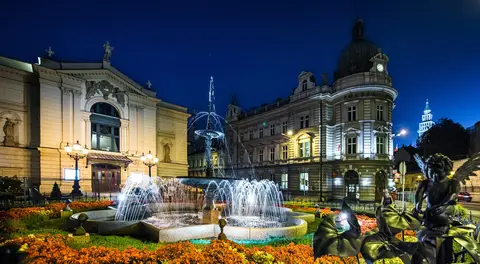
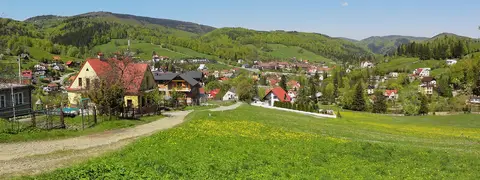
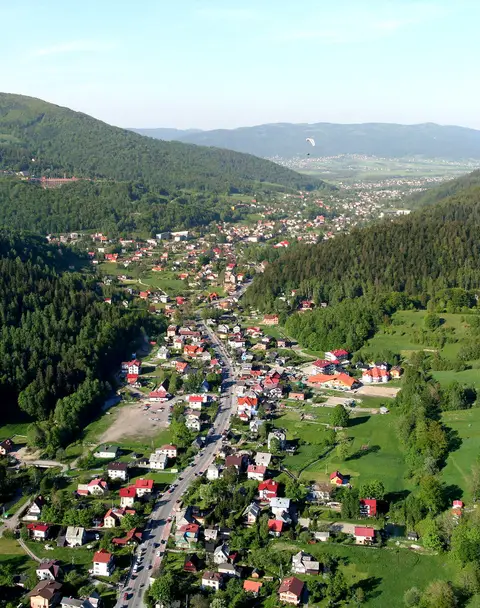
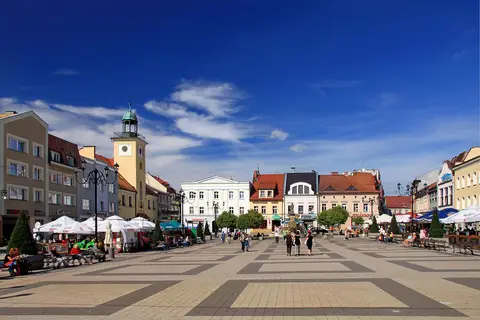
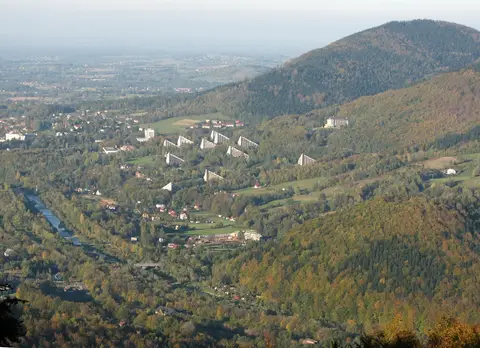
Bielsko-Biała is the gateway to the Beskids, a city with Art Nouveau façades and a long textile tradition. Wisła and Szczyrk are the best-known resorts of the Silesian Beskids, with ski lifts, ski jumps and hiking trails; ski jumper Adam Małysz comes from Wisła. Ustroń has established itself as a spa town, and Cieszyn on the Olza is a divided city whose Czech half can be reached across a bridge. In and around Rybnik, mines and lakes recall the region's mining history.
In the Żywiec Beskids, the town of Żywiec lies on a reservoir; its brewery is one of the best known in Poland and runs a museum. From Szczyrk a gondola lift climbs Skrzyczne, the highest peak in the Silesian Beskids. In the mountain village of Koniaków, women crochet fine lace that was once even supplied to the Vatican.
Food and Drink
Silesian cuisine is hearty. The traditional Sunday meal consists of beef rolls, kluski śląskie (round potato dumplings with a dimple in the middle), and red cabbage. Żur śląski, a sour soup, and krupnioki, a groats sausage, are everyday dishes. In the Beskids you'll find oscypek and mountain cheese, and in Częstochowa sweet gingerbread. Beer has a long tradition in Tychy, home to one of the country's largest breweries.
Getting There and Best Time to Visit
Katowice-Pyrzowice Airport (KTW) has connections to many German cities. The A4 motorway runs from Dresden via Wrocław to Katowice, and trains reach Kraków in a little over an hour and Warsaw in about two and a half hours. The best time to visit is May through September for the cities, the Upland and hiking; in winter, Wisła and Szczyrk are popular ski destinations. On the Feast of the Assumption, August 15, Częstochowa is especially crowded.