Lubusz: Forests, Wine, and Lakes along the Oder
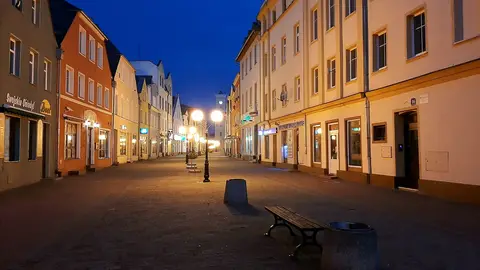
Travel guide · editorialLubusz Voivodeship lies just across the German border, yet many Germans have never heard of it. It is one of the most heavily forested regions in Poland, with hundreds of lakes, river floodplains, and one of the country's oldest wine-growing areas around Zielona Góra (formerly Grünberg). A vacation in Lubusz means bike rides along the Oder, canoe trips, and quiet small towns with a Prussian past.
Borderland on the Oder, Neisse, and Warta
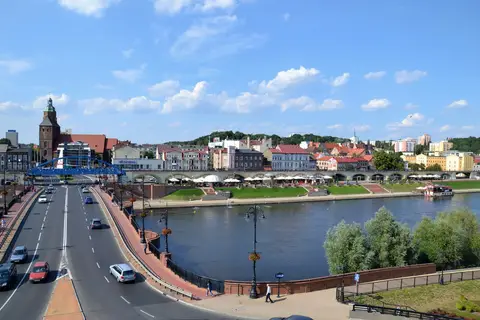
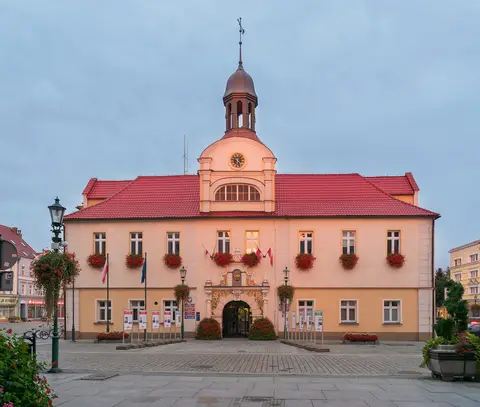
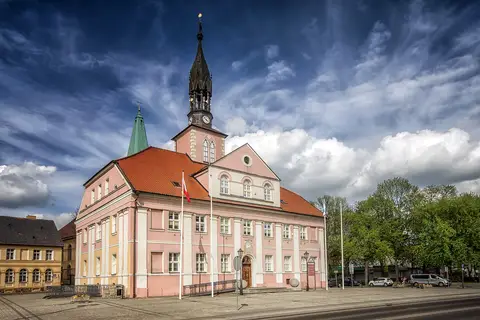
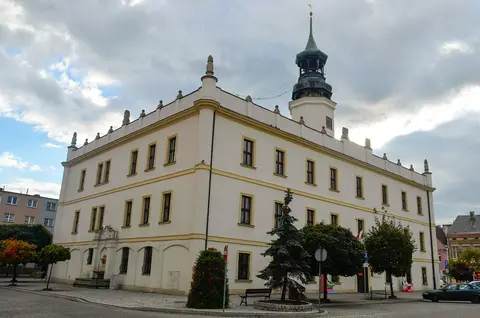
The region borders Brandenburg and Saxony. The Oder and Neisse form the western border, while the Warta flows through the north. Almost half of the land is forested, and the region also includes the Lubusz Lake District around Łagów and the floodplain landscape of Warta Mouth National Park. Around one million people live in the voivodeship, which has two capitals: the voivode (governor) is seated in Gorzów Wielkopolski (formerly Landsberg an der Warthe), while the regional assembly meets in Zielona Góra (formerly Grünberg in Silesia). Until 1945 the area belonged to Brandenburg and Silesia, and towns such as Żary (Sorau), Świebodzin (Schwiebus), Międzyrzecz (Meseritz), and Sulechów (Züllichau) recall that past with brick churches, town halls, and city walls. On the border lies Słubice, the former Dammvorstadt suburb of Frankfurt (Oder), to which it is linked by a bridge and a shared university.
Sights in Lubusz
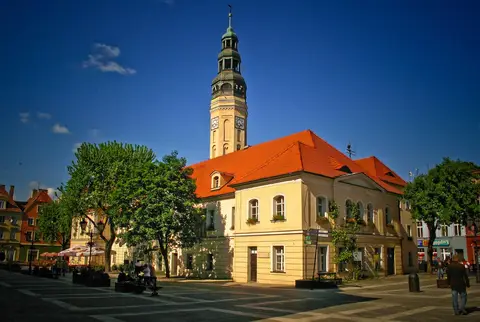
Zielona Góra is Poland's wine capital. Vines were already growing here in the Middle Ages, sparkling wine was produced in the 19th century, and for several decades now winemaking has been enjoying a revival with dozens of wineries. A palm house stands on the vineyard hill in the town center, and small bronze figures of Bacchus sit all over the city. In September the town celebrates its Wine Festival. Near Łęknica lies the Polish part of Muskau Park, a landscape park laid out by Prince Pückler, which together with the German side in Bad Muskau is a UNESCO World Heritage Site. Near Międzyrzecz, the Ostwall route, the Oder-Warta Bend Fortified Region, runs underground through miles of bunker tunnels where one of Europe's largest bat colonies spends the winter. Paradyż Abbey near Gościkowo is a Baroque Cistercian monastery, and Łagów has a Knights Hospitaller castle between two lakes and hosts a film festival. In Kostrzyn (Küstrin), at the confluence of the Warta and the Oder, only foundation walls, street paving, and fortress bastions remain of the old town destroyed in 1945. You can wander among them on marked paths, a quiet and impressive place often called the "Pompeii on the Oder." In autumn, tens of thousands of geese and cranes rest in Warta Mouth National Park.
Food and Drink
Wine naturally plays a role: white wines made from Solaris, Riesling, and Müller-Thurgau, as well as reds from Regent and Pinot Noir, are served in wine taverns. In the lake regions, fish dishes with pikeperch, pike, and carp are common, along with mushrooms from the vast forests. Pierogi, bigos, and potato dishes are on every menu, and in Gorzów the brewing tradition is alive and well.
Getting There and Best Time to Visit
The region is quickly reached from Berlin: via Frankfurt (Oder) you take the A2 toward Poznań, and you can reach Zielona Góra via Guben or Forst in about two to three hours. Trains run from Berlin to Gorzów and Kostrzyn. Zielona Góra-Babimost Airport (IEG) has domestic connections only. The best time to visit is May through September; in September the grape harvest and the Zielona Góra Wine Festival are a draw, and in autumn the bird migrations along the Warta.