Holy Cross: Kielce, Sandomierz and the Holy Cross Mountains
Travel guide · editorialHoly Cross Voivodeship, known in Polish as Świętokrzyskie, is one of Poland's smallest regions and one of its most unspoiled. It is named after a monastery on an ancient mountain wrapped in witch legends. A vacation in Holy Cross takes you into a low mountain range with fir forests, to the Renaissance town of Sandomierz, and to castle ruins, spa towns and dinosaur tracks.
One of Europe's oldest mountain ranges
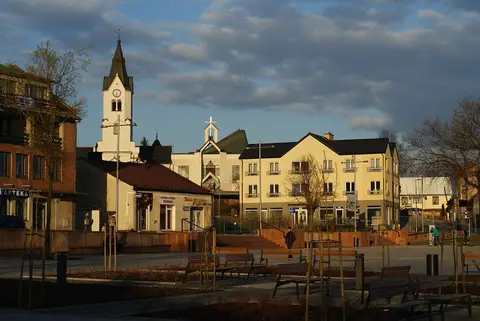
The region lies in the south of central Poland between Kraków and Warsaw. Its core is the Holy Cross Mountains, a heavily eroded Paleozoic range whose highest peak, Łysica, reaches 614 meters (2,017 feet). Quartzite scree fields known as gołoborza cover the slopes. In the east, the Vistula flows past Sandomierz, and to the south lies the Ponidzie, the Nida Valley with its gypsum cliffs, steppe grasslands and meanders. About 1.2 million people live in the voivodeship. Kielce is the capital, Ostrowiec Świętokrzyski and Starachowice are old industrial towns with an ironworking tradition, and Skarżysko-Kamienna is a railway hub.
Sights in Holy Cross
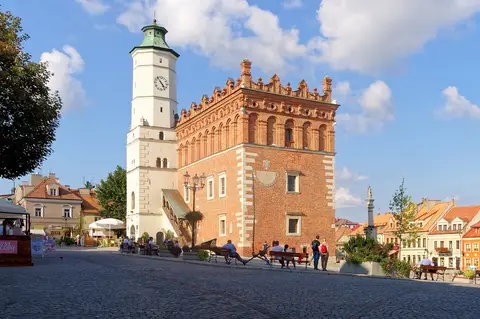
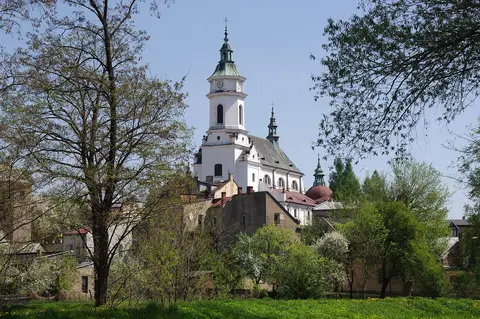
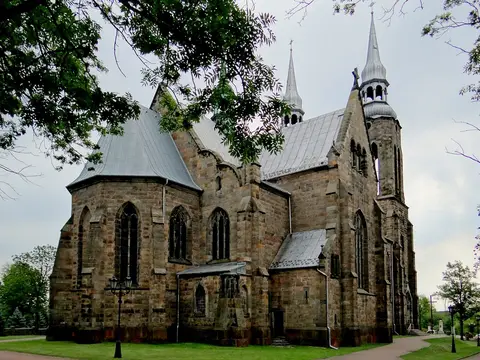
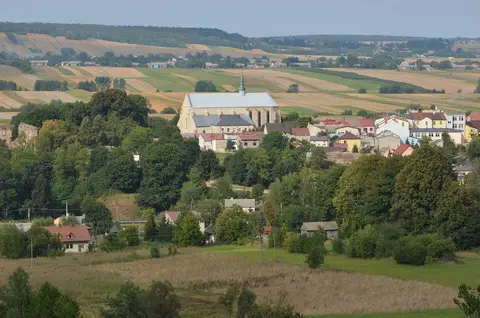
Sandomierz on the Vistula is one of the most beautiful small towns in Poland, with a market square on a hill, a Renaissance town hall and underground passages you can tour with a guide. The Gothic cathedral and the Opatów Gate offer views over the Vistula Valley; in spring the surrounding orchards are in bloom. The TV detective series about a sleuthing priest, "Ojciec Mateusz," made Sandomierz famous across Poland. The monastery on Łysa Góra, the Bald Mountain, preserves a relic of the cross that gives the region its name; according to legend, witches gathered here for their sabbath. Holy Cross National Park protects the fir forests and the gołoborza. Chęciny Castle looms over the town of the same name, and stalactites glow in the nearby Raj Cave. In Bałtów, a Jurassic park draws visitors with life-size dinosaurs, and near Zachełmie the oldest known tracks of land vertebrates in the world were discovered. Bodzentyn has the ruins of a bishop's castle. Near Ostrowiec lie the Krzemionki flint mines, where people mined banded flint some 5,000 years ago; they have been a UNESCO World Heritage Site since 2019 and can be explored on an underground route.
Kielce and the Ponidzie
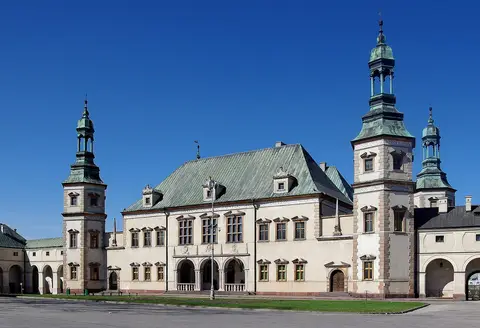
Kielce has a 17th-century bishop's palace that houses the National Museum, as well as geological reserves in the middle of the city, such as the Kadzielnia quarry with its open-air amphitheater. Busko-Zdrój in the south is a spa town with sulfurous springs and a spa park, and neighboring Solec-Zdrój is also well known. The Ponidzie, with Pińczów and Wiślica, one of Poland's oldest towns, with Romanesque floors, is ideal for cycling tours and paddling on the Nida. Końskie in the north has a beautiful palace complex with a park.
Food, getting there and best time to visit
The cuisine is hearty and rustic. Zalewajka, a sour rye soup with potatoes, and pierogi filled with buckwheat or sauerkraut are typical, along with mushrooms from the fir forests. Sandomierz is known for apples and fruit wines, and vineyards have now sprung up around the town. The region has no airport; from Kraków and Warsaw you can reach Kielce by train or bus in about two hours. The best time to visit is May through September; the orchards around Sandomierz bloom in May, and the beech forests glow in the fall.