Rogaland: Preikestolen, Lysefjord and Stavanger
Travel guide · editorialRogaland is the region where Norway's oil wealth began – and it is also home to some of the country's most famous viewpoints. A vacation in Rogaland means hiking to Preikestolen high above the Lysefjord, strolling through the wooden houses of Gamle Stavanger and spending beach days on the sandy shores of Jæren.
Landscape between fjord and flat coast
Rogaland is surprisingly diverse. To the south lies Jæren, a flat, windy coastal plain with long sandy beaches and stone walls, and one of Norway's most important farming regions. To the east, the Lysefjord cuts into the land between granite walls more than 1,000 meters high, while Haugesund and islands such as Karmøy lie to the north. In the southeast, the barren rocks of Dalane and the lakes around Sokndal make for wild, lonely country. The beaches of Jæren, such as Bore and Orre, are wide and popular with surfers. Off the coast lies the island of Utsira, a meeting point for birdwatchers and street art fans.
Sights in Rogaland
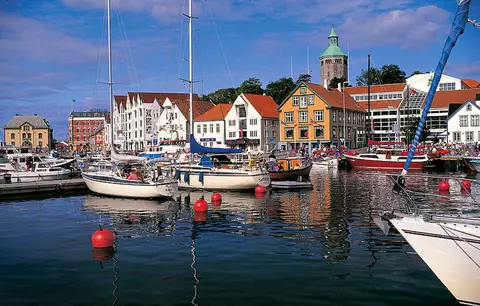
Preikestolen, a rock plateau 604 meters above the Lysefjord, can be reached on a round trip of about four hours and is one of the most visited destinations in Norway. At the inner end of the fjord, the Kjeragbolten, a boulder wedged between two rock walls, hangs above the abyss; the road to Lysebotn winds down in 27 hairpin turns. Stavanger charms with Gamle Stavanger, a neighborhood of around 170 white wooden houses, the 12th-century cathedral and the Petroleum Museum at the harbor, which explains the history of North Sea oil production. In the fjord at Hafrsfjord, three huge swords commemorate the battle in which Harald Fairhair is said to have unified Norway around 872. Haugesund is considered the home of the Viking kings, and on Karmøy the Viking village of Avaldsnes shows what life was like a thousand years ago. Sandnes, Stavanger's neighboring city, is the gateway to hikes on Dalsnuten. In Stavanger, Øvre Holmegate with its brightly colored houses attracts photographers. On the coast of Hå, the old parsonage Hå gamle prestegard presents art with ocean views, and on the Lysefjord at Flørli, more than 4,000 wooden steps run alongside an old penstock up to the mountain plateau.
Culture and economy
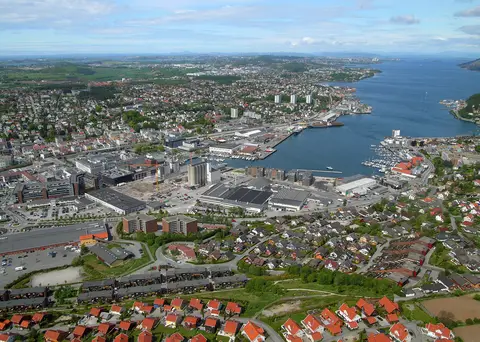
Since the 1970s, Stavanger has been Norway's oil capital, home to the energy company Equinor and many suppliers. The city has an international character and a lively cultural scene, with the Nuart street art festival and the Gladmat gourmet festival. Before oil, the region lived off herring and canneries, whose history is told in the Canning Museum. Every August, Haugesund hosts the Norwegian International Film Festival.
Food, getting there and best time to visit
Typical fare includes fish dishes, lamb and vegetables from Jæren, canned sardines and komle, potato dumplings with bacon. Stavanger-Sola Airport has direct flights from Central Europe, and ferries connect Stavanger with Denmark. A rail line runs via Kristiansand to Oslo, and undersea tunnels such as the Ryfast link the sides of the fjords. The best time to visit is June through September; the trails to Kjerag are usually not free of snow until June. For the hike to Preikestolen, it is best to start early; in winter, you should only go with a guide. Boat trips from Stavanger show you the rock walls of the Lysefjord from the water.