Nordland: Lofoten, Saltstraumen, and the Arctic Circle
Travel guide · editorialNordland stretches for roughly 500 kilometers along the coast and crosses the Arctic Circle along the way. A vacation in Nordland means the jagged peaks of the Lofoten Islands, the strongest tidal current in the world near Bodø, island worlds like Vega, and, in winter, the northern lights over snow-covered fjords.
Landscape Between Glacier and Sea
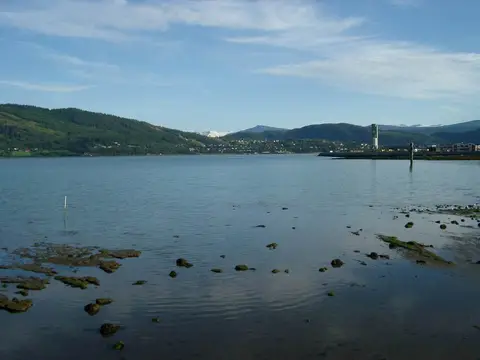
The coast is shaped by thousands of islands, fjords, and steeply rising mountains. In the south lies the Vega Archipelago, a UNESCO World Heritage Site thanks to its tradition of eider duck farming. Near Mo i Rana, the Arctic Circle crosses the country, and farther east lies Svartisen, Norway's second-largest glacier. In the north, the Lofoten and Vesterålen islands rise from the sea like a wall. Thanks to the Gulf Stream, the climate is milder than the latitude would suggest; in summer the midnight sun shines, while December brings the polar night. Farther south near Sandnessjøen, the peaks of the Seven Sisters tower overhead, and the coastal road Kystriksveien links Steinkjer and Bodø with bridges and ferries. Saltfjellet-Svartisen National Park combines glaciers, high mountain plateau, and valleys.
Sights in Nordland
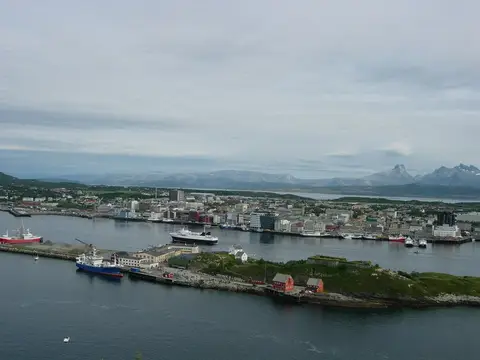
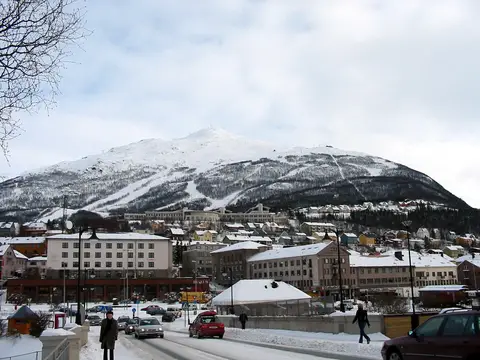
The Lofoten Islands are the best-known destination: fishing villages like Reine, Hamnøy, and Henningsvær with red rorbuer cabins on stilts, sandy beaches like Haukland, and hiking mountains like Reinebringen. In winter, cod hangs to dry on wooden racks. About 30 kilometers from Bodø, the Saltstraumen roars, a tidal current through which enormous masses of water surge every six hours, forming whirlpools. Bodø, European Capital of Culture 2024, is home to the Norwegian Aviation Museum and is the ferry port for the Lofoten Islands. Narvik, a port for Swedish ore from Kiruna, was the scene of heavy fighting in 1940; the war museum commemorates this, and the Ofoten Line offers spectacular rides to the Swedish border. Mo i Rana is the starting point for the Grønligrotta cave and Svartisen. In the Vesterålen islands, whale-watching tours depart from Andenes. On the Lofoten Islands, the Lofotr Viking Museum in Borg displays a reconstructed chieftain's longhouse, and Nusfjord is a fully preserved fishing village. Svolvær and Kabelvåg, home to the Lofotakvariet aquarium, are the largest towns. On the Saltfjell plateau, the E6 crosses the Arctic Circle, where a visitor center stands.
Culture and History
For over a thousand years, Nordland has lived off the Lofoten cod fishery, which drew fishermen from all over Norway each winter. Lule and South Sami people live in the mountains, and the region is the setting of many works by Knut Hamsun, whose center stands in Hamarøy. The Stockfish Museum in the village of Å explains how cod is processed, and works from the Nordland Sculpture Landscape stand in many of the province's municipalities.
Food, Getting There, and Best Time to Visit
Stockfish, clipfish, skrei (the winter cod), and Lofoten lamb are typical, along with cloudberries and reindeer. Bodø can be reached by plane and by the Nordland Line from Trondheim, and the Hurtigruten coastal ferry connects the coastal towns. The best time to visit for hiking and the midnight sun is June through August; for the northern lights and the skrei season, it's February through March. Ferries connect Bodø with Moskenes in the Lofoten Islands, and a road with bridges and tunnels leads from Narvik out to the islands. Book rorbuer early for the summer.