Pristina District: A Young Capital and Ancient Monasteries
Travel guide · editorialA trip to Pristina takes you to one of Europe's youngest capitals: Kosovo declared its independence in 2008, which many countries recognize but Serbia does not. The city is lively, full of cafés and students, and the surrounding district holds a UNESCO-listed monastery, a stalactite cave, and Roman ruins.
Location and Landscape
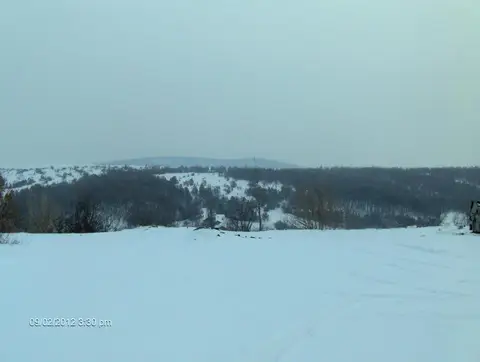
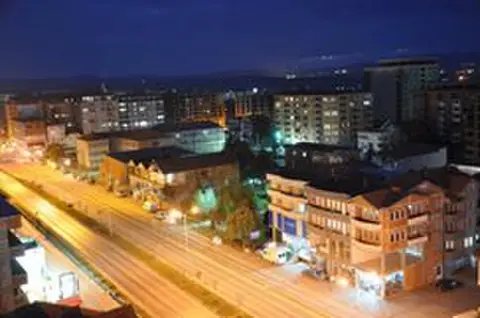
Pristina District covers the capital and the surrounding municipalities, including Fushë Kosova, Obiliq, Lipjan, Podujeva, and Gračanica. It lies on the eastern edge of the Kosovo Plain (Field of Blackbirds), a broad plain in the middle of the country, framed by hills and the Gollak mountains to the east. The landscape is largely agricultural, and large lignite power plants stand near Obiliq, west of Pristina. Pristina itself is a fast-growing city with new residential districts on its outskirts; the Matiqan neighborhood in the south is one example. Kosovo's population is very young, and you feel it in the streets right away.
Sights in Pristina
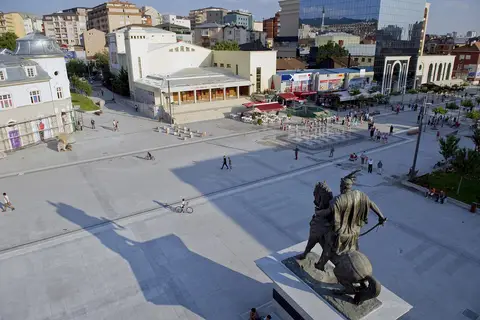
The Newborn Monument, a set of large yellow letters, was unveiled on Independence Day in 2008 and is redesigned every year. Mother Teresa Boulevard, a wide pedestrian zone, leads past cafés, the Skanderbeg Monument, and the Cathedral of Saint Mother Teresa. The National Library, built in the 1980s with its domes and metal lattice facade, is among the most unusual buildings in the Balkans. In the small old town you'll find the 15th-century Sultan Mehmet Fatih Mosque, the Clock Tower, and the Ethnological Museum, housed in an Ottoman residential complex. On the edge of the city, Germia Park invites you to explore its forests, trails, and an outdoor swimming pool.
Excursions in Pristina District
Just a few kilometers to the southeast lies the Serbian Orthodox Gračanica Monastery, which King Milutin had built around 1321. The church, with its tiered domes and magnificent frescoes, is part of the UNESCO World Heritage listing of Medieval Monuments in Kosovo. Near Lipjan, the Gadime stalactite cave, with marble walls and crystal formations, leads deep into the rock. Nearby are the excavations of the Roman city of Ulpiana, and northwest of Pristina the Gazimestan Monument commemorates the 1389 Battle of Kosovo, which plays a major role in the region's history.
Culture and Daily Life
Pristina has a surprisingly vibrant cultural scene. Galleries, small theaters, and clubs shape the evenings, open-air concerts and film festivals take place in summer, and street art decorates many facades. The university, with thousands of students, brings a young crowd. Many residents speak English or German because they or their relatives have lived in Western Europe. The euro is the official currency, and prices in cafés and restaurants are low for visitors from Central Europe.
Food, Getting There, and Best Time to Visit
Pristina is a coffee city, and the macchiato is considered an art form here. On the table you'll find flija, a layered pastry baked for hours under a lid covered with embers, burek, grilled meat, beans, and peppers with yogurt. Adem Jashari Airport lies about 15 kilometers (9 miles) southwest and has flights from many cities in Germany, Austria, and Switzerland. Buses connect Pristina with Skopje, Tirana, and all the towns in the country. The best time to visit is from May to October; in summer, when the diaspora comes home for visits, the city is especially lively.