Gjilan District: Eastern Kosovo Between the Morava and the Mountains
Travel guide · editorialA trip to Gjilan takes you to eastern Kosovo, a hilly region on the border with Serbia and North Macedonia. The district is little known to tourists, yet it holds the ruins of one of the richest mining towns of the medieval Balkans and an important Catholic pilgrimage site.
Location and Town
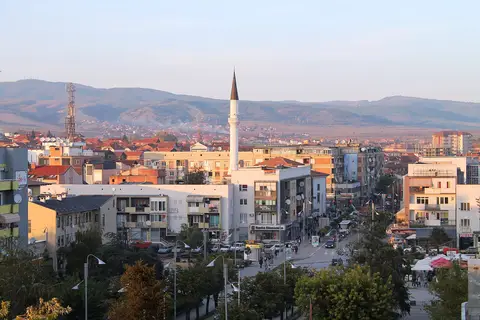
Gjilan, known in Serbian as Gnjilane, lies in the valley of the Binačka Morava, about 50 kilometers (31 miles) southeast of Pristina. The district includes Viti, Kamenica, Novo Brdo, Ranilug, Parteš, and Klokot, several of them with Serbian majorities. The landscape is shaped by fields, orchards, and wooded hills that give way to mountains in the east. Gjilan is a lively commercial town with a modern center, plenty of cafés, and a pedestrian zone. In January, the Flaka e Janarit music festival takes place, commemorating the events of 1981 and drawing artists from across the Albanian-speaking world.
Sights in Gjilan District
Novo Brdo Fortress sits on a volcanic cone west of the town. In the 14th and 15th centuries, Novo Brdo was one of Europe's most important silver mines, with a mint and merchants from Ragusa and Venice; the Ottomans conquered the town in 1455. Today restored walls and towers rise above the countryside, and excavations reveal the remains of a large cathedral. To the south, in the municipality of Viti, lies Letnica with a Catholic church whose Black Madonna has drawn pilgrims for centuries. Mother Teresa is said to have felt her calling here as a young girl; every August, many of the faithful come on pilgrimage. Around Gjilan you'll find small reservoirs and wooded areas that are well suited to day trips.
Food, Getting There, and Best Time to Visit
Gjilan is known for grilled meat, pite, and sweet pastries, and the region supplies fruit and vegetables to the whole country. From Pristina, you can reach the town by bus in about an hour, and there are also connections to Skopje. The best time to visit is from May to October; in summer, when the diaspora returns, the villages are full of celebrations.