Molise: Italy's Unknown Region
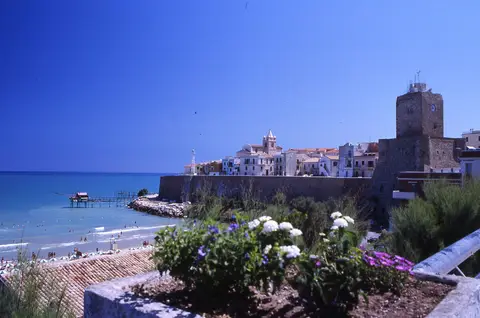
Travel guide · editorialMolise is so little known that Italians joke the region doesn't even exist. If you take a trip to Molise, you'll find mountain villages, the old shepherds' routes of transhumance, a Samnite temple complex, and, in Termoli, a beach resort on the Adriatic.
Location and Landscape
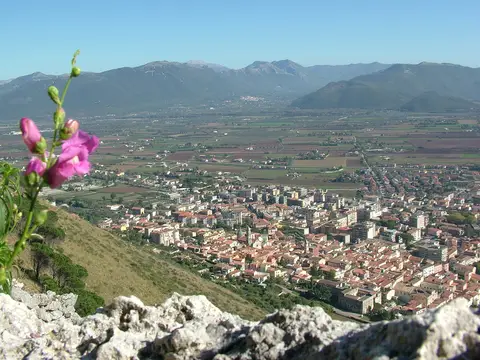
Molise, Italy's second-smallest region, was only separated from Abruzzo in 1963. It lies between Abruzzo, Lazio, Campania, and Puglia and has only about 35 kilometers (22 miles) of coastline. The interior is hilly to mountainous, with the Matese massif in the south and the Mainarde range in the west, which is part of Abruzzo, Lazio and Molise National Park. Running through the region are the tratturi, broad grassy tracks along which shepherds drove their flocks for centuries between the mountain pastures and the plains of Puglia. Transhumance has been on UNESCO's list of intangible cultural heritage since 2019.
Cities and Towns
Campobasso, the capital, is dominated by Castello Monforte. On Corpus Christi, the city holds the Sfilata dei Misteri, a procession in which children appear to float above the crowd on metal scaffolds. Isernia is known for the discovery at La Pineta, one of the oldest settlement sites in Europe, with traces about 600,000 years old. Termoli is the vacation hub, with a walled old town on a rocky promontory, a castle built by Frederick II, and harbors from which ferries depart for the Tremiti Islands. The neighboring towns of Campomarino and Montenero di Bisaccia offer broad beaches and dunes. In Campomarino and other villages live Arbëreshë, and in a few towns Croats as well, who immigrated centuries ago and have preserved their language.
Sights in Molise
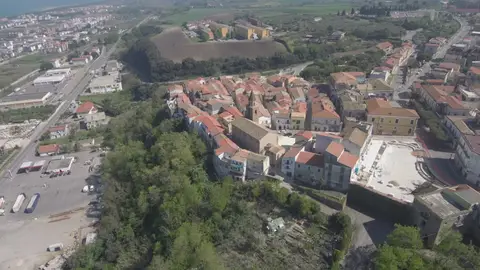
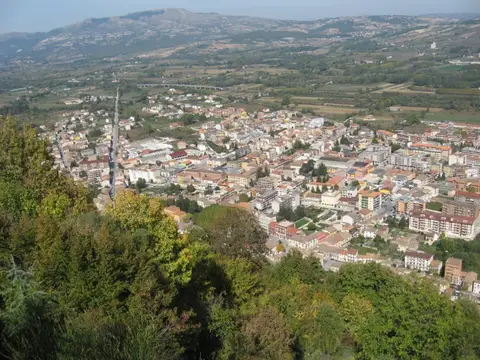
Near Pietrabbondante, the Samnite temples and theater from the 2nd century B.C. sit in a mountain landscape that could hardly be more remote. Saepinum, near Sepino, is a small Roman town with city gates and a forum, through which an old tratturo runs. Agnone is home to one of the oldest bell foundries in the world, the Pontificia Fonderia Marinelli, which has been casting bells since the Middle Ages, including for the Vatican; in December, huge torches are lit here for the Ndocciata. Venafro lies in a plain of olive groves and has the Castello Pandone with its horse frescoes. Bojano, at the foot of the Matese, is considered the ancient Samnite capital of Bovianum. In the Matese, Campitello Matese is the region's ski area, and in summer trails lead from there to summits and to Lago del Matese. Scapoli is the village of bagpipes, the zampogne, and celebrates them every summer with a festival. If you're looking for peace and quiet, you'll find villages in Molise where in the evening all you hear is the ringing of church bells and conversation on the piazza.
Food, Getting There, and Best Time to Visit
The region's cuisine is hearty and down-to-earth: cavatelli with ragù, lamb, caciocavallo and scamorza from the mountains, and truffles from the area around San Pietro Avellana, where white truffles are hunted in the fall. By the sea, there's brodetto alla termolese. The wines Tintilia and Biferno are local rarities. There are no airports of its own; you reach the region via Pescara, Naples, or Rome, and Termoli is on the Adriatic railway line. In the interior, a car is almost indispensable. The best times to visit are early summer and early fall; in August, Termoli is lively.