Discover Stuttgart: Vineyards, Cars, and Stäffele
Travel guide · editorialGrapevines grow right up to the main train station, hundreds of steps known as "Stäffele" climb the hillsides, and two museums showcase the sports cars that made the city world famous. Stuttgart sits in a valley basin surrounded by forests and vineyards. A city break in Stuttgart combines automotive history, art, and Swabian coziness.
From Stud Farm to Car City
The name goes back to a stud farm, a "Stuotgarten," established by Duke Liudolf around 950; the horse still adorns the city's coat of arms and the Porsche logo today. Stuttgart was the residence of the counts, dukes, and kings of Württemberg. In the 19th century, Gottlieb Daimler and Carl Benz invented the automobile in the region, and Robert Bosch founded his company here. In World War II, the city center was heavily destroyed and rebuilt in a modern style. Today Stuttgart is the state capital and part of one of the strongest economic regions in Europe.
Sights in Stuttgart
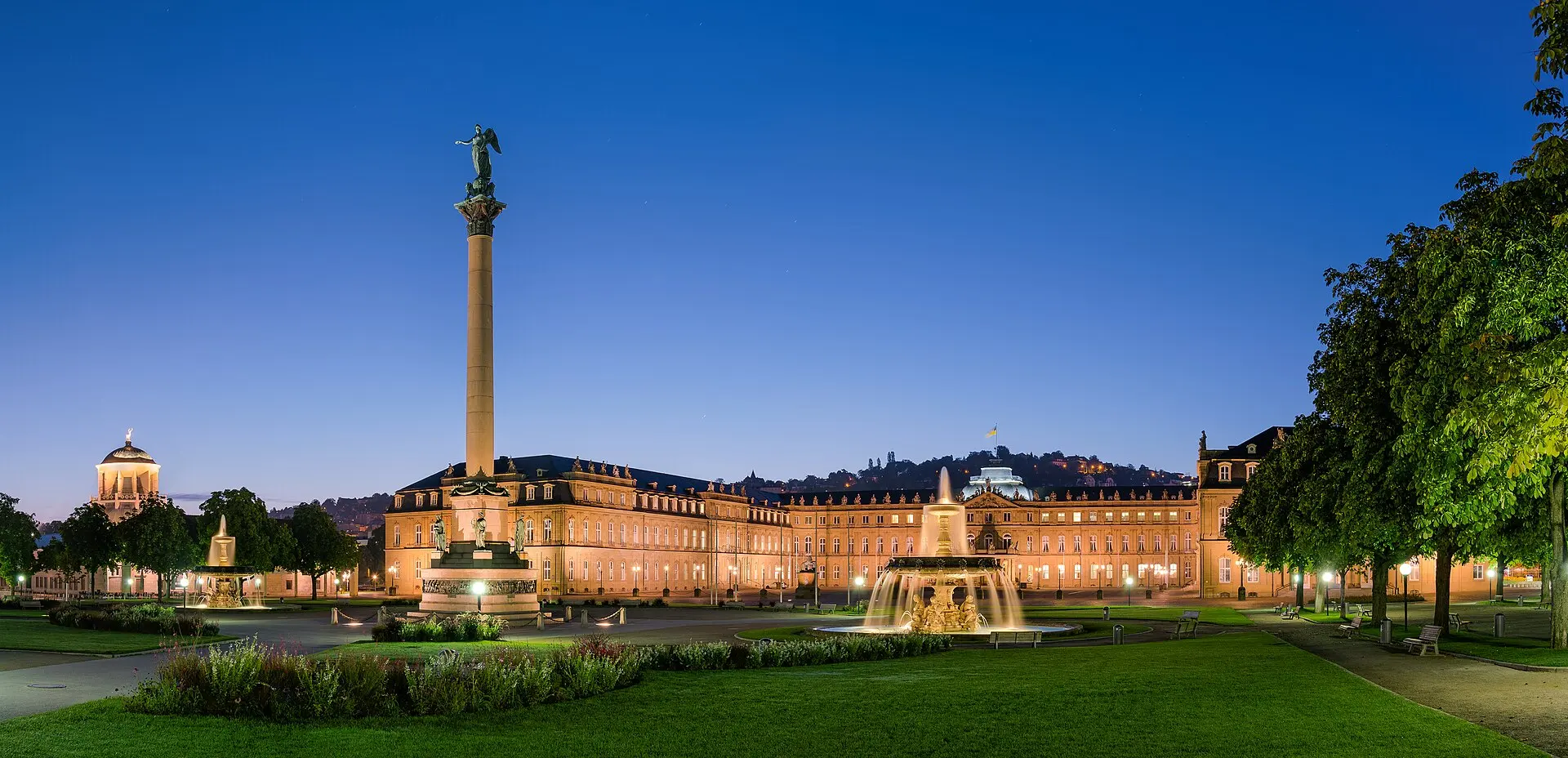
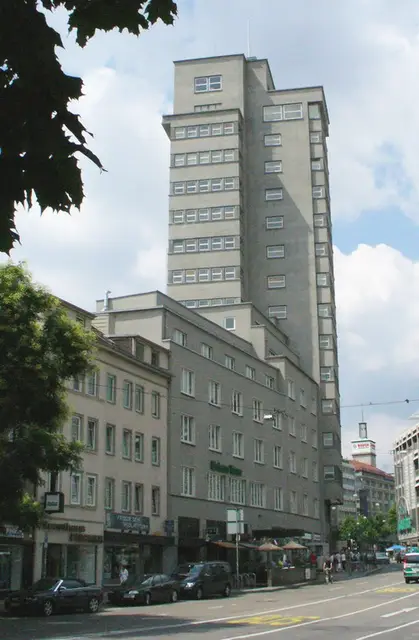
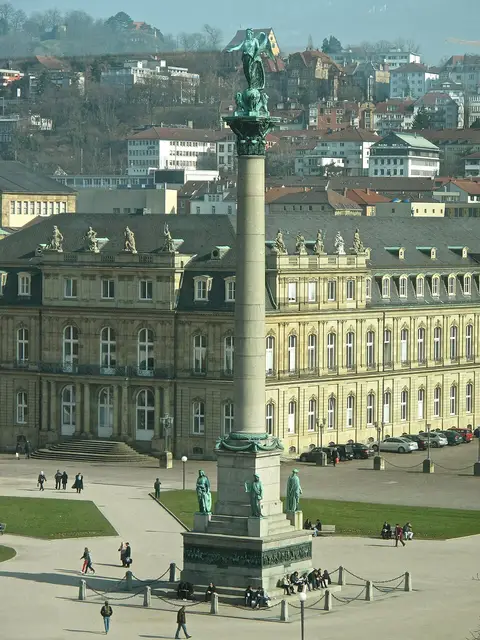
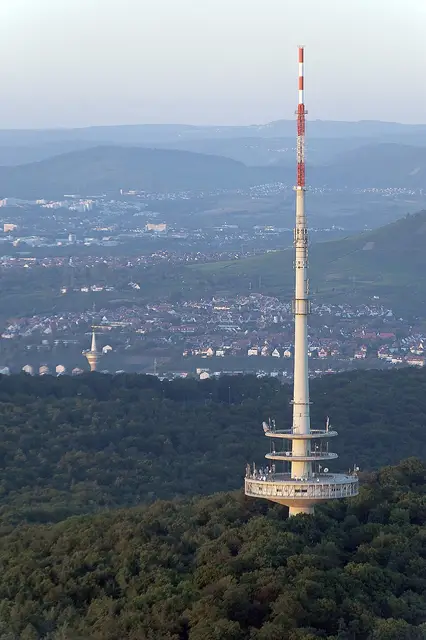
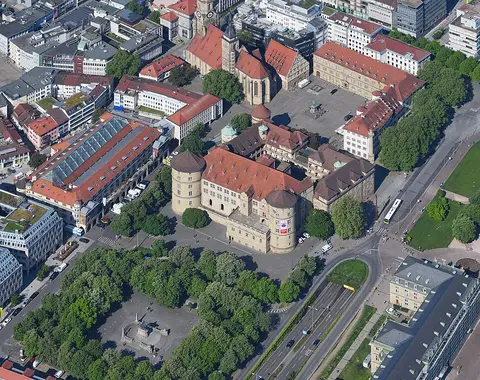
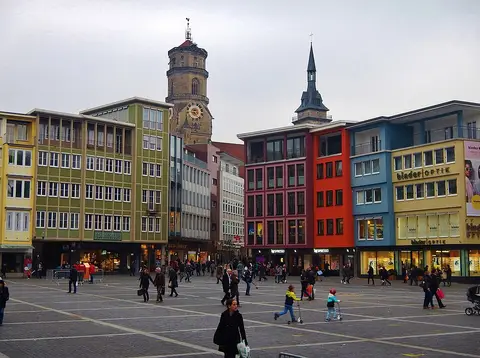
Schlossplatz, with the Baroque New Palace, the Jubilee Column, and the Kunstmuseum in its glass cube, is the heart of the city. Next to it stand the Old Palace, home to the Landesmuseum, and Schillerplatz with its monument to the poet, who was born nearby. Königstraße is one of the longest shopping streets in Germany. The Stuttgart TV Tower, built in 1956, was the first of its kind made of reinforced concrete and became a model for many others; from its platform you can see all the way to the Swabian Alb. The Weissenhof Estate of 1927, a manifesto of the New Building movement with houses by Le Corbusier, Mies van der Rohe, and Walter Gropius, is a UNESCO World Heritage Site thanks to its two Le Corbusier houses.
Museums and Culture
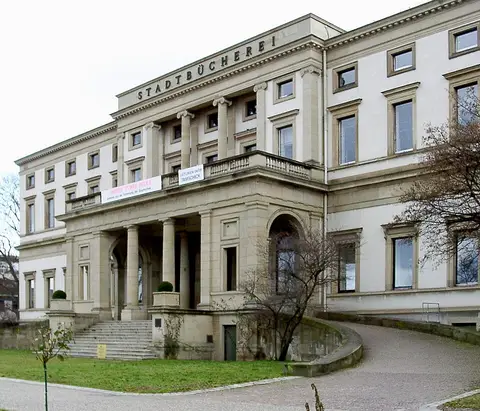
The Mercedes-Benz Museum in Untertürkheim presents more than 130 years of automotive history across nine levels arranged in a double helix, while the Porsche Museum in Zuffenhausen showcases the brand's sports cars. The Staatsgalerie holds works from Rembrandt to Picasso, and James Stirling's new building is a classic of postmodernism. The Staatstheater, with its opera and the famous Stuttgart Ballet, is one of Europe's great stages. The city library at Mailänder Platz, with its white, cube-shaped reading room, is a popular photo spot.
Food, Wine, and Nightlife
Stuttgart is one of the few major cities with extensive viticulture within its city limits. In the "Besenwirtschaften," which open only a few weeks a year, winemakers pour their own Trollinger and Lemberger. To go with it, you eat Maultaschen, cheese Spätzle, lentils with Spätzle and Saitenwürstle sausages, or Zwiebelrostbraten. The Market Hall from 1914 is a magnificent Art Nouveau building full of gourmet food stalls. In the evening, Stuttgarters head to the Bohnenviertel, Theodor-Heuss-Straße, and the neighborhood around the Feuersee. In the fall, the city celebrates its folk festival at the Cannstatter Wasen, and in late summer the Weindorf wine village takes over the market square.
Getting Around and Best Time to Visit
The airport is located to the south on the Filder plateau and can be reached by S-Bahn in about 30 minutes. Light rail, S-Bahn trains, and buses serve the city, and the "Zacke," a rack railway, runs to Degerloch. With its mineral springs, Bad Cannstatt has one of the largest mineral water reserves in Western Europe, and the Leuze and Mineralbad Berg spas invite you to take a dip. The best time to visit is from May to October. Day trips lead to Ludwigsburg with its Baroque palace, to Esslingen and Tübingen, and into the Swabian Alb.