Lower Saxony: North Sea Coast, Heath and Harz
Travel guide · editorialBetween the Wadden Sea of the North Sea and the peaks of the Harz lies Germany's second-largest state. A vacation in Lower Saxony means island getaways on Norderney or Langeoog, heather in bloom near Lüneburg, half-timbered towns like Goslar and Hildesheim, and the Herrenhausen Gardens in Hanover.
From the Coast to the Uplands
Lower Saxony covers large parts of northern Germany, from the Emsland on the Dutch border to the Elbe, and from the Wadden Sea to the borders of Hesse and Thuringia. Along the coast, the seven inhabited East Frisian Islands line up from Borkum to Wangerooge, and the Wadden Sea is a national park and World Heritage site. Behind them lie marshes, moors and geest, flat and windy. The Lüneburg Heath stretches across the middle of the state, while the south holds the Weser Uplands, the Solling and the Harz with the Wurmberg. The Weser, the Aller and the Elbe River Landscape also shape the region, which lives from agriculture and the VW plant in Wolfsburg alike.
Hanover, Braunschweig and Oldenburg
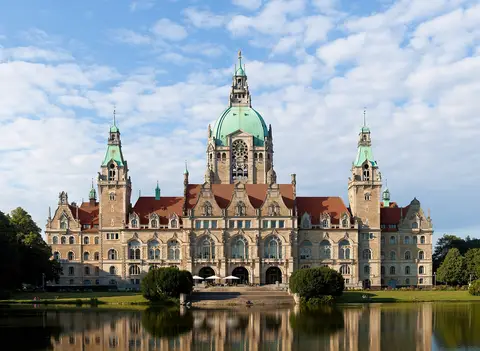
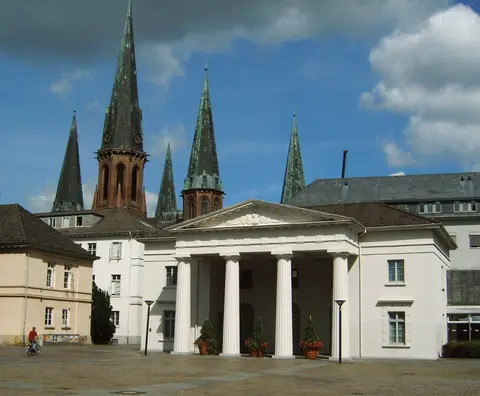
Hanover, the state capital and a trade-fair city, is home to the Herrenhausen Gardens, one of the most important Baroque garden complexes in Europe. The Red Thread, a line painted on the pavement, leads to sights such as the New Town Hall with its slanted dome elevator, Maschsee lake and the Old Town. From 1714 to 1837, the electors of Hanover also ruled Great Britain in a personal union. Braunschweig is the city of Henry the Lion, whose bronze lion stands on Burgplatz; the rebuilt palace houses a shopping center and a museum. Oldenburg is a green university city with a palace and a pedestrian zone, and the gateway to the Ammerland with its rhododendron parks. Osnabrück, like Münster, was a site of the Peace of Westphalia and calls itself the City of Peace; the Felix Nussbaum House by Daniel Libeskind commemorates the Jewish painter.
Sights in Lower Saxony
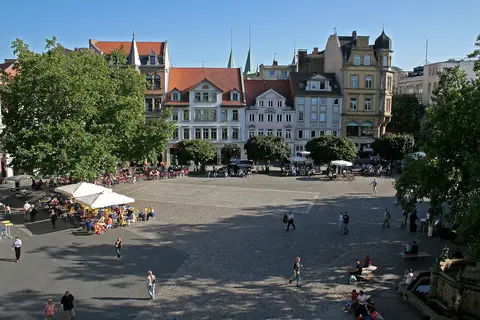
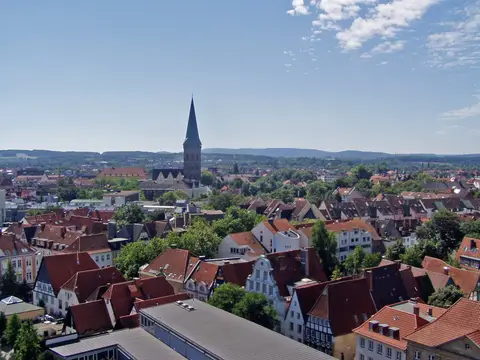
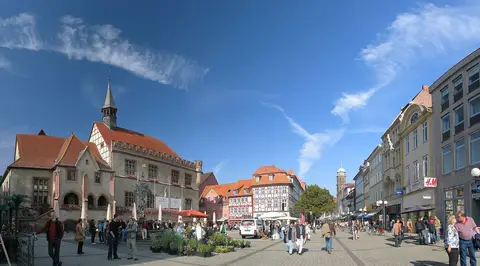
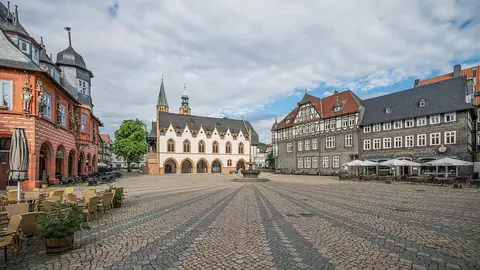
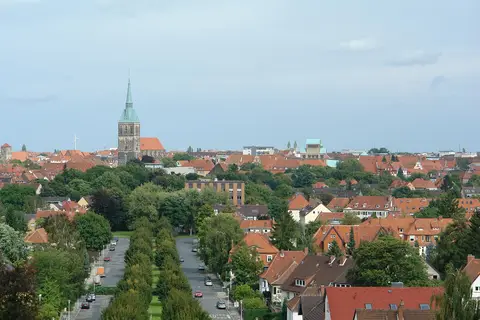
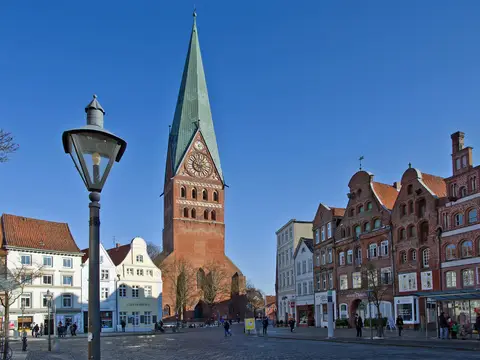
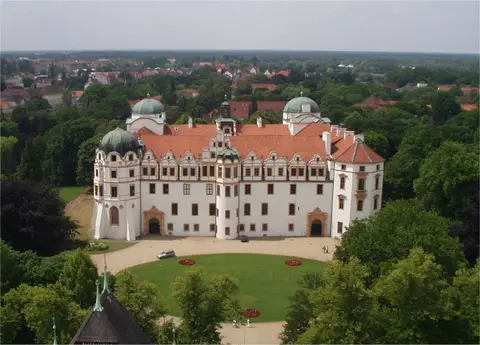
Goslar on the edge of the Harz is a World Heritage site thanks to its Imperial Palace, Old Town and the Rammelsberg ore mine. Hildesheim has St. Mary's Cathedral and St. Michael's, two world-class Romanesque churches, as well as the rebuilt market square with the Knochenhaueramtshaus. In the Harz, the Brocken Railway climbs up from Wernigerode in Saxony-Anhalt; on the Lower Saxony side you'll find Braunlage, Clausthal-Zellerfeld and the Upper Harz Water Regale. Göttingen is a university town where more than 40 Nobel Prize winners studied or taught; the Goose Girl statue at the market fountain is kissed by newly minted doctorate holders. Other Lower Saxony destinations include Celle with its half-timbered houses and palace, Lüneburg with its Brick Gothic architecture and Salt Museum, Hamelin with the legend of the Pied Piper, and Bad Zwischenahn on the Zwischenahner Meer.
The North Sea and the Islands
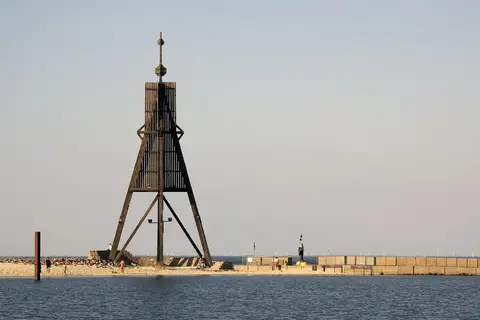
Cuxhaven at the mouth of the Elbe is one of Germany's largest seaside resorts; at low tide, a mudflat hike or a horse-drawn carriage ride across the flats leads to the island of Neuwerk, which belongs to Hamburg. From the Alte Liebe viewing platform, you can watch large container ships on their way to Hamburg. Farther west lie fishing villages such as Greetsiel with its shrimp cutters and Norddeich, the ferry port for Norderney and Juist. Some of the islands are car-free, with horse-drawn carriages and bicycles taking the place of cars. On Borkum you can spot seals, on Spiekeroog you can find peace and quiet, and on Norderney you can unwind at the Kurhaus and the thalassotherapy spa.
Food and Drink
East Frisians drink more tea than almost anyone else in the world, served with Kluntje (rock sugar) and cream that you don't stir in. East Frisian tea culture is recognized as intangible cultural heritage. In winter, groups set out on a Kohlfahrt, a kale outing where kale is served with Pinkel sausage. Heidschnucken roast, buckwheat cake and heather honey come from the Lüneburg Heath, and asparagus from the area around Nienburg and Burgdorf. On the coast you'll find shrimp rolls and matjes herring, and in the Harz, Harzer cheese and herbal schnapps.
Getting There and Best Time to Visit
Hanover Airport connects with many European cities; to reach the coast, you often travel via Bremen or Hamburg. Hanover and Göttingen are on ICE high-speed rail lines, and regional trains reach Norddeich Mole and Cuxhaven. Ferries to the islands run according to the tides. The best time to visit Lower Saxony is summer for the beaches and islands; the heath blooms purple from early August to mid-September. In winter, the Harz is a destination for cross-country skiers when there's snow, while the islands are quiet and stormy.