Bremen: Town Musicians and Overseas Port
Travel guide · editorialGermany's smallest state consists of two cities about 60 kilometers apart, connected only by the Weser River. A vacation in Bremen takes you to the Town Hall and Roland statue, into the Schnoor quarter and along the Schlachte promenade, then on to Bremerhaven with its German Emigration Center, Klimahaus and views of the North Sea.
Two Cities, One State
The Free Hanseatic City of Bremen is a two-city state. Bremen lies on the Lower Weser, Bremerhaven at the river's mouth on the North Sea; everything in between belongs to Lower Saxony. Bremerhaven was founded in 1827 because the Weser was silting up for large ships and Bremen needed a seaport. For more than 1,200 years, Bremen has been a trading city, a member of the Hanseatic League and proud of its independence. The city also includes Bremen-Nord with Vegesack, an old harbor town on the Weser with the training ship Deutschland and a waterfront promenade, as well as Blumenthal and Burglesum.
Sights in Bremen
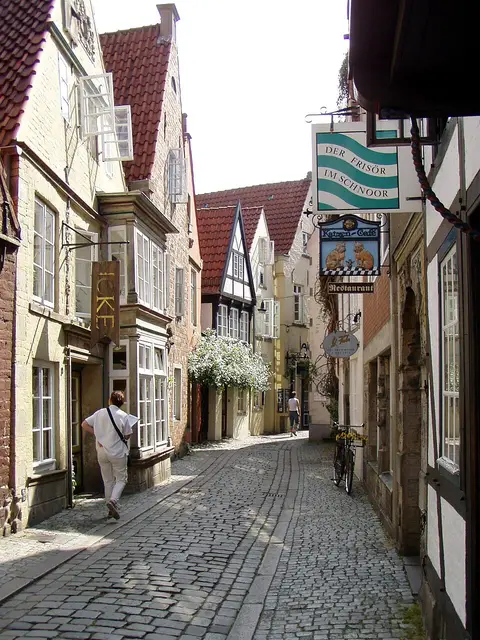
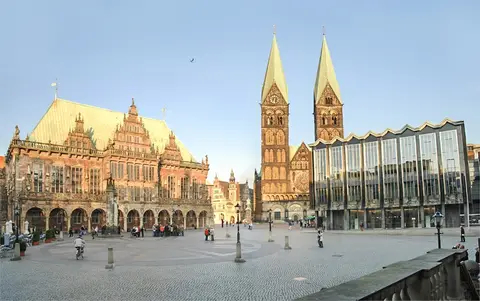
The market square is among the most beautiful in Germany. The Town Hall with its Weser Renaissance façade and the Roland statue from 1404, a symbol of the city's freedom, are together a UNESCO World Heritage Site. Beside them rises St. Peter's Cathedral, and on the west side of the Town Hall stand the bronze Bremen Town Musicians; if you touch the donkey's front legs, you're said to have good luck. Böttcherstraße is an artfully designed lane from the 1920s with a carillon and museums. In the Schnoor, the oldest quarter, small houses from the 15th to 18th centuries stand packed close together. Along the Schlachte, the Weser promenade, you'll find beer gardens and ships. The Universum Science Center and the Übersee-Museum are good destinations for families. The Bürgerpark is a large park near the main train station.
Bremerhaven: Gateway to the World
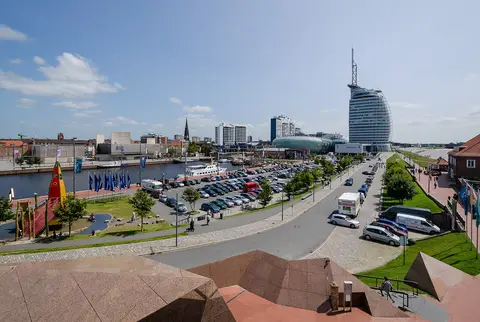
Between 1830 and 1974, around seven million people emigrated to America via Bremerhaven. The German Emigration Center tells their stories through personal fates. The Klimahaus takes you on a journey along the eighth line of longitude through different climate zones. In the district of Bremerhaven-Süd you'll find the Fischereihafen (fishing harbor) with the Schaufenster Fischereihafen, restaurants and smokehouses, as well as the German Maritime Museum with the Bremen Cog of 1380. The Havenwelten with the Zoo am Meer and the observation deck at the Atlantic Hotel Sail City offer views across the Weser estuary, where container ships and car carriers pass by.
Food and Drink
Bremen specialties include Knipp, a fried groats sausage, and Labskaus. In winter, Kohl und Pinkel (kale with smoked sausage) is a ritual, especially on Kohlfahrten (kale outings). Bremen's coffee and chocolate trade has a long tradition, as do Bremer Klaben, a type of stollen, and Kluten, peppermint chocolate. Beck's and Haake-Beck are brewed here. In Bremerhaven you can get fresh-caught fish and shrimp.
Culture and Festivals
Bremen is home to a university and several colleges, has a lively pub and theater scene in the area around Ostertor and Steintor, and boasts the storied soccer club Werder Bremen. In summer, the Breminale takes place on the Osterdeich, a festival on the banks of the Weser.
Getting There and Best Time to Visit
Bremen Airport is close to the center and reachable by streetcar. ICE and IC trains connect Bremen with Hamburg in about an hour, and regional trains run to Bremerhaven. The best time to visit is from May to September. In October the Bremer Freimarkt takes place, one of Germany's oldest folk festivals, and during Advent the Christmas market and the Schlachte-Zauber.