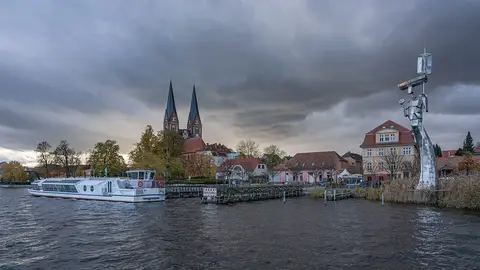
Brandenburg: Palaces, Lakes and the Spreewald
Travel guide · editorialSurrounding Berlin is a region of more than 3,000 lakes, pine forests, tree-lined avenues and Prussian palaces. A vacation in Brandenburg takes you to the gardens of Sanssouci, by punt through the canals of the Spreewald, and on bike tours along the Havel, Oder and Elbe rivers.
A Land of Water Around the Capital
Brandenburg completely surrounds Berlin and is at the same time one of Germany's most sparsely populated states. The Ice Age shaped the landscape: flat ground moraines, sandy soils, terminal moraine hills and countless lakes. In the north, the Uckermark borders the Mecklenburg Lake District; the Schorfheide and the Grumsin Forest, with its ancient beech woods, are part of a World Heritage site. In the east, the Oder forms the border with Poland, home to the Lower Oder Valley National Park. To the south lie Lusatia, where open-pit lignite mines are being flooded to create lakes, and the Spreewald, a labyrinth of waterways. The Märkische Schweiz around Buckow and the Fläming, with its in-line skating routes, are further destinations for day trips.
Potsdam and the Havel
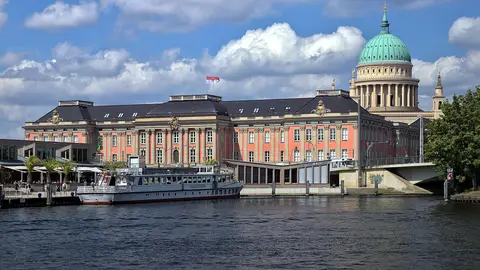
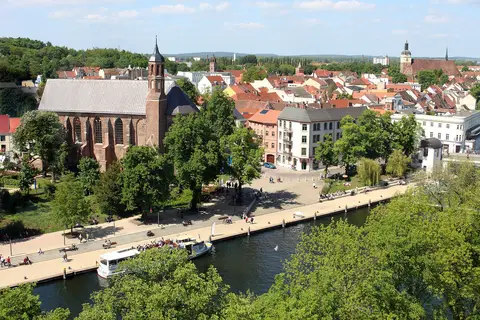
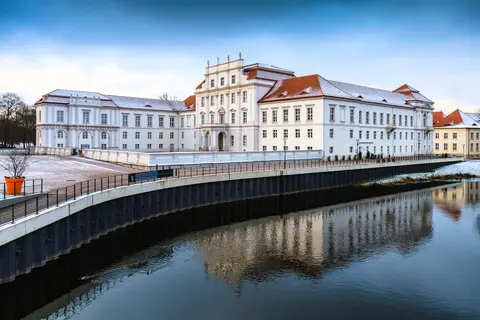
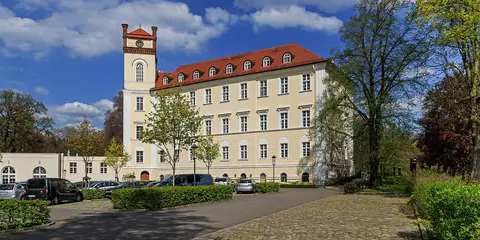
Potsdam, the state capital and former residence of the Prussian kings, is home to the palaces and parks of Sanssouci, one of the largest World Heritage sites in Germany. Frederick the Great had his summer palace built here, joined by the New Palace, the Orangery and Babelsberg Park. The Potsdam Agreement was signed at Cecilienhof Palace in 1945. The Dutch Quarter, the Alexandrowka colony of Russian singers and Babelsberg Studio, one of the oldest film studios in the world, are also part of the city. The Museum Barberini on the Old Market shows Impressionist paintings. Brandenburg an der Havel, the oldest town in the Mark and the one that gave the region its name, sits on islands between the Havel lakes and has a cathedral dating from the 12th century. North of Berlin, Oranienburg has a Baroque palace, and the Sachsenhausen Memorial commemorates the concentration camp there.
Sights in Brandenburg: Spreewald and Lusatia
The Spreewald is a biosphere reserve and one of the most popular destinations in Brandenburg. In Lübbenau/Spreewald, flat-bottomed boats propelled with poles set off on trips through the canals; some farmsteads can only be reached by boat, and even the mail is delivered that way. At the Lehde Open-Air Museum you can see old farmhouses. The region is home to the Sorbs and Wends, who have their own language; bilingual place-name signs and traditional costumes at Easter bear witness to this. Cottbus, the largest city in Lusatia, has the Branitz Park of Prince Pückler, a landscape garden with earth pyramids. The Prince Pückler Park in Bad Muskau on the Neisse is a World Heritage site shared with Poland.
Towns on the Oder and Around Berlin
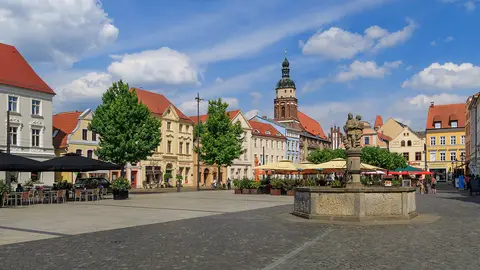
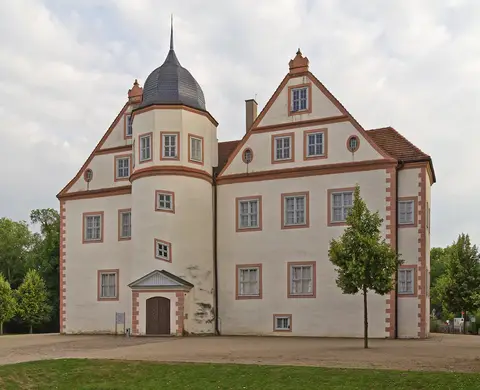
Frankfurt (Oder) lies opposite the Polish town of Słubice and is home to the European University Viadrina; St. Mary's Church has medieval stained-glass windows that returned from Russia after decades. Fürstenwalde/Spree and Königs Wusterhausen are growing towns in the Berlin hinterland; Königs Wusterhausen is considered the birthplace of German radio broadcasting, with the first broadcast transmitted from the Funkerberg in 1920. In the north, Rheinsberg with the palace of the young Frederick, Chorin Abbey and the Niederfinow Boat Lift, one of the oldest still operating in Germany, make for great excursions. Water-trip enthusiasts appreciate the Ruppin Lake District and the waters around Fürstenberg, which can be explored by canoe or by houseboat, no boating license required. In the Fläming, Rabenstein Castle and Wiesenburg Palace are worth a visit.
Eating and Drinking
The Spreewald pickle is the region's best-known product, preserved in many varieties, from sour to mustard pickles. Also on the menu are boiled jacket potatoes with quark and linseed oil, plinsen (small pancakes), Märkisch pike and pikeperch from the lakes, Teltow turnips and Beelitz asparagus, which draws day-trippers in spring. In fall there is game and mushrooms, and the Oderbruch is known for its fruit. In Werder an der Havel, the Tree Blossom Festival with fruit wine is celebrated every spring.
Getting There and Best Time to Visit
BER Airport is in Brandenburg, south of Berlin. Regional express trains connect Potsdam, Cottbus, Frankfurt (Oder) and the Spreewald with Berlin. Cyclists will find a well-developed network, such as the Berlin–Usedom cycle route or the Spree cycle route, and paddlers can rent canoes and houseboats. The best time to visit is from May to September, when the lakes and beer gardens beckon. In fall, cranes migrate through the Linum Marshes, an impressive natural spectacle.