About Frankfurter Judengasse
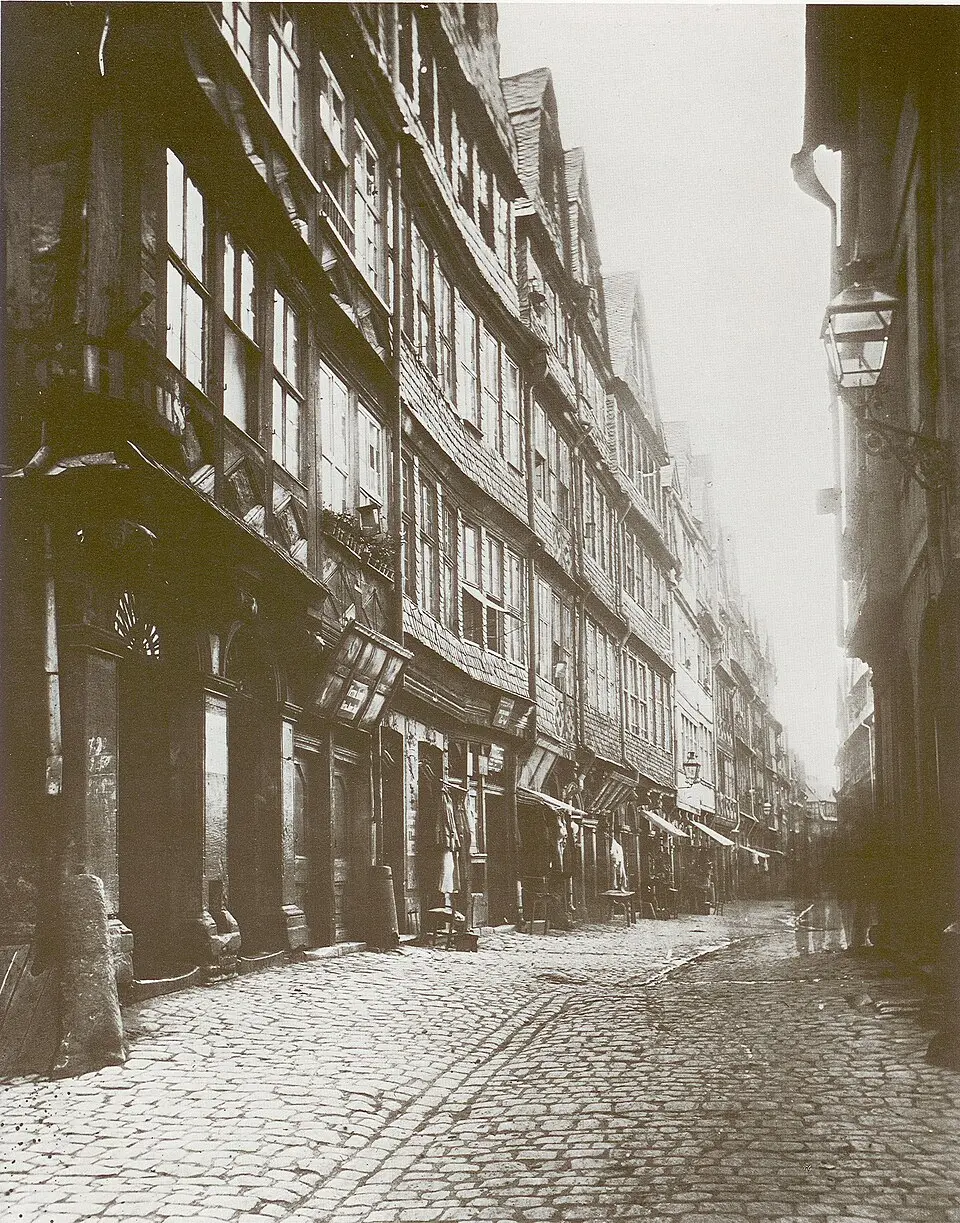
From 1462 to 1796, Frankfurt's Judengasse was the Jewish ghetto in Frankfurt am Main, and in the early modern period it was home to the largest Jewish community in Germany. One of the last of its kind in Germany before emancipation in the 19th century, it was only a little more than three meters wide and about 330 meters long. It ran in an arc from the Konstablerwache to what was then the Judenmarkt, today's Börneplatz, and was enclosed on all sides by walls that could only be passed through three gates. Originally planned for a few families, the development grew considerably as rear buildings and multistory additions were added, so that by the end of the 18th century around 3,000 people were living in this extremely cramped space. The tight construction led to severe fires, including in 1711 and 1721, which destroyed large parts of the lane. The residents' lives were strictly regulated by the so-called Judenstättigkeit, which set out residency rights, permitted occupations, and even dress codes, yet the community still formed a culturally and religiously significant center that hosted a major rabbinical assembly in 1603.
After the compulsory ghetto was abolished in the 19th century, the Judengasse lost its distinctive character and became a poor neighborhood. From the middle of the 19th century on, the historic buildings were systematically demolished to make room for new streets and buildings. In 1885 the street was renamed Börnestraße, after the writer Ludwig Börne, who grew up there, an honor the Nazis reversed in 1935. During the November pogroms of 1938, the synagogues there were destroyed, and in World War II the entire street was lost to air raids. Today the historic course of the lane is barely recognizable in the streetscape, as the newly built Kurt-Schumacher-Straße covers a large part of the former ghetto district.
Today, you can trace the history of the site at several points. At the southern end, beneath the modern administration building of the municipal utilities at Börneplatz, you'll find the Museum Judengasse. The foundations of houses discovered in 1987 and the remains of a mikveh are integrated and displayed on the lower level. The museum, a branch of the Jewish Museum Frankfurt, documents life in the ghetto. Memorial plaques and a mural on Kurt-Schumacher-Straße also commemorate the former main synagogue, while the street An der Staufenmauer marks the northwestern end of the old lane, where you can still see remains of the original city wall.
At a glance
- Category
- Sight › Historic sites
- Rating
- no reviews yet · write a review
- Address
- —
Frankfurt, Germany - District
- Altstadt
- Phone
- —
- Website
- —
- —
- Coordinates
- 50.11361° N · 8.68694° E
- Data quality
- confidence 0.77
- Identifier
- ID 7ed874fa-9d4…
Location & surroundings
Toggle layersFAQ about Frankfurter Judengasse
quick answersWhat is the Frankfurt Judengasse?
From 1462 to 1796, the Frankfurt Judengasse was the Jewish ghetto in Frankfurt am Main, in what is now Frankfurt's Old Town. In the early modern period, Germany's largest Jewish community lived here. The lane was only a little more than 3 meters wide and about 330 meters long. It curved from the Konstablerwache to what was then the Judenmarkt, today's Börneplatz, and was enclosed by walls with just three gates.
How did people live in the Frankfurt Judengasse?
Life in the Frankfurt Judengasse was extremely cramped and strictly regulated. By the end of the 18th century, around 3,000 people lived in a lane originally planned for only a few families, packed ever more densely with rear buildings and multistory additions. The so-called Judenstättigkeit set out residency rights, permitted occupations, and even dress codes, and severe fires, such as those in 1711 and 1721, destroyed large parts of the lane. Even so, the community was an important cultural and religious center that hosted a major rabbinical assembly in 1603.
What can still be seen of the Frankfurt Judengasse today?
Hardly anything of the Frankfurt Judengasse's historic course is still recognizable in the streetscape of Frankfurt am Main. The buildings were demolished starting in the mid-19th century, the synagogues were destroyed during the November pogroms of 1938, and the entire street was lost in World War II; today, Kurt-Schumacher-Straße covers a large part of the district. Along Kurt-Schumacher-Straße, memorial plaques and a mural commemorate the former main synagogue. The street An der Staufenmauer marks the northwestern end of the old lane, where remains of the original city wall can still be seen.
What does the Museum Judengasse in Frankfurt show?
The Museum Judengasse in Frankfurt am Main documents life in the former Jewish ghetto and is a branch of the Jewish Museum Frankfurt. It is located at the southern end of the former Judengasse, beneath the Stadtwerke administration building at Börneplatz. On the lower level, the foundations of houses discovered in 1987 and the remains of a mikveh are integrated into the exhibition and on display.
What can you see around the Frankfurt Judengasse?
Around the Frankfurt Judengasse in Frankfurt's Old Town, numerous sights and museums are within a short distance. travelguide195 lists, among others, the Neuer Börneplatz Memorial (about 224 meters), the Bienenkorbhaus (about 125 meters), and the Tugendbrunnen (about 213 meters). Less than 300 meters away, you'll also find the MMK Museum of Modern Art, the Dom Museum, and the Fronhofturm. Within a 500-meter radius, travelguide195 also lists around 270 restaurants.
Ratings & comments
none yetNear Frankfurter Judengasse
closest 5 per category · 2 kmSights
Restaurants
Museums
Hotels
More:Historic sites in Frankfurt (155)Sights in Altstadt (32)All sights in Frankfurt (198)
299 places within 2 km loaded.
Don't miss in Frankfurt
All sights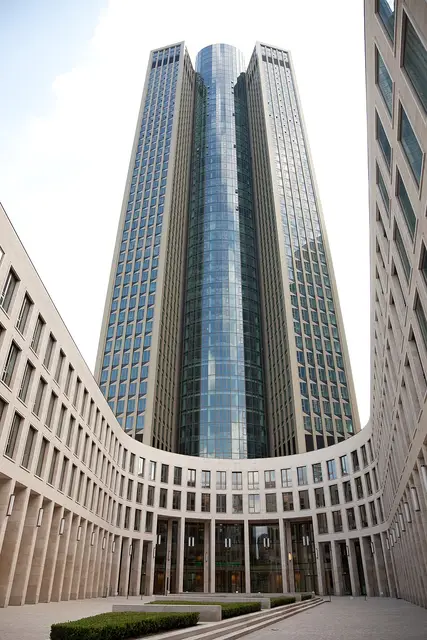 Historic sites01
Tower 185
Friedrich-Ebert-Anlage 35 · Frankfurt● Website● Phone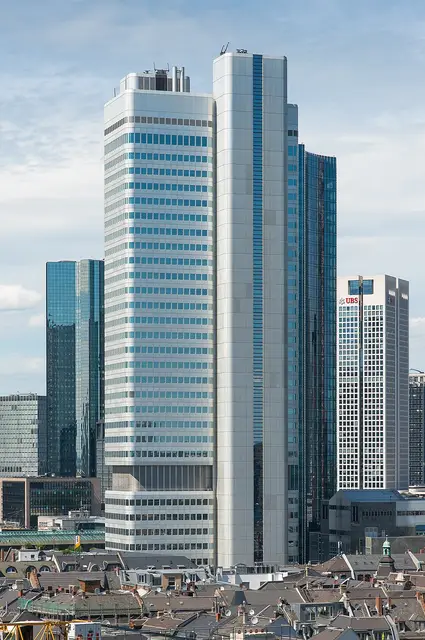 Historic sites02
Silberturm
Silver Tower, Jürgen-Ponto-Platz 1 · Frankfurt● Website● Phone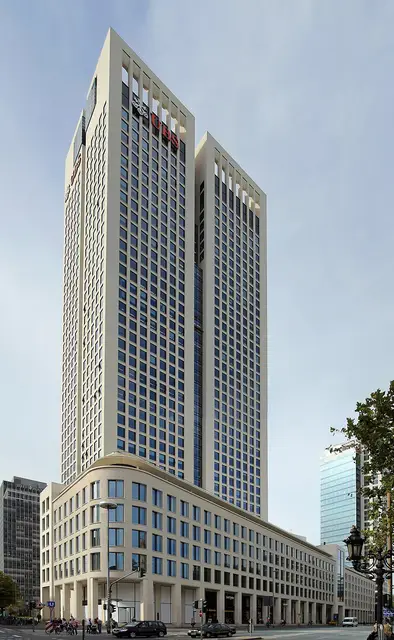 Historic sites03
OpernTurm
Bockenheimer Landstraße 2 · Frankfurt● Website● Phone Historic sites04
You need a free account to leave reviews and photos – that keeps comments genuine and lets you edit them later.