About Museo del Muro del Checkpoint Charlie
Checkpoint Charlie in Berlin was one of the most important crossing points through the Berlin Wall between 1961 and 1990. On Friedrichstraße, it connected the Soviet sector with the American sector, and with it the East Berlin district of Mitte with the West Berlin district of Kreuzberg. The checkpoint was originally set up by the Western Allies shortly after the Wall was built so that their military personnel could pass through. Because it was one of three Allied checkpoints used by the Americans, it was named Charlie after the international spelling alphabet. While all visitors could pass through on the western side without being checked, on the eastern side only certain groups, such as diplomats or Allied military personnel, were subject to simplified checks. For the general public, however, the crossing was heavily guarded and served above all as a symbolic display of the confrontation between the two blocs.
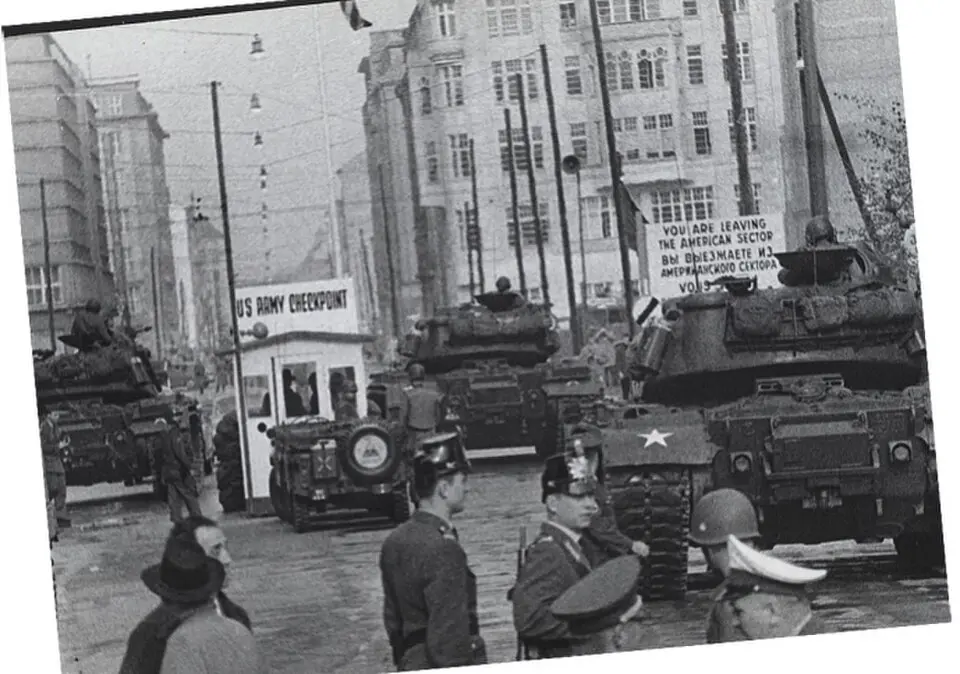
The history of the site is marked by dramatic events and escape attempts. In October 1961, Soviet and American tanks faced each other here ready for battle, a stark reminder of the danger of a military conflict. The checkpoint was also the scene of spectacular escapes from East Germany, including the tragic death of the refugee Peter Fechter in 1962, who bled to death in front of Western observers. Later escape attempts also took place here, such as the breakthrough with a loaded truck in 1986 or the last escape by Hans-Peter Spitzner in 1989. The Friedrichstraße border crossing point built on the eastern side was expanded several times over the years, from simple checkpoint structures to extensive halls and towers staffed by members of the Ministry for State Security.
Today the site is one of Berlin's best-known sights. A faithful replica of the first checkpoint booth, built in 2000 and surrounded by stacked sandbags filled with concrete, recalls the early phase of the division. A double row of cobblestones marks the former course of the Wall. The Wall Museum – Museum Haus am Checkpoint Charlie documents the history of the Wall, escape attempts, and the struggle for human rights. Alongside photos and documentation, you can marvel at original escape vehicles such as hot-air balloons, escape cars, and a mini submarine. The museum, which was among Berlin's most visited museums in the 2000s, is run by the Arbeitsgemeinschaft 13. August e. V. and is housed in a building by the architect Peter Eisenman.
In addition to the museum, a free open-air gallery along Friedrichstraße, Zimmerstraße, and Schützenstraße offers extensive information. The western gallery wall tells of failed and successful escapes as well as the steady expansion of the border fortifications. The eastern wall addresses the symbolic significance of the site for international politics, in particular the tank standoff of 1961. The neighboring BlackBox Cold War has offered further information on the division of Germany since 2012. Its centerpiece is a multimedia exhibition (admission charged) that brings historical events to life with media stations, a cinema, and original exhibits, giving you a deep insight into the Cold War era.
Yadegar Asisi's panoramic image offers a special experience, transporting you into everyday life in divided Berlin in the 1980s. It shows the contrast between the alternative lifestyle in West Berlin and the reality in the East, separated only by the Wall. The site is also known for its media presence, as it plays a role in numerous films such as The Spy Who Came in from the Cold and Der Schnüffler. Despite its international fame, Checkpoint Charlie played a secondary role in the official debate over the central memorial site for the Wall, since the Berlin Senate designated Bernauer Straße as the main site of remembrance. Nevertheless, Checkpoint Charlie remains a central place of remembrance, and its historic fabric is preserved through urban planning discussions and heritage protection measures.
At a glance
- Category
- Museum › Museums (general)
- Rating
- no reviews yet · write a review
- Address
- —
Berlin, Germany - District
- Mitte
- Phone
- —
- Website
- www.mauer-museum.com
- —
- Coordinates
- 52.50780° N · 13.39060° E
- Data quality
- confidence 0.79
- Identifier
- ID 7cd4f50f-5d8…
Location & surroundings
Toggle layersRatings & comments
none yetNear Museo del Muro del Checkpoint Charlie
closest 5 per category · 2 kmSights
Museums
Hotels
More:Museums in Mitte (178)All museums in Berlin (502)
298 places within 2 km loaded.
Don't miss in Berlin
All sights Historic sites01
Die Berliner Mauer
Mühlenstraße 79 · Berlin● Website● Phone Historic sites02
Brandenburger Tor
Pariser Platz · Berlin● Website● Phone Historic sites03
Fernsehturm
Panoramastraße 1 · Berlin● Website● Phone Historic sites04
You need a free account to leave reviews and photos – that keeps comments genuine and lets you edit them later.
It was the only border crossing between East and West Berlin that permitted foreigners passage. Residents of East and West Berlin were not allowed to use it. This contributed to Checkpoint Charlie's mythological status as a meeting place for spies and other shady individuals. Checkpoint Charlie gained its name from the phonetic alphabet; checkpoints "Alpha" and "Bravo" were at the autobahn checkpoints Helmstedt and Dreilinden respectively. Checkpoint Charlie's atmosphere was not improved at all on 27 Oct 1961 when the two Cold War superpowers chose to face each other down for a day. Soviet and American tanks stood approximately 200 m apart, making an already tense situation worse. Now the remains of the Berlin Wall have been moved to permit building, including construction of the American Business Center and other institutions. At the intersection of Zimmerstraße and Friedrichstraße (U-Bahn Kochstraße U6) is the famous "You Are Leaving the American Sector" sign. The actual guardhouse from Checkpoint Charlie is now housed at the Allied Museum on Clayallee. For a more interesting exhibit go to the Haus am Checkpoint Charlie. This is a private museum with kitschy memorabilia from the Wall and the devices GDR residents used to escape the East (including a tiny submarine!). There are also people who set up booths here offering to stamp your passport with souvenir stamps in exchange for a small fee. You are highly advised not to put these stamps in your passport, as these are not official stamps and could invalidate it. Instead, bring along an expired passport or a small booklet to put the stamps in.
Source: Wikivoyage, „Berlin/East Central“ · authors per page history · CC BY-SA 4.0