About Varna Necropolis
The Varna Necropolis, also known as the Chalcolithic burial ground, lies about five kilometers west of downtown Varna in Bulgaria. On a south-sloping terrace on the northern shore of Lake Varna, in the middle of what is now an industrial area, archaeologists uncovered traces of a total of 294 graves across roughly 7,500 square meters. The site belongs to the Varna culture, a local variant of the Kodzadermen-Gumelnitza-Karanovo VI phase, and radiocarbon dating places it between 4590 and 4340 B.C. Excavations began after a backhoe operator discovered the site by chance in 1972, and they have shown that the cemetery was used in five phases, expanding from northwest to southeast, toward the lake. Burial practices shifted over time, from crouched burials in the early phase to predominantly extended burials on the back in the later phases.
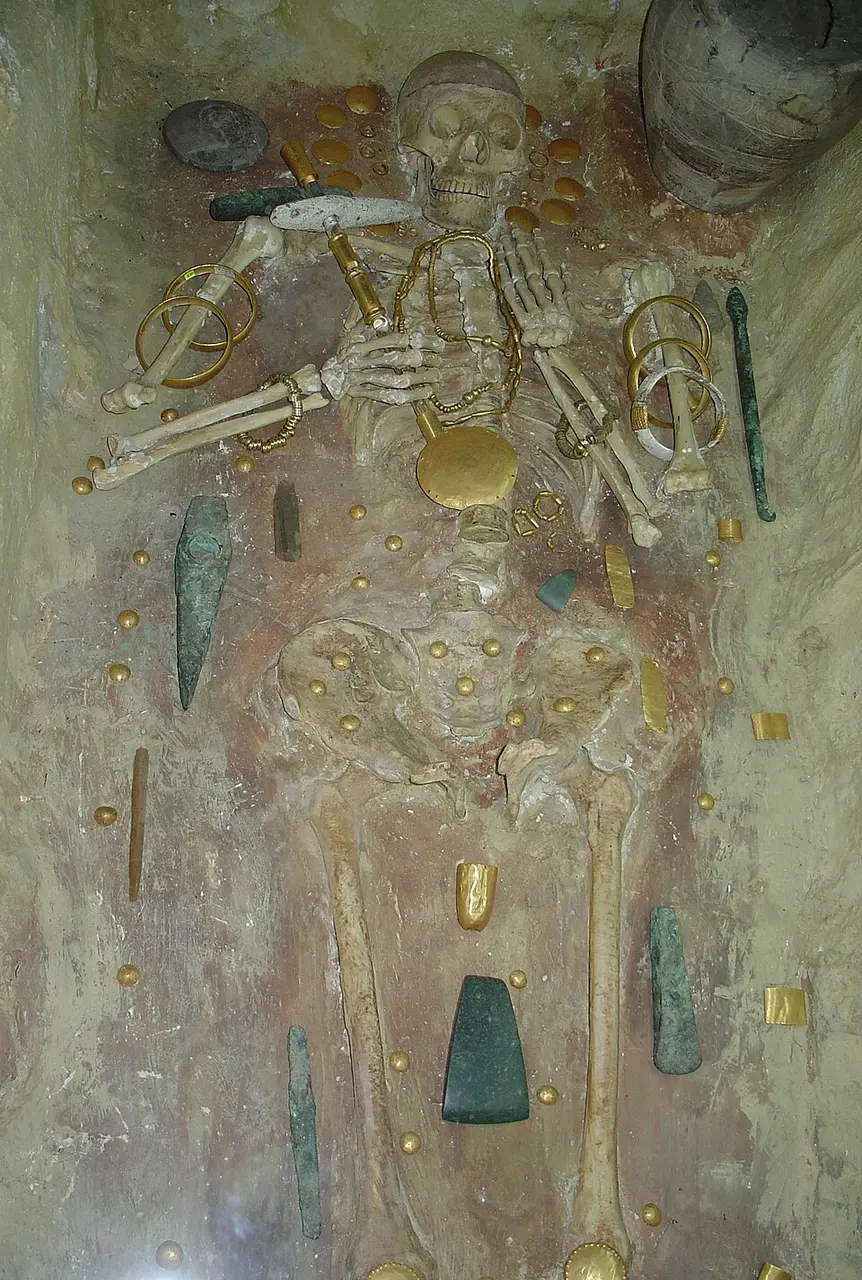
The site gained special significance because of its extraordinary gold and copper finds, which set these burials far above the level of typical graves of the period. More than 3,000 ornaments of very pure gold, weighing roughly six kilograms in total, testify to a highly developed tradition of metalworking and craftsmanship. Grave goods include bracelets and headbands, necklaces, scepters, and gold-foil clothing appliqués, some of them depicting animals. Grave No. 43 is especially impressive: it held the skeleton of a man buried with 990 gold objects, including a golden scepter and a bow fitting. Even symbolic burials without a skeleton, such as Pit No. 1, contained rich deposits of material, which may have marked a boundary between the world of the dead and that of the living. The finds also point to trade connections reaching as far as the lower Volga region and the Cyclades, with salt from Provadia and copper from Stara Zagora serving as trade goods.
Today the artifacts are on display at the Varna Archaeological Museum and the National Historical Museum in Sofia. The site's international fame grew through the touring exhibition "The Gold of Varna," which has been shown at many of the world's leading museums since the 1970s. The 1982 presentation in Japan drew particular attention; staged under the title "The Oldest Gold in the World – The First European Civilization," it generated widespread interest and led to two TV documentaries. In the decades that followed, the gold objects were also exhibited in countries such as Germany, France, Italy, and Canada. Interpretations of the finds have changed over time: whereas invasions were often assumed to have caused cultural change in the past, scholars today are more likely to see the spread of agriculture and the development of society itself as the driving force behind these rich burial rites.
At a glance
- Category
- Sight › Historic sites
- Rating
- no reviews yet · write a review
- Address
- —
Varna, Bulgaria - Phone
- —
- Website
- —
- —
- Coordinates
- 43.21306° N · 27.86444° E
- Data quality
- confidence 0.80
- Identifier
- ID a889c08c-432…
Location & surroundings
Toggle layersFAQ about Varna Necropolis
quick answersWhat is the Varna Necropolis in Varna?
The Varna Necropolis, also known as the Varna Cemetery or the Chalcolithic necropolis, is a prehistoric burial site in Varna, Bulgaria. Traces of a total of 294 graves have been uncovered across roughly 7,500 square meters. The site belongs to the Varna culture and has been dated by radiocarbon analysis to between 4590 and 4340 B.C.
Where is the Varna Necropolis located?
The Varna Necropolis lies about five kilometers west of the center of Varna, Bulgaria. It sits on a south-sloping terrace on the northern shore of Lake Varna, in the middle of what is now an industrial area. The burials took place in five phases, moving from northwest to southeast, that is, toward the lake.
Where can you see the Gold of Varna?
The finds from the Varna Necropolis are on display at the Archaeological Museum in Varna and the National Historical Museum in Sofia. They became internationally famous through the traveling exhibition "The Gold of Varna," which has been shown at many leading museums around the world since the 1970s. The 1982 presentation in Japan, titled "The Oldest Gold in the World – The First European Civilization," drew particular attention.
Why is the Varna Necropolis so significant?
The Varna Necropolis is significant above all for its extraordinary gold and copper finds. More than 3,000 pieces of jewelry made of very pure gold, with a total weight of about six kilograms, were found, including arm bands and headbands, necklaces, scepters, and garment appliqués made of gold foil. Grave No. 43 alone contained a man buried with 990 gold objects, including a golden scepter and a bow fitting. The finds also show evidence of trade links reaching as far as the lower Volga and the Cyclades.
How was the Varna Necropolis discovered?
The Varna Necropolis was discovered by chance in 1972 by an excavator operator, and excavations began soon afterward. They showed that burial practice shifted from flexed burials in the early phase to mostly extended burials on the back in later phases. Symbolic burials without a skeleton, such as in Pit No. 1, also contained rich grave goods.
Ratings & comments
none yetNear Varna Necropolis
closest 5 per category · 2 kmSights
Restaurants
Museums
None within 2 km.
More:Historic sites in Varna (124)All sights in Varna (138)
48 places within 2 km loaded.
You need a free account to leave reviews and photos – that keeps comments genuine and lets you edit them later.